

Same diet and same workouts. And, the same discipline you’ve always had. So why does the weight keep creeping back after 40? The answer isn’t weak willpower, it’s a hidden biological “slingshot effect” most diet plans never mention.

Key Takeaways
Hormonal shifts during perimenopause and menopause can override conscious effort, making willpower alone an unreliable strategy for managing weight after 40
Declining estrogen, slower metabolism, and changes in insulin and thyroid function all make traditional calorie-focused advice less effective for women 40+
Disrupted sleep and elevated cortisol skew hunger hormones and increase fat storage, which explains why cravings feel stronger than conscious effort can handle
An identity-based approach that treats slip-ups as data instead of moral failure provides a different path than restriction-based dieting
Understanding the biology behind the diet cycle can be the first step toward breaking free of shame and restarting on more sustainable terms
Millions of women reach their 40s and 50s doing everything they did in their 20s. The same food choices, same workouts, same discipline. And yet the scale refuses to cooperate the same way. The frustration that follows often gets pinned on a lack of willpower, when the real story is happening at a biological and psychological level most diet plans never touch.
Willpower Isn’t the Problem - Biology Is
Women who have battled weight for decades tend to blame themselves first. They assume that if they just tried harder, planned better, or wanted it more, the results would finally stick. But willpower operates like a muscle with a limited charge, and hormonal shifts during perimenopause and menopause drain that charge faster than most people realize.
Willpower works like holding a beach ball underwater. The arms can only push down for so long before they give out, and when they do, the ball does not float up gently - it snaps upward with force. For women whose hormones are actively working against restriction, that snap often shows up as an evening kitchen raid that feels impossible to explain the next morning.
Understanding why the body pushes back changes the entire conversation around weight after 40. Instead of another round of self-blame, it opens the door to strategies built around biology and identity rather than sheer grit.
What Hormonal Shifts Actually Do to Your Body
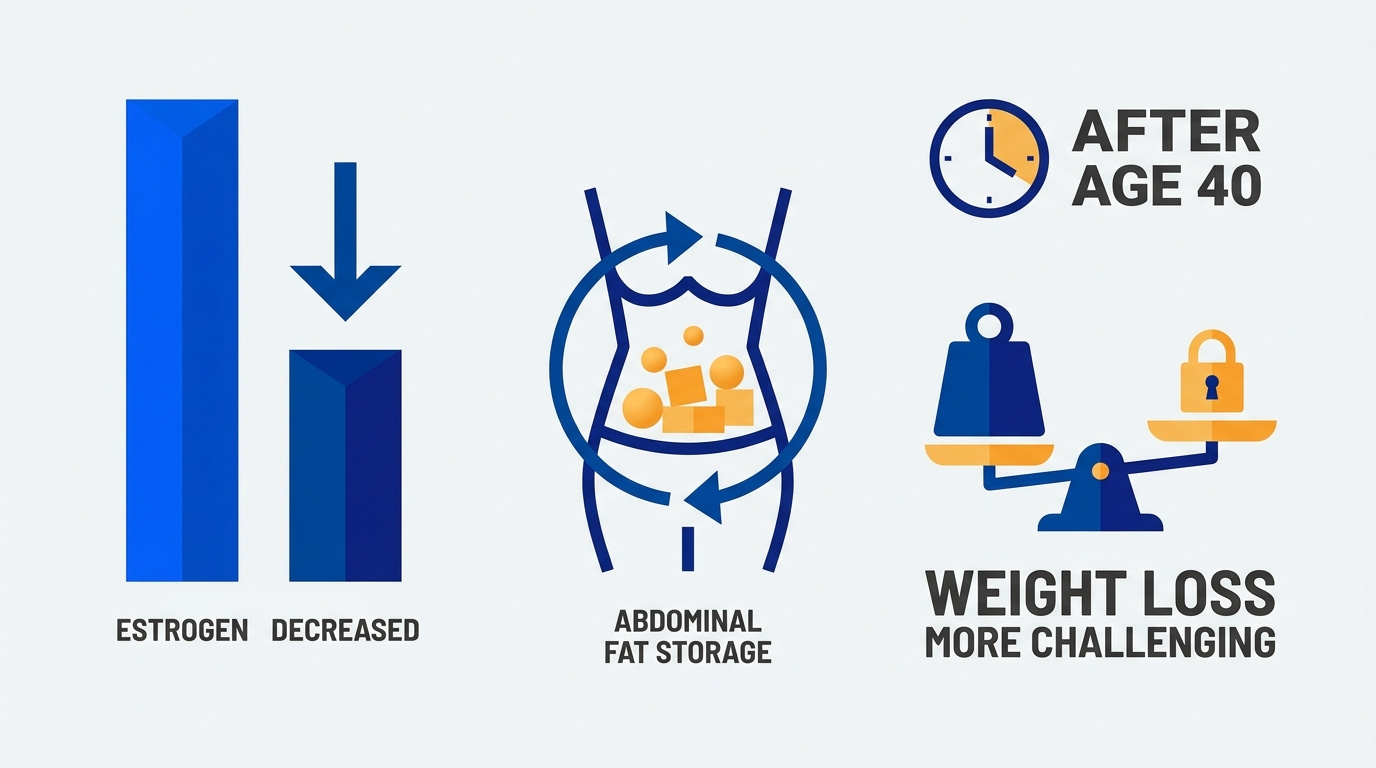
The changes women notice in their 40s are not imagined, and they are not a personal failing. Multiple biological systems shift at once during this stage of life, and each one makes the body hold onto weight more stubbornly than it used to.
Estrogen Decline and Abdominal Fat
As estrogen levels decline during perimenopause and menopause, fat storage patterns change noticeably. Weight that once distributed more evenly across the body tends to settle around the midsection instead. This is not a matter of eating differently - the body is responding to a shifted hormonal environment that favors abdominal fat storage.
Slower Metabolism, Less Muscle
Metabolism also slows with age-related hormonal changes, meaning fewer calories are needed just to maintain the same weight that used to require more food. At the same time, many women experience a natural decrease in muscle mass paired with an increase in fat mass. Since muscle burns more energy at rest than fat does, this shift compounds the metabolic slowdown, making the old formula of eating less and moving more far less reliable than it once was.
Insulin Resistance and Thyroid Changes
Insulin resistance tends to increase with age and hormonal change, making it harder for the body to process glucose efficiently and easier for that glucose to be stored as fat. Thyroid function can decline as well, and an underactive thyroid slows metabolism further, adding yet another layer of resistance to weight loss efforts that used to work.
Why Sleep and Stress Undermine Self-Control
Even the most disciplined mindset struggles against a body that isn’t sleeping well or is flooded with stress hormones. These two factors alone can undo a day’s worth of careful food choices.
Disrupted Sleep Skews Hunger Hormones
Sleep disturbances are common during perimenopause and menopause, and they directly affect the hormones that regulate hunger and fullness - ghrelin and leptin. When those hormones are thrown off balance, hunger signals intensify and cravings for high-calorie foods become harder to ignore, regardless of how much willpower a person believes they have.
Cortisol and Fat Storage
Stress adds another layer to the problem. Elevated cortisol, the body’s primary stress hormone, promotes fat storage particularly around the abdomen. The brain’s reward system also becomes more sensitive to highly palatable foods when stress and hormonal imbalance are present, which helps explain why cravings during stressful weeks feel almost impossible to resist through sheer determination.
The Hidden Psychology Behind “Falling Off Track”
Biology tells only part of the story. The mind runs its own patterns underneath conscious awareness, and those patterns often decide the outcome before a single food choice is made.
Willpower Depletion Is Real
Willpower behaves as a finite resource that depletes over the course of the day, making it progressively harder to resist temptation as hours pass. Layer hormonal cravings on top of that natural depletion, and the late-afternoon or evening slide into old habits stops looking like weakness and starts looking like a predictable outcome of biology meeting a tired mind.
Decision Fatigue and Food Noise
Constantly battling hunger and cravings intensified by hormonal signals creates decision fatigue, making it progressively harder to choose well as the day wears on. Many women describe this as constant background chatter about food, eating, and body image - sometimes called “food noise” - that hormonal fluctuations can amplify to the point where willpower alone stands little chance of quieting it.
Why the Diet Cycle Keeps Repeating
Restriction-based dieting fails to solve these problems and often makes them worse, setting up a cycle that repeats itself again and again.
Restriction Triggers the Slingshot Effect
Pulling back hard on food intake creates tension rather than balance, and tension has a way of snapping back with force. Restriction can trigger compulsive eating through what might be called a slingshot effect: hunger hormones spike, blood sugar crashes, and the body reads deprivation as a threat to survive. The harder the pullback, the harder the rebound - a pattern that has little to do with discipline and everything to do with physiology.
All-or-Nothing Thinking Fuels Shame
Restrictive diets also feed an all-or-nothing mindset, where one skipped workout or one “off” meal feels like total failure. That kind of thinking often leads to abandoning healthy habits altogether rather than course-correcting, because the framework leaves no room for being human. Shame becomes the byproduct, and shame rarely motivates lasting change - it usually just restarts the cycle.
Shifting From Willpower to Identity
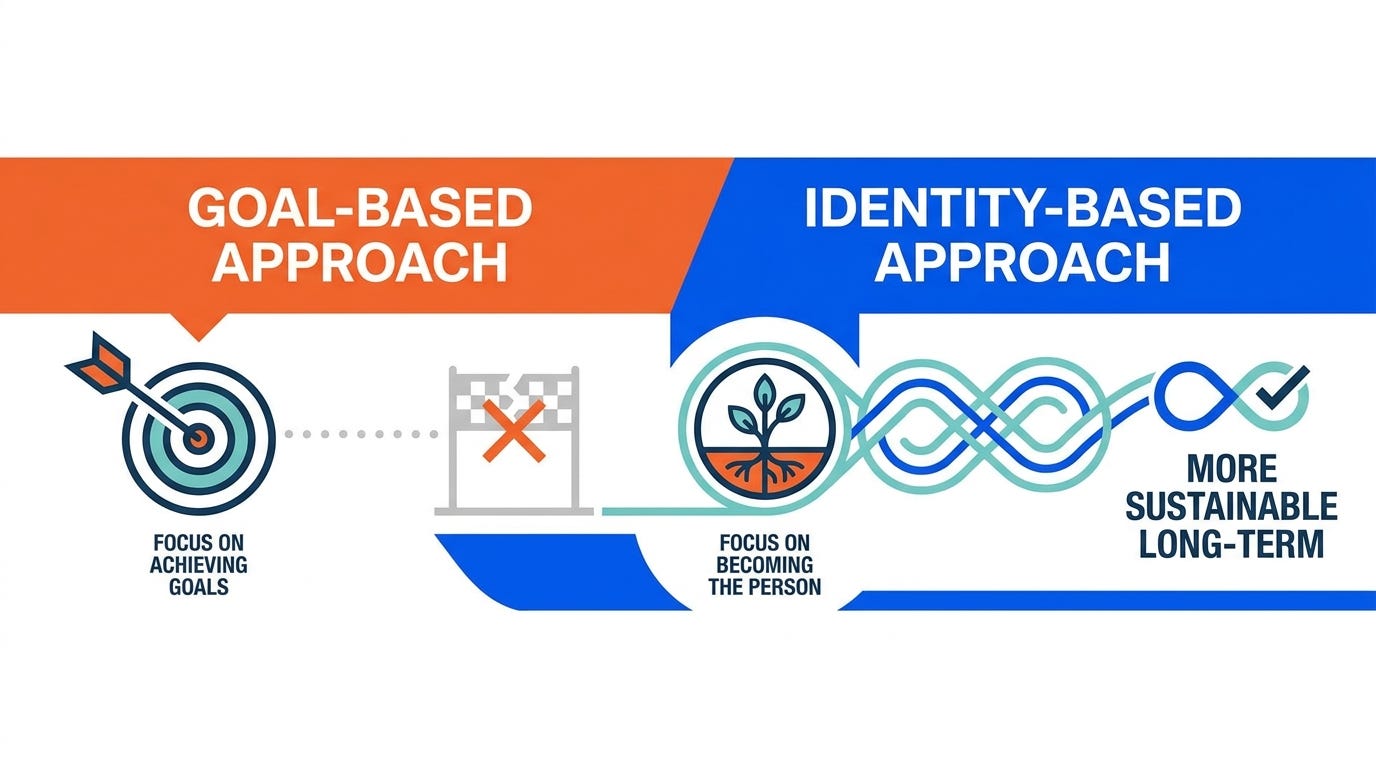
If biology and psychology are working against restriction, the answer is changing the framework entirely rather than gripping harder.
Resetting the Identity Thermostat
Weight Loss Mindset frames this shift around what founder Rick Taylar calls the Identity Thermostat. Diets open a window for a while - a temporary fix that closes again once willpower runs out. Resetting the identity underneath the behavior works more like adjusting the thermostat itself, changing the baseline so that habits shift on their own rather than requiring constant enforcement.
Becoming the Scientist, Not the Judge
Central to this approach is a simple reframe: treat slip-ups as data rather than moral failures. Acting as a scientist means observing what happened and why, without delivering a verdict about character or discipline. This mindset removes the shame that so often derails progress after a single setback, replacing self-criticism with curiosity. Anyone wanting a deeper look at how this identity-first approach applies specifically to hormonal weight changes can find more through Weight Loss Mindset, which focuses on the mental patterns beneath eating behavior rather than another meal plan.
You Were Never Broken - You Were Overridden
The exhaustion that comes from trying diet after diet, only to end up back at the same starting point, does not mean something is wrong with a person’s character. Biological and psychological systems were quietly overriding conscious effort the entire time, systems most weight loss advice never explains or addresses. Recognizing that difference is often the first real relief many women feel after years of self-blame.
Moving forward does not require more discipline or a stricter plan. It requires understanding what estrogen decline, slower metabolism, disrupted sleep, and stress hormones are actually doing beneath the surface, and building a strategy that works with those realities instead of against them. For a next step, consider an identity-based approach to weight loss built around understanding these patterns rather than fighting them through willpower alone.