

You’ve heard “eat less, move more” a hundred times, but one study found only 33 of 159 doctor visits offered any real action steps. So why does this advice persist, and what actually works instead?

Key Takeaways
Primary care doctors often give generic weight advice because short appointments, uneven obesity-specific training, and complicated insurance rules leave little room for a full treatment plan.
Research on recorded doctor visits found most weight advice skipped a clear rationale or practical steps, which helps explain why patients walk away frustrated.
Structured, multi-session behavioral programs have been linked to meaningfully better outcomes than a single piece of generic advice from a primary care visit.
Lasting change tends to involve addressing the mental patterns behind eating choices, not just the biology of calories, a point Weight Loss Mindset builds its approach around.
Appointments averaging under 22 minutes rarely leave enough time to unpack decades of dieting history, which is one reason the advice can feel so thin.
Anyone who has sat in a doctor’s office after years of failed diets knows the feeling. The scale goes up, the appointment goes by fast, and the advice that comes out sounds the same every time: eat less, move more. For people over 40 who have already tried keto, intermittent fasting, and every meal plan in between, that line can feel dismissive, even insulting. The real story behind that advice has more to do with a strained system than a careless doctor.
The Advice Falls Short - Here’s Why
Generic weight loss advice fails because it treats a layered, chronic condition like a simple math problem. Obesity involves hormones, genetics, sleep, stress, environment, and deeply wired habits, yet “eat less, move more” reduces all of that to a single sentence. Patients leave with no plan for Tuesday night cravings or the holiday season, just a vague directive that sounds more like a judgment than a strategy.
The gap between advice and action is where most people fall through the cracks. A sentence delivered in the final minute of an appointment cannot compete with decades of habits, emotional triggers, and biology working against a person’s best intentions. Weight Loss Mindset has built its coaching approach around this exact gap, pointing to identity and mindset, rather than willpower, as what actually determines whether advice turns into lasting change.
Generic Advice Is The Norm, Not The Exception
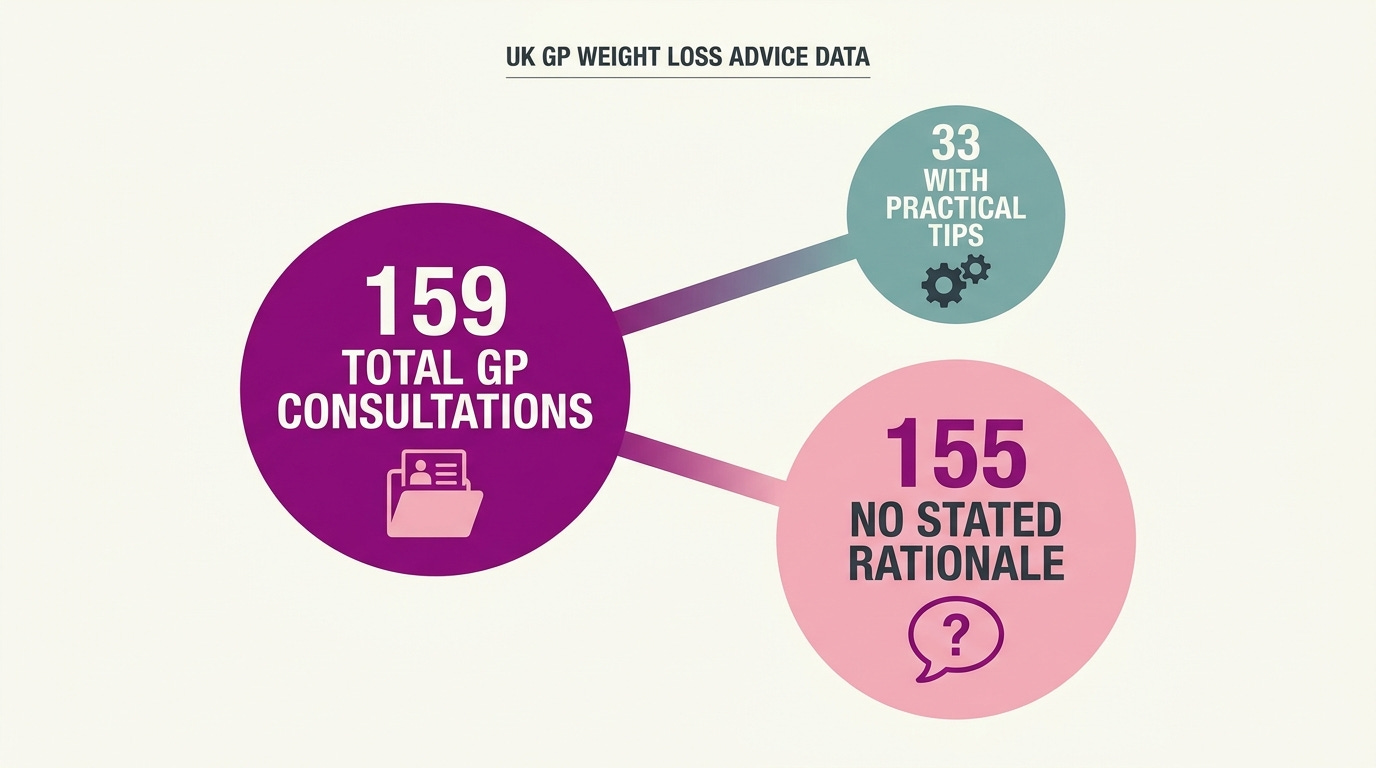
Vague instructions are not the exception in primary care. They are the default setting for how weight gets discussed in most doctor’s offices, and that pattern shows up clearly when researchers record what actually happens in the exam room.
What Real Consultations Actually Sound Like
A review of 159 recorded UK primary care consultations about weight loss found that advice almost always came down to some version of “eat less, do more.” Only a small fraction of those visits, 33 out of 159, included any practical tips for putting the advice into action. The vast majority offered no explanation at all for why the recommendation made sense for that particular patient. The advice was rarely personalized to someone’s existing habits, schedule, or past attempts at weight loss.
The Emotional Cost Of Vague Instructions
Vague advice does more than fail to help; it can carry an emotional cost. In one scenario experiment, adults who read a doctor’s weight loss advice reported feeling more motivated to eat healthfully, but they also reported more distress and negative emotion about their weight than those who did not receive that advice. That combination, a nudge toward motivation paired with a spike in shame, is a rough trade for anyone who has already spent years blaming themselves for not sticking to a plan.
Why Doctors Can’t Do More
None of this means doctors do not care. The setup they work inside rarely gives them the tools, time, or financial support to treat obesity the way they treat other chronic conditions.
Appointments Are Too Short For Real Change
A typical primary care visit runs under 22 minutes, and research suggests only a small portion of that time, under a third, actually gets spent on weight-related concerns. That leaves barely a few minutes to discuss something as layered as long-term eating behavior, let alone build a personalized plan around it. National guidelines recommend intensive behavioral programs that often involve more than a dozen sessions across a full year. A few rushed minutes simply cannot deliver what a structured program is built to provide.
Obesity-Specific Training Remains Limited And Inconsistent
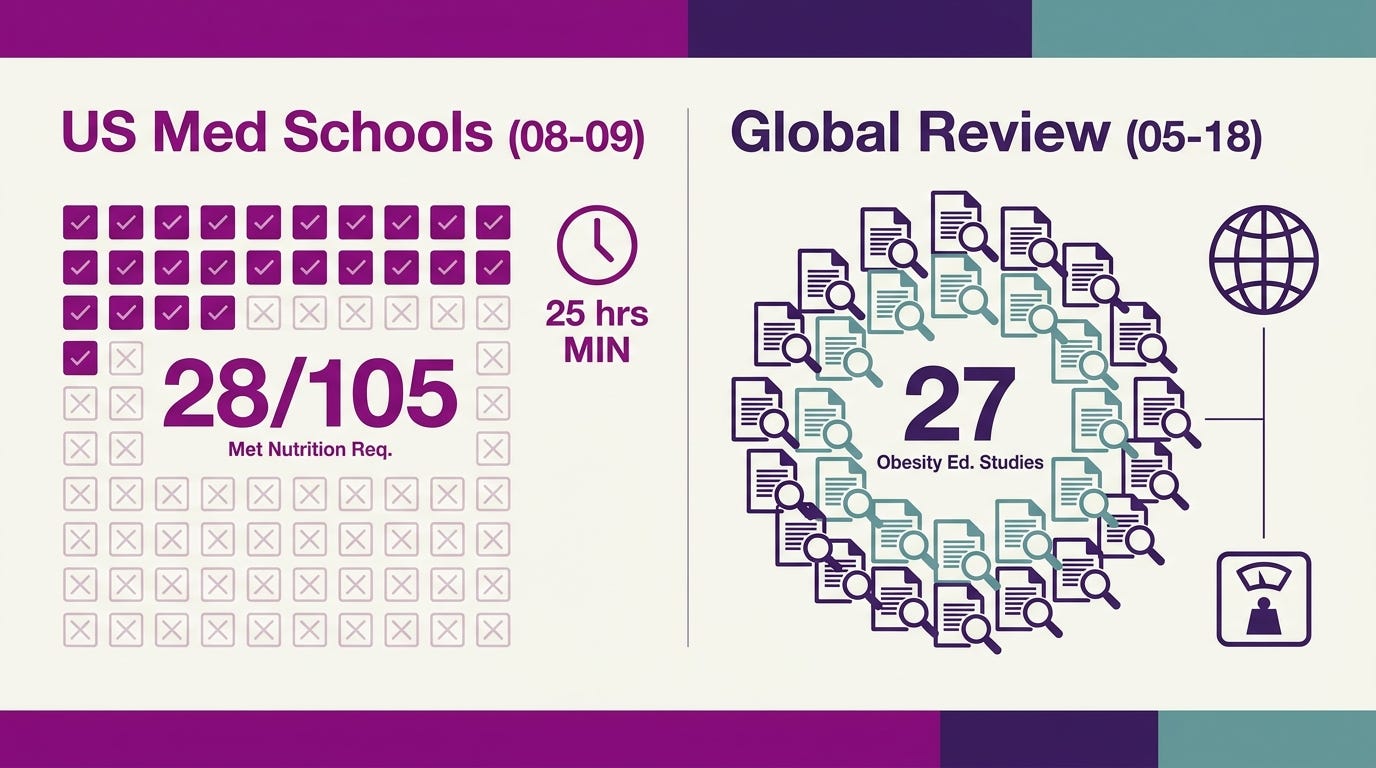
Medical school curriculums were never built around obesity as a chronic, standalone condition. A 1985 standard called for a minimum of 25 hours of nutrition education, and a widely cited survey found that only 27% of responding U.S. medical schools, 28 out of 105, met that minimum. More recent reviews have found that most U.S. medical students still receive fewer than those 25 hours of nutrition instruction.
A 2020 survey of leaders at 40 medical schools found that only 10% of respondents believed their students were “very prepared” to manage patients with obesity, and half of the schools surveyed said expanding obesity education was a low priority or not a priority at all. Physicians themselves have reported feeling poorly trained or unprepared to counsel patients on weight.
Insurance Coverage For Weight Care Is Complex
Even when a doctor wants to refer a patient to a structured program, insurance coverage can get in the way. Reimbursement for obesity counseling is inconsistent, and many primary care providers report that a lack of payment structures makes it hard to offer anything beyond a quick conversation. Referring someone to a specialist or a behavioral program takes time and paperwork that a packed appointment schedule rarely allows for.
What Actually Moves The Needle
If generic advice is not the answer, the question becomes what actually works. The research points toward two things: structured support over time, and specialized expertise.
Structured Behavioral Programs Outperform One-Off Advice
National guidelines recommend intensive, multicomponent behavioral interventions for adults with obesity, and the evidence behind that recommendation carries real weight. These programs combine diet changes, activity goals, self-monitoring, and relapse-prevention strategies, typically delivered across a year or more, often with at least a dozen sessions in the first year alone. That scale of support illustrates exactly why a single sentence in a rushed appointment cannot substitute for sustained care.
Obesity Medicine Certification Signals Deeper Preparation
Physicians can pursue additional training through obesity medicine certification, which covers the behavioral, biological, and social factors involved in weight management in far more depth than a standard medical degree. That credential requires substantial continuing education focused specifically on obesity care. A doctor holding that certification has typically invested in the kind of specialized knowledge that a general practice visit does not have time to teach or apply.
Beyond Biology: The Missing Piece
Even the best behavioral program addresses behavior and biology without necessarily touching the mental patterns that drive eating decisions in the first place. That gap is where a different kind of approach comes into focus.
Why Willpower Alone Was Never The Answer
Telling someone to simply try harder treats weight loss as a test of character rather than what it actually is: a mix of brain chemistry, conditioned habits, and emotional triggers. Years of failed diets are proof that restriction-based approaches often create more tension than they resolve, and tension tends to snap back the moment life gets stressful.
Treating The Mind, Not Just The Scale
Identity-based coaching diverges from both generic advice and standard behavioral programs by centering on the beliefs and self-perception driving food choices in the first place, rather than focusing only on meal plans or activity targets. Slip-ups become information to study rather than moral failures to punish, a shift that reframes the entire relationship between a person and their habits. When someone stops treating themselves as broken and starts treating their patterns as solvable puzzles, the behavior change that follows tends to feel less like a fight and more like a natural result.
The System Failed You, Not Your Discipline
The pattern across all of this research tells a consistent story. Short appointments, uneven training, and complicated insurance coverage combine to produce the same thin advice millions of people over 40 have heard again and again. That advice was never going to be enough, and its shortfall says far more about the healthcare system’s constraints than it does about anyone’s willpower or character.
Understanding why the advice fell short is the first step toward looking for support that actually matches the size of the problem. For a next step built around changing the thinking behind the habit rather than counting another calorie, consider an identity-based approach to weight loss designed for people who are done blaming themselves for a system that was never built to help them fully.