You step onto the scale. Same number. You move it across the bathroom floor and try again. Still the same.
Then the familiar thought arrives: Here we go again. This is where I always get stuck.
A weight loss plateau can bring years of disappointment into one ordinary morning. You remember every attempt that ended with you giving up. Before breakfast, you’re wondering whether the effort was worth it.
Weight loss slows for physical reasons. Your response to that slowdown matters too, because frustration can change how you eat and whether you keep your routines. Understanding both helps you decide what to adjust.
Key takeaways
Weight loss can slow as your body’s energy needs change and appetite increases. A plateau carries no verdict about your character.
The story you attach to stalled progress can affect whether you maintain your routines or abandon them.
Panic-driven restriction can intensify hunger and make eating harder to manage.
Reviewing patterns with curiosity helps you identify adjustments without feeding the shame spiral.
Seeing yourself as someone who cares for their health helps you follow through when the scale offers little encouragement.
Check the weight trend before changing your routine. Choose adjustments you can sustain, and get support if the plateau persists.
Check the pattern before calling it a plateau
3 mornings at the same weight can feel like 3 weeks when you’re waiting for proof that something is working.
The scale measures more than body fat. Water shifts and the food moving through your digestive system affect the reading. A change in exercise can temporarily affect water retention too. It’s easy to miss that bigger picture when you’re staring at a decimal point.
A plateau is a sustained leveling off of your weight trend. A handful of readings won’t tell you much. Look across several weeks and consider what else was happening during that time.
If weighing helps you, use the same scale at a similar time of day. That makes comparisons more useful. If you keep checking compulsively, or the number decides your mood for the day, discuss another way to monitor progress with a qualified professional.
Ask yourself: What do I actually know from this number?
Sometimes the honest answer is: I need more information.
Why the same routine can produce a different result
Your body changes as you lose weight. A smaller body generally needs less energy, and weight loss can change how hungry you feel and how much energy you burn. The routine that helped you lose weight may eventually help you maintain it.
That can feel unfair. You’re keeping the same habits and getting a different result.
Researchers at the National Institutes of Health examined appetite changes during weight loss in a clinical trial. As participants lost weight, their appetite increased, encouraging them to eat more and helping explain why weight loss leveled off. Your body can respond to weight loss by making you hungrier.
Daily life changes too. A busy spell at work might have pushed your lunchtime walk out of the schedule. Less satisfying meals can leave you hungrier in the evenings. Check your sleep as well, because too little can affect appetite.
Look at those changes before deciding what the plateau means. Mindset influences your choices, but biology still matters. Changing your self-talk alone cannot guarantee further weight loss.
When the scale stops moving, old stories get louder
The thought My weight hasn’t changed can become I never finish anything before you’ve even stepped off the scale.
If you’ve spent years losing and regaining weight, a slowdown comes with history attached. You remember abandoning a plan. Clothes bought after an earlier weight loss may still hang unworn in your wardrobe, reminding you of the point when you stopped opening the tracking app.
Those memories can make a familiar prediction feel certain: This will end the same way.
That prediction can change what you do next. A walk feels pointless, so you cancel it. Lunch becomes whatever’s easiest. By evening, you’re standing at the fridge with cold air on your face, looking for something that will settle the disappointment.
Notice the moment disappointment starts changing your plans. That’s a place to pause before the day slips further away.
Separate what happened from what you assume will happen. My weight trend has been flat is an observation. I’m destined to fail again is a prediction. You can review your routine without accepting that prediction as fact.
How the urge to fix everything can make eating harder
When progress stalls, urgency often takes over.
Breakfast gets smaller. Lunch becomes something you can barely call a meal. You add another workout, even though you’re exhausted. By late afternoon, you’re watching the clock and thinking about dinner constantly.
Now you’re dealing with a plateau while trying to get through the day hungry and exhausted.
Aggressive restriction can leave you hungrier and thinking about food more often. For some people, rigid rules also strengthen all-or-nothing thinking: once a rule is broken, the whole day feels lost.
The Willpower Trap grows out of that pressure. Every difficult moment becomes another demand to resist harder, until the routine takes more effort than you can keep giving it.
Protect regular, adequate meals while you review what needs adjusting. Return to your usual eating pattern after a difficult evening. Movement should fit your capacity and support your health. Using exercise to punish yourself for eating adds another source of pressure.
Approach the plateau as a scientist
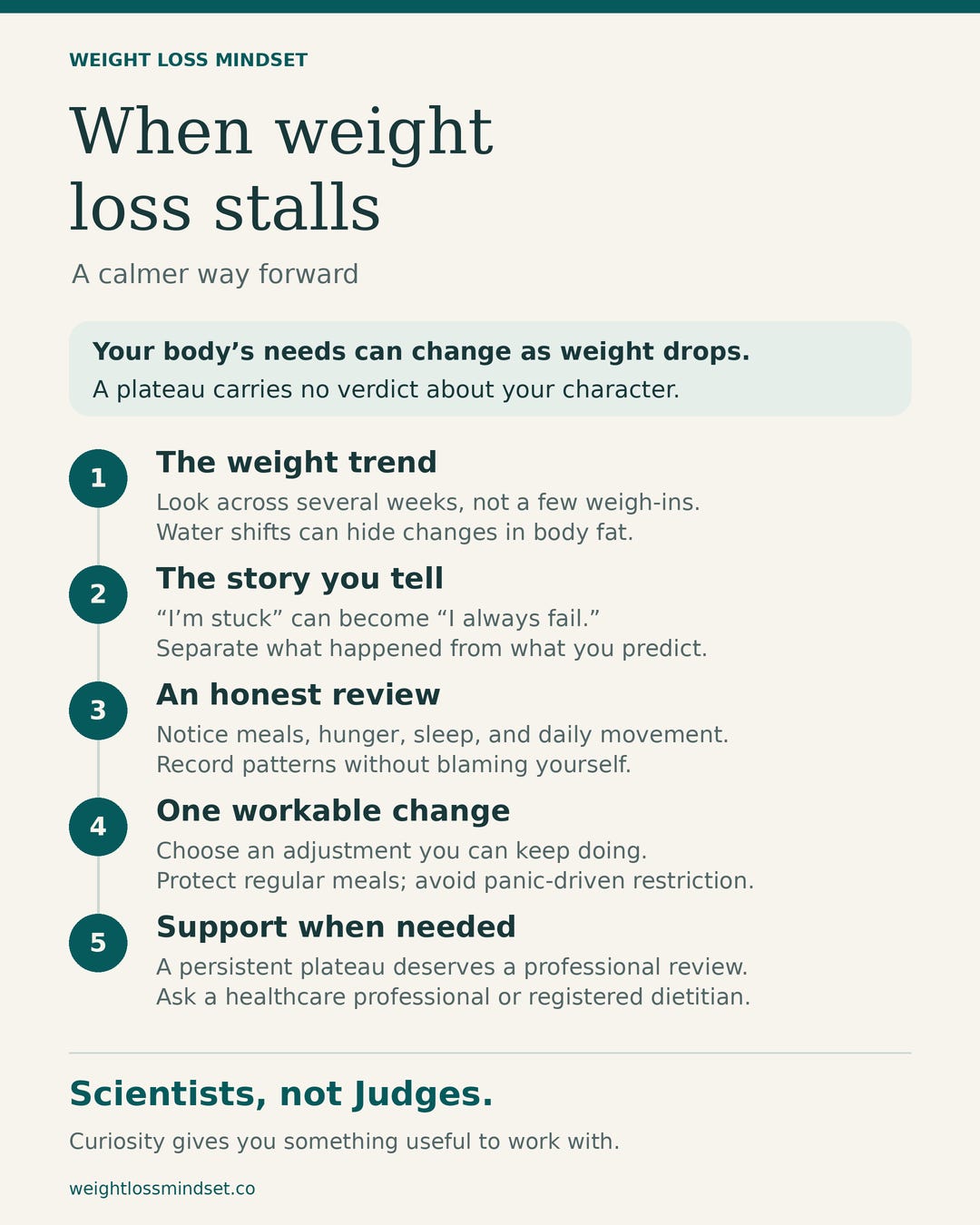
Scientists, not Judges.
A scientist asks what happened and gathers information before deciding what to change. Bring that curiosity to your stalled weight trend.
For a week, jot down a few notes about your eating and movement. Record when hunger gets intense and whether your meals satisfy you. Include sleep and what you do after a disappointing weigh-in. A few lines are enough.
You might find that lunch keeps getting delayed until you’re ravenous, or that the afternoon walk has disappeared. At dinner, your attention may stay on your phone until you look down and find an empty plate.
Ask: What would make the next healthy choice easier? Your notes can help you find the part of the day that needs attention.
Write down what happened, including the parts you’d usually edit out. You need an honest picture to make a useful adjustment.
Build an identity that holds through slow weeks
When your confidence depends on losing weight every week, a plateau can leave you doubting everything you’re doing.
Seeing yourself as someone who cares for their health gives you a reason to keep your habits through a slow week.
I’m someone who keeps caring for myself while I work out what needs adjusting.
Give that statement evidence. Eat a satisfying lunch and keep the walk you planned. After a difficult evening, return to your regular breakfast. Asking for help belongs here too.
Over time, those choices help you trust your ability to follow through. A week without weight loss can still include meals eaten regularly and walks you would once have cancelled.
What would someone who trusts themselves do this week?
Make your answer specific enough to recognize when you’ve done it. Keeping your lunch break tomorrow is something you can put in the calendar.
Make one adjustment you can actually live with
Choose 1 manageable change based on what you noticed.
If delayed meals leave you ravenous by evening, organize a lunch you can reliably eat. A walk that fits your schedule can help restore movement that’s dropped away. Putting the phone aside during dinner gives you time to notice your food.
Give the change time. Adjusting everything at once makes it harder to tell what helped.
Check whether the change is doing the job you chose it for. A regular lunch might make evenings less frantic, even before you see a change in weight. Further weight loss takes longer to assess, and that adjustment alone may not restart it.
Keep an eye on the longer-term weight trend. Also notice whether you have more energy and how often you followed through. Being able to walk farther gives you useful information about fitness. Spending less of the evening thinking about food matters too.
If your routine already leaves you hungry or exhausted, get guidance before tightening it further.
Know when to bring in support
If the plateau persists despite a consistent approach, speak with a registered dietitian or healthcare professional.
They can review whether your eating and activity meet your needs. Medications and relevant health conditions deserve attention too. Together, you can assess whether your goal and current approach suit your circumstances.
Seek psychological support if weighing or food rules cause distress, or if eating feels difficult to control. You can bring those concerns to your healthcare professional.
Maintaining the weight you’ve already lost also takes effort. Give those habits credit while you decide what comes next.
Become someone who can stay with the process
Tomorrow morning, the scale may show the same number.
Breakfast is still waiting. Later, you can look at your notes and decide whether anything needs adjusting. You don’t have to make that decision standing on the scale.
The scale goes back in its place. You sit down to breakfast, and for a few minutes you can just taste your food.
Sources