Lost the same 15 pounds three times? The scale isn’t lying, but it’s also not telling the whole truth. Learn why a simple seven-day shift in how you see yourself might outlast every diet you’ve tried.

Key Takeaways
Lasting weight loss grows from a consistent identity, such as being someone who cares for their body, rather than from chasing a single number on the scale
Replacing outcome-only goals like a target number with flexible identity statements can make daily choices feel less like a fight against willpower
Habit stacking, attaching a new action to something already done every day, makes a new identity easier to practice without relying on motivation
Tracking actions instead of only the scale, through a calendar mark or a short evening note, builds proof that a new identity is taking hold
A seven-day starter plan, including writing one identity statement and choosing a two-to-ten minute action, provides a practical way to begin without an overhaul
Anyone who has lost weight more than once knows the frustrating pattern: the number drops, life happens, and the number climbs back up. The missing piece often has nothing to do with the diet plan itself and everything to do with who a person believes they are while following it. Building an identity around consistent self-care, rather than chasing a single number on a scale, tends to hold up far better over time.
Why the Scale Isn’t the Whole Story
A scale measures water weight, muscle, hormones, sodium intake, and a dozen other things that shift day to day. It does not measure whether someone is becoming a person who moves their body regularly, eats in a way that supports their energy, or recovers quickly after a hard week. When the scale becomes the only scoreboard, a single bad reading can undo weeks of genuine progress in someone’s mind, even when their habits never changed.
Weight Loss Mindset provides a useful reframe here: treat setbacks and slip-ups as data to study rather than verdicts to accept. That one shift, from judge to scientist, changes what the scale even means. A higher number becomes a data point worth examining instead of proof of failure, which keeps someone in the game long enough to build real, lasting change.
Measuring progress by identity instead of pounds does not mean ignoring the scale completely. It means putting it in its proper place, as one data point among several, rather than treating it as the only thing that counts.
Build an Identity Instead of an Outcome Goal
An outcome goal says, “I need to lose 15 pounds.” An identity says, “I am someone who takes care of my body.” The second version keeps working even on weeks when the scale refuses to move, because it describes a way of acting rather than a destination to reach.
Turning Outcome Goals Into Identity Statements
The shift from outcome to identity is simpler than it sounds. A goal like “I want to exercise more” becomes “I am someone who moves regularly in a way I enjoy.” A goal like “I want to stop snacking at night” becomes “I am someone who notices hunger, stress, and habit before reaching for food.” Each version points to a repeatable behavior instead of a finish line, which matters because behaviors can be practiced daily while finish lines can only be reached once.
Why Flexible Identities Last Longer
Rigid identities tend to snap under pressure. “I never eat sugar” leaves no room for a birthday party or a stressful travel week, and one exception can feel like total failure. A flexible identity, such as “I am someone who stays active and adapts when life gets busy,” bends without breaking. It allows for an off day without erasing months of consistent practice, which keeps the identity believable through ordinary life rather than only during perfect weeks.
Start Small Enough to Actually Repeat
A dramatic overhaul rarely survives contact with a busy Tuesday. The actions most likely to stick are the ones so small they feel almost too easy to skip, such as drinking a glass of water after breakfast, taking a ten-minute walk after dinner, or adding one vegetable to a single meal.
Each small action functions like a vote for the kind of person someone wants to become. One vote does not decide an election, but enough of them cast in the same direction eventually do. The goal in the early weeks is repetition rather than intensity, because repetition is what turns an idea about identity into lived evidence.
Link New Behaviors to Routines You Already Have
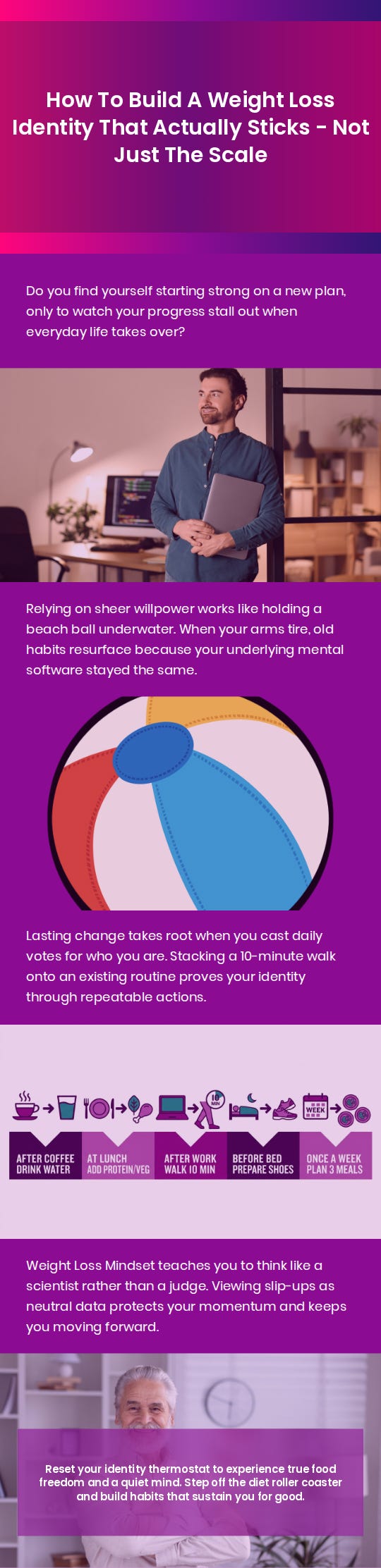
Habit stacking provides a practical shortcut: attach a brand-new behavior to something already happening automatically every day. The template is simple: “After I [current habit], I will [new habit].”
After pouring morning coffee, drink a full glass of water.
After brushing teeth at night, do two minutes of stretching.
After closing the laptop at the end of the workday, take a short walk.
After getting home from work, prep one protein or vegetable for tomorrow’s meal.
The existing routine acts as a built-in reminder, so the new behavior does not depend on remembering or feeling motivated. Over time, the two actions start to feel like a single habit rather than two separate decisions, which is exactly what makes the new identity easier to sustain.
Track the Actions, Beyond the Weight
Weigh-ins can still offer useful information, but they tell an incomplete story when they stand alone. Tracking the behaviors that reflect the chosen identity gives a fuller picture of what is actually happening day to day.
A few questions work well for a short evening check-in:
Did I move my body today, even briefly?
Did I eat in a way that supported my energy rather than drained it?
Did I notice stress or boredom before reaching for food?
Did I recover from an off-plan moment instead of giving up on the whole day?
A simple calendar mark or a three-line note at the end of the day is enough to capture this. The point is a running record that shows the identity being practiced, which matters far more during a plateau than a scale number does.
Choose a Sustainable Approach and Keep Your Autonomy
An eating and movement plan handed down by someone else rarely survives long term, especially if it feels forced rather than chosen. A plan that genuinely fits someone’s life, preferences, and schedule has a much better shot at lasting, because it feels like a personal choice rather than an obligation imposed from outside.
Support from friends, family, a group, or a coach can make the process easier without taking away that sense of ownership. The goal is to lean on people who encourage the behaviors that match the chosen identity, while the decisions themselves stay in the hands of the person doing the work. A plan built around genuine preference and real-life constraints tends to outlast one built around someone else’s rules.
Respond to Setbacks With Curiosity, Not Judgment
A missed workout or an evening of overeating does not erase weeks of consistent practice, even though it can feel that way in the moment. Treating the moment with curiosity, asking what led to it rather than what it says about someone’s character, tends to produce a much faster recovery than harsh self-criticism does.
This curiosity-first approach lines up with a broader idea worth repeating: setbacks are data, not verdicts. A skipped walk or a rough food day becomes information about what made that day hard, which can be used to adjust the plan going forward. Scaling a goal down into smaller steps after a setback, rather than abandoning it altogether, tends to preserve momentum far better than trying to bounce back with a dramatic reset.
A Simple Seven-Day Start
Building a new identity does not require a perfect plan on day one. A short, low-pressure starting structure can get the process moving:
Write one identity statement, such as “I am someone who takes care of my body.”
Choose a single action, between two and ten minutes long, that proves the statement true.
Attach that action to an existing daily routine using the “after I...I will...” format.
Mark a calendar each day the action happens, even briefly.
At the end of the week, review which days felt easier and what made the difference.
Seven days is not long enough to transform anyone’s life, but it is long enough to gather real evidence about which identity statement feels true and which small action actually fits into a real schedule.
Lasting Weight Loss Is an Identity, Not a Number
A number on a scale will always move up and down with water, hormones, and life’s ordinary chaos. An identity built from small, repeated, flexible actions tends to hold steady through all of that noise, because it describes a way of living rather than a single measurement. The habits that follow from a genuine identity shift often outlast any single diet attempt, simply because they were never dependent on a specific number to begin with.
As a practical next step, consider writing one identity-based habit down today and attaching it to a routine already in place, since that one small action is often what separates a plan that fades by February from one that quietly becomes part of everyday life.