

You expected weight loss to simplify your life, but 81% of people who lost weight say they lost friends along the way. What’s really driving the fade, and can your marriage survive the scale too?

Key Takeaways
A survey of more than 2,500 Britons who lost weight found that 81% lost friends during their weight loss process, with jealousy named as the top reason
Close relationships are often built around shared habits like meals, drinks, and family traditions, so changing those habits can leave others feeling left out or unsure how to reconnect
Partners can experience more energy and intimacy after weight loss, but jealousy, insecurity, or mismatched goals can strain a relationship too
A Swedish registry study on bariatric surgery (Bruze et al., 2018, published in JAMA Surgery) found links to both increased divorce and increased new relationships, showing just how much major change can shake up an existing relationship structure
Separating the habit change from the relationship itself and replacing old rituals with new ones can help protect bonds through the transition
Significant weight loss rarely stays confined to the body. It ripples outward into marriages, friendships, and family dinners, changing the shared habits that held those bonds together in the first place. That shift can feel confusing, especially for people who expected weight loss to simply make life easier, only to find it also makes certain relationships more complicated.
Survey: 81% of Britons Lost Friends
A survey of more than 2,500 Britons who lost weight found that 81% lost friends during their weight loss process, with jealousy named as the number one reason. That number is striking, but the stories behind it are rarely dramatic. Most people did not describe blowups or declared enemies. They described a slow fade: a friend who stopped texting as often, a standing lunch date that quietly disappeared, or a group chat that got quieter once the weight loss became obvious.
Jealousy topped the list of reasons, but the underlying pattern is simpler than it sounds. When one person’s life changes in a visible way, the people who built their connection to that person around the old version sometimes do not know how to show up for the new one. People starting this process often raise this exact concern before the scale even moves, which makes it worth addressing honestly from the outset.
Why Shared Habits Hold Relationships Together
Relationships are often built on repetition long before anyone notices it happening. The same coffee order, the same bar stool, the same Sunday dinner, over and over, until the habit itself becomes part of how two people know each other.
Meals, Drinks, and Rituals as Social Glue
Closest relationships often form around shared patterns: meals, drinks, restaurants, family traditions, and the unspoken “we always do this” that defines a friendship or a marriage. A weekly happy hour, a Sunday pasta night, or a drive-through run after work is rarely about the food or drink alone. It works as a ritual that says “we are connected,” and both people usually understand that without ever saying it out loud.
When New Habits Leave Others Behind
When weight loss changes those patterns, people can feel left out, insecure, or unsure how to connect with someone who no longer shows up the same way. A friend who used to split a pizza might feel quietly rejected when that invitation gets turned down, even if nothing personal was intended. The disruption usually has little to do with the food itself. It centers on the sense that a familiar connector just disappeared, and nobody replaced it with something new.
The Mixed Verdict on Partners
Marriages and long-term partnerships tend to show the widest range of outcomes after major weight loss. Some couples grow closer. Others struggle, and research on this topic reflects both outcomes rather than a single clean verdict.
More Energy and Intimacy
Many partners report more energy, more intimacy, and more shared activities once weight loss takes hold. Someone who once avoided hikes, vacations, or even simple walks around the block may suddenly want to say yes to all of it, and a partner willing to join in often finds the relationship gaining fresh momentum. Confidence tends to be contagious in a household, and couples who lean into new activities together often describe feeling closer rather than farther apart.
Jealousy, Insecurity, and Changed Dynamics
The flip side is just as real. Research on couples has found that when one partner loses weight, the relationship can suffer, with the non-dieting partner reporting jealousy and insecurity. A partner’s noticeably changed appearance can stir up hidden insecurities in the other person, sometimes leading to accusations of seeking attention or quiet resentment that has little to do with the relationship’s actual health.
Weight has also been documented as a tool of control in some relationships, and a shift in one partner’s weight can upend that balance entirely, for better or worse. When goals do not align between partners, the one actively changing habits can end up frustrated, feeling like their significant other is not on board with a shared future.
Bariatric Surgery’s Link to Divorce and Marriage
The most dramatic data on this subject comes from bariatric surgery research. A Swedish registry study by Bruze et al. (2018), published in JAMA Surgery, found that weight loss surgery was associated with an increased incidence of both divorce and separation, alongside an increased incidence of new marriages and relationships. Major physical transformation appears to act almost like an accelerant: relationships that were already strong often grew stronger, while relationships already under strain sometimes did not survive the shift.
Friends, Family, and Identity Gaps
Partners are not the only ones recalibrating. Friend groups and family units often go through their own quiet renegotiation once someone’s habits visibly change.
Jealousy as the Top Reason Friendships Fade
As the earlier survey showed, jealousy sits at the top of the list when friendships fade after weight loss. A friend may feel insecure about their own body image or their own stalled attempts at weight loss once someone close to them succeeds. Friends can also feel threatened if they previously held a role, like “the fun one” or “the outgoing one,” that now feels less secure once the other person starts showing more confidence of their own.
Family Pressure to Eat ‘Normally’
Family gatherings carry their own pressure. Relatives might comment on a changed body, push second helpings at holiday dinners, or treat a declined dessert as a personal insult rather than a simple choice. Family traditions are often built entirely around food, so new eating habits can feel, to relatives, like a rejection of the tradition itself rather than a personal health decision made for personal reasons.
Feeling Like Two Different People
There is also an internal version of this shift worth naming. Major weight loss can create what feels like an identity gap, where the person someone used to be and the person they are now feel like two different versions of the same self. This is mostly an internal adjustment period, but it often shows up socially too, since a person who feels unsettled about their own identity may struggle to explain the change to people who knew the old version well.
Protecting Relationships Through the Transition
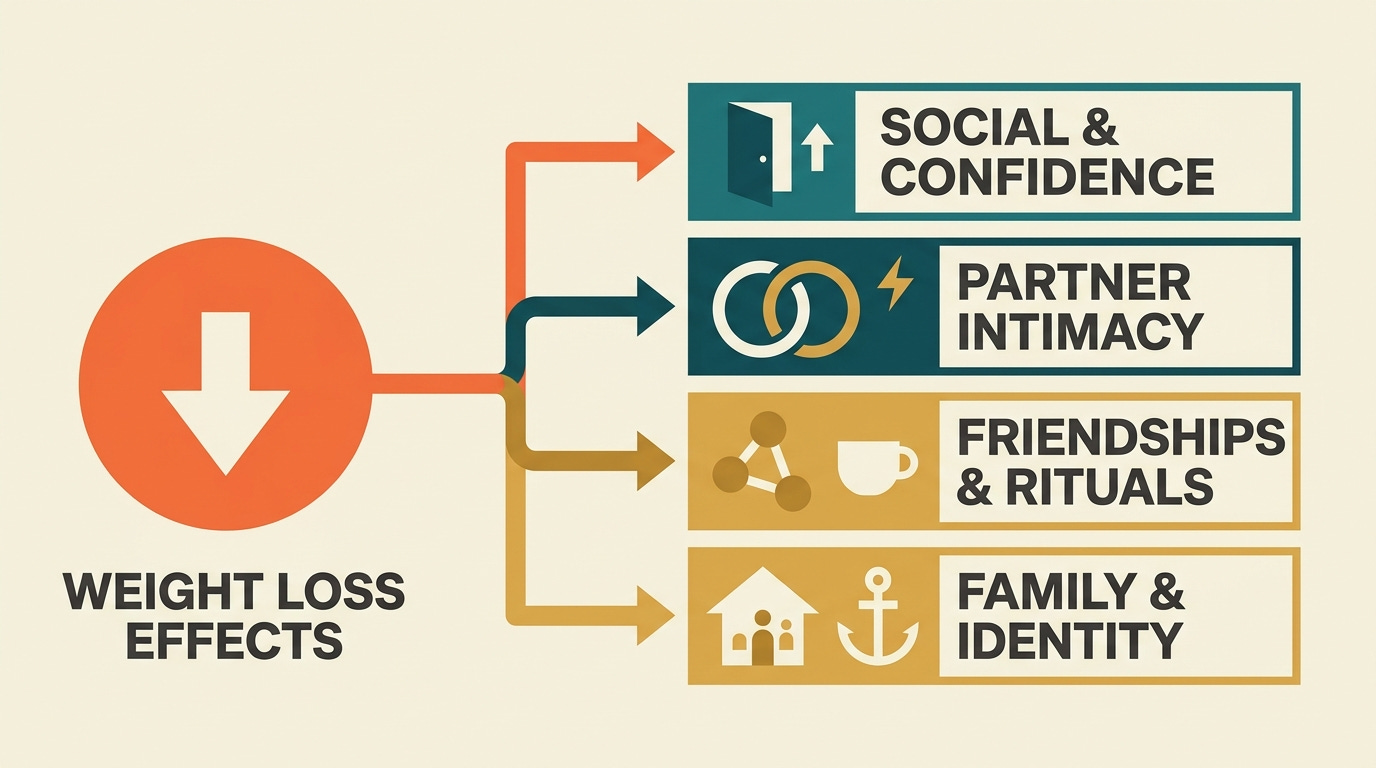
None of this means relationships are doomed to fracture during weight loss. Most of the friction described above responds well to a few deliberate choices made early, before misunderstandings have time to settle in.
Separate the Habit Change From the Relationship
A simple, direct message can prevent a lot of unnecessary hurt: habits are changing, but the relationship and the care behind it are not. Partners, friends, and family members are far less likely to feel rejected when they hear plainly that a new eating pattern comes from a personal health decision rather than a judgment of anyone else’s choices.
Replace Rituals Instead of Just Dropping Them
If Friday night drinks or a weekly fast-food run served as the glue holding a friendship together, simply removing it leaves a gap that someone has to fill. Swapping it for a Friday walk, a cooking night, or a new shared activity keeps the connection alive while letting the habit itself evolve. The goal centers on giving the ritual a new shape rather than abandoning the connection altogether.
Invite Support Without Demanding It
Offering a partner or friend the chance to join a walk, a meal, or a new activity tends to work far better than expecting them to adopt the same plan. Turning weight loss into a test of someone else’s loyalty or commitment almost always backfires, creating resentment on both sides instead of the support that was intended. An invitation leaves room for someone to say yes in their own time, which protects the relationship even if they are not ready to change their own habits yet.
Relationships Evolve, They Don’t Have to Break
Weight loss changes a person’s energy, confidence, and daily routines, and those changes inevitably reach the people closest to them. Some relationships grow stronger through that shift, gaining new shared activities and renewed intimacy.
Others need a deliberate reset: new rituals, clearer communication, and patience while everyone involved adjusts to a version of the relationship that looks a little different than before. Viewed through an identity lens, the real work centers on updating who a person believes they are, since habits and the relationships built around them tend to follow that shift rather than lead it.
For anyone managing these changes alongside a partner, friend, or family member, an identity-based approach to weight loss from Weight Loss Mindset can offer a steadier way through the social side of transformation, beyond the physical one.