

You’re not weak-willed at 11pm - your cortisol, dopamine, and a sleepy logical brain are conspiring against you. Learn why willpower fails here and what actually breaks the late-night craving cycle.
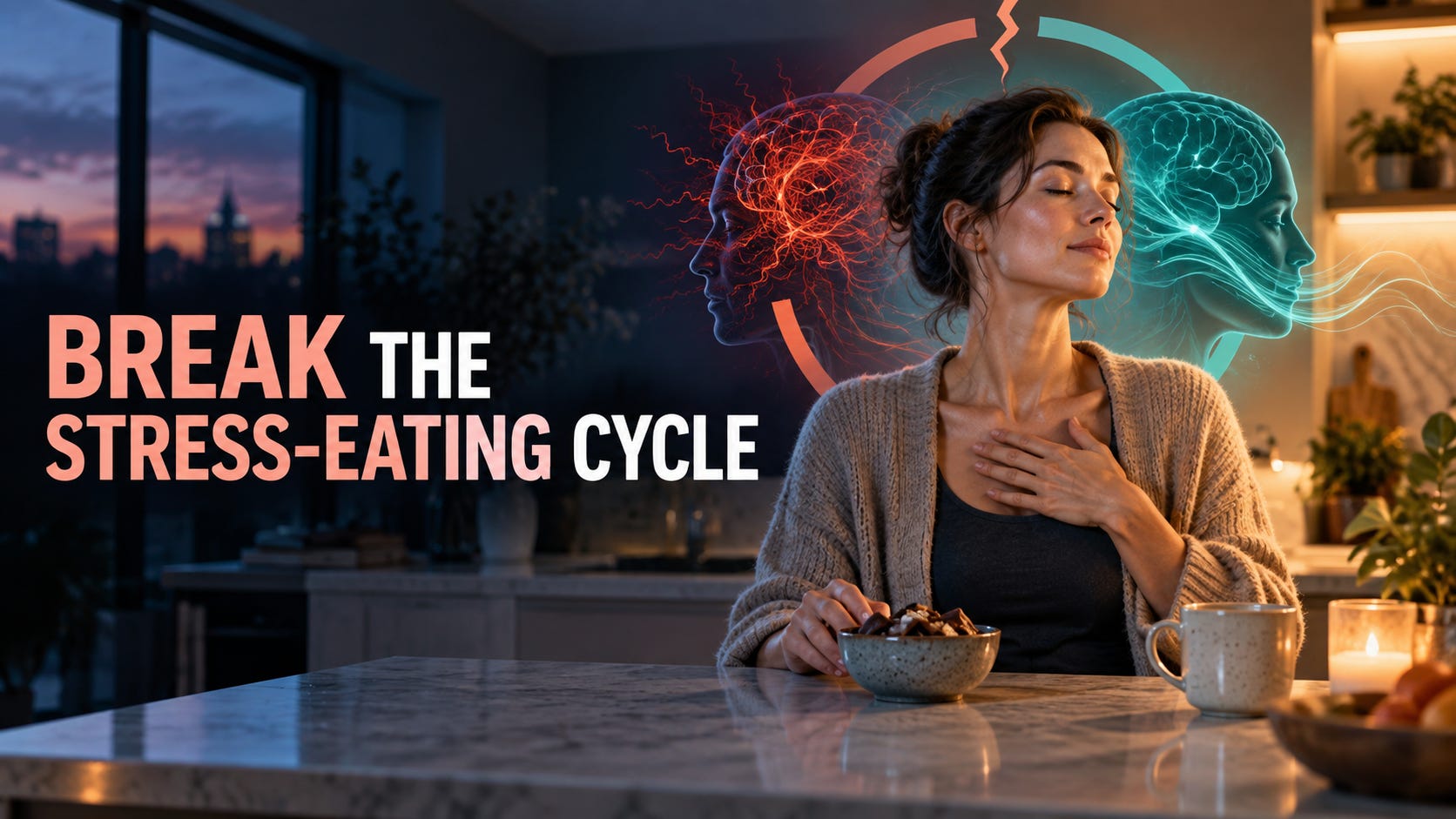
Key Takeaways
Late-night cravings are usually driven by cortisol and stress rather than true physical hunger, which is why they hit suddenly and demand specific foods
The brain’s self-control center grows quieter in the evening while its reward system grows louder, making cravings harder to resist after dark
Restrictive eating during the day can trigger a rebound effect at night, sometimes called the slingshot pattern, that sets up the exact eating it was meant to prevent
A simple nightly log of food, timing, and mood can reveal the real pattern behind an 11pm kitchen visit, and the article walks through exactly how
Cravings work better as data to study than as character flaws to judge
Standing in front of an open fridge at 11pm, spoon already in hand, feels like a personal failing to a lot of people. It usually is not. Decades of research on stress, hormones, and brain chemistry point to something else entirely: a biological and psychological chain reaction that has very little to do with hunger and a lot to do with the day that came before it.
Why 11pm Cravings Aren’t Real Hunger
True physical hunger builds slowly and can be satisfied by almost any food. Late-night cravings behave differently. They arrive suddenly, demand a specific food (usually something salty, sweet, or creamy), and rarely respond to a glass of water or a piece of fruit. That mismatch is the first clue that something other than an empty stomach is driving the moment.
These cravings often function as a signal rather than a demand. A brain under emotional strain reaches for comfort, relief, or a sense of control, and food happens to be the fastest way to get all three at once. Understanding that distinction is the starting point for breaking the cycle, and it’s a topic Weight Loss Mindset has spent years helping people work through as they try to make sense of patterns that have followed them through diet after diet.
How Cortisol Hijacks Your Appetite
Stress does not just live in the mind. It shows up in the bloodstream as cortisol, and cortisol has a direct line to appetite. When cortisol rises, it increases hunger signals and steers cravings specifically toward energy-dense, high-fat, high-sugar foods rather than a balanced plate. This is a hormone doing exactly what it evolved to do, not a character flaw showing up at night.
The Brain Chemistry Behind Comfort Food
A mentally draining day floods the body with cortisol, and the brain responds by looking for quick energy and comfort. Stress hormones also make the brain’s reward pathways more sensitive, so sugary and fatty foods feel more satisfying than they would on a calmer day. Dopamine, the chemical tied to reward and repetition, reinforces the behavior each time it happens, which is part of why the same craving tends to resurface at the same time, in the same kitchen, night after night.
Chronic stress compounds the effect. A single stressful moment might briefly suppress appetite, but ongoing stress keeps the system stimulated, pushing a person toward energy-dense food on a near-constant loop. Over time, that same cortisol response also encourages the body to store fat, particularly around the midsection, adding a physical consequence to what started as a mental one.
Why Willpower Fails Against Biology
Trying to out-discipline this process rarely works, and there’s a reason for that. Willpower behaves like holding a beach ball underwater: it takes constant effort, and the moment attention wavers, the ball shoots to the surface. Stress hormones override the brain’s usual “off switch” for unhealthy food, so gritting through a craving with sheer determination means fighting biology instead of working with it. The more useful move is understanding what triggered the surge in the first place, rather than treating the craving itself as the enemy.
Nighttime: The Brain’s Weak Spot
Evening hours create a kind of perfect storm. The parts of the brain responsible for planning and self-control grow quieter just as reward-seeking circuits grow louder, and hormone levels shift in ways that make cravings harder to ignore.
Prefrontal Cortex Shuts Down After Dark
The prefrontal cortex handles decision-making, impulse control, and weighing long-term consequences against short-term desires. As the day wears on, this region becomes less active, while the brain’s reward system takes on a more dominant role. That shift helps explain why a food choice that seems easy to resist at 2pm can feel almost impossible to turn down at 11pm. The evening hours also tend to bring emotional vulnerability to the surface, whether it’s leftover stress from work, loneliness, or tension that never got resolved during the day, and eating becomes a fast, familiar way to manage all of it.
Ghrelin, Leptin, and Sleep Debt
Two hormones play a starring role in nighttime appetite: ghrelin, which signals hunger, and leptin, which signals fullness. In the evening, ghrelin levels can rise while leptin drops, tilting the body toward wanting more food right when self-control is already running low. Sleep debt makes the problem worse. Even mild sleep disruption has been linked to stronger cravings for high-energy, carbohydrate-rich foods, so a rough night’s sleep can quietly set up the next day’s cravings before it even begins.
Restriction Sets Up the Crash
Many people walk straight into their own late-night crash without realizing it. Skipping meals, cutting carbs entirely, or white-knuckling through a restrictive eating plan all day can feel like progress in the moment, but the body keeps score.
The Slingshot Effect of Food Rules
Restriction creates tension instead of balance, and tension always snaps back. Rigid food rules during the day prime the body biologically for a rebound later, so by the time evening arrives, hunger hormones spike, blood sugar dips, and the stage is set for exactly the kind of eating the rules were meant to prevent. This pattern deserves a different name than failure. It behaves more like physics: pull something back hard enough, and it snaps forward with equal force.
Interrupting the Craving Loop
Breaking this cycle does not require more discipline. It requires a few specific tools used at the right moment, before the craving turns into an automatic reach for the pantry door.
Naming the Story Behind the Craving
Every craving carries a story, even if it’s never spoken out loud. It might sound like “I deserve this after today” or “I can’t handle feeling this way without something to eat.” Naming that story out loud, even quietly, creates a small gap between the urge and the action. That gap is where choice lives. Once the story is visible, it becomes something to examine rather than something to obey.
Circuit Breaker Tools for Real-Time Control
The urge to eat behaves a lot like electricity moving through a circuit: automatic, fast, and hard to notice until it’s already in motion. A circuit breaker cuts that power before it reaches the outlet. In practice, this might look like:
Stepping outside for two minutes before opening the fridge
Naming the emotion underneath the urge, out loud or on paper
Picturing the craving as a wave rising and falling rather than something to fight head-on
That last image reflects a simple truth: a craving is not identity. It rises, peaks, and passes on its own, much like a wave moving through open water, whether or not it gets fed.
Tracking Patterns Without Judgment
A short nightly log, noting what was eaten, when, and what was happening emotionally at the time, can reveal patterns that feel invisible in the moment. This works best without scorekeeping or self-criticism attached to it. The goal is collecting information, not building a case for guilt. Over a week or two, most people start to see a clear thread connecting certain days, moods, or stressors to the exact moment the cravings hit.
Cravings Are Data, Not Character Flaws
A craving at 11pm says something about the day that led up to it, not about a person’s discipline or willpower. Treating each one as a piece of data rather than a verdict changes the entire relationship with the moment. The question shifts from “What’s wrong with me?” to “What happened today that made this feel necessary?” That second question actually leads somewhere useful.
The goal is not perfect control over every craving that shows up after dark. It’s building the kind of self-understanding that makes those cravings less frequent and less powerful over time, one noticed pattern at a time. For anyone ready to dig deeper into the stress-and-cravings connection, understanding the mindset behind late-night eating is a solid place to start.