

You’re not weak-willed at 11pm - your cortisol, dopamine, and a sleepy logical brain are conspiring against you. Learn why willpower fails here and what actually breaks the late-night craving cycle.
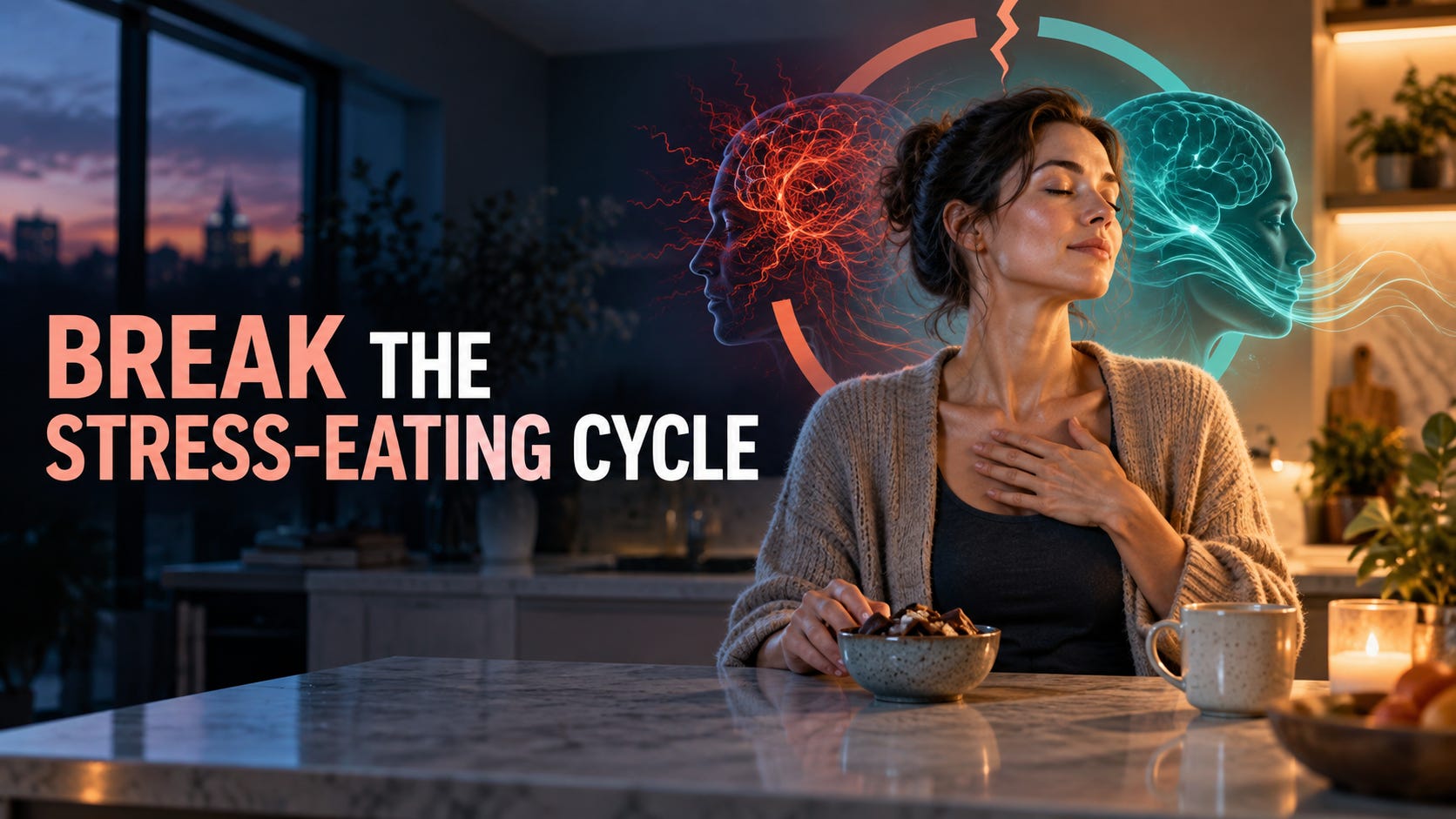
Key Takeaways
Late-night cravings are usually driven by cortisol and stress rather than true physical hunger, which is why they hit suddenly and demand specific foods
The brain’s self-control center grows quieter in the evening while its reward system grows louder, making cravings harder to resist after dark
Restrictive eating during the day can trigger a rebound effect at night, sometimes called the slingshot pattern, that sets up the exact eating it was meant to prevent
A simple nightly log of food, timing, and mood can reveal the real pattern behind an 11pm kitchen visit, and the article walks through exactly how
Cravings work better as data to study than as character flaws to judge
Standing in front of an open fridge at 11pm, spoon already in hand, feels like a personal failing to a lot of people. It usually is not. Decades of research on stress, hormones, and brain chemistry point to something else entirely: a biological and psychological chain reaction that has very little to do with hunger and a lot to do with the day that came before it.
