

Over 40, your body quietly rewrites the rules on fat loss, and the usual eat-less-move-more math stops working. So which wins, dumbbells or the treadmill? The real answer involves a mental shift most gym-goers never consider.
Key Takeaways
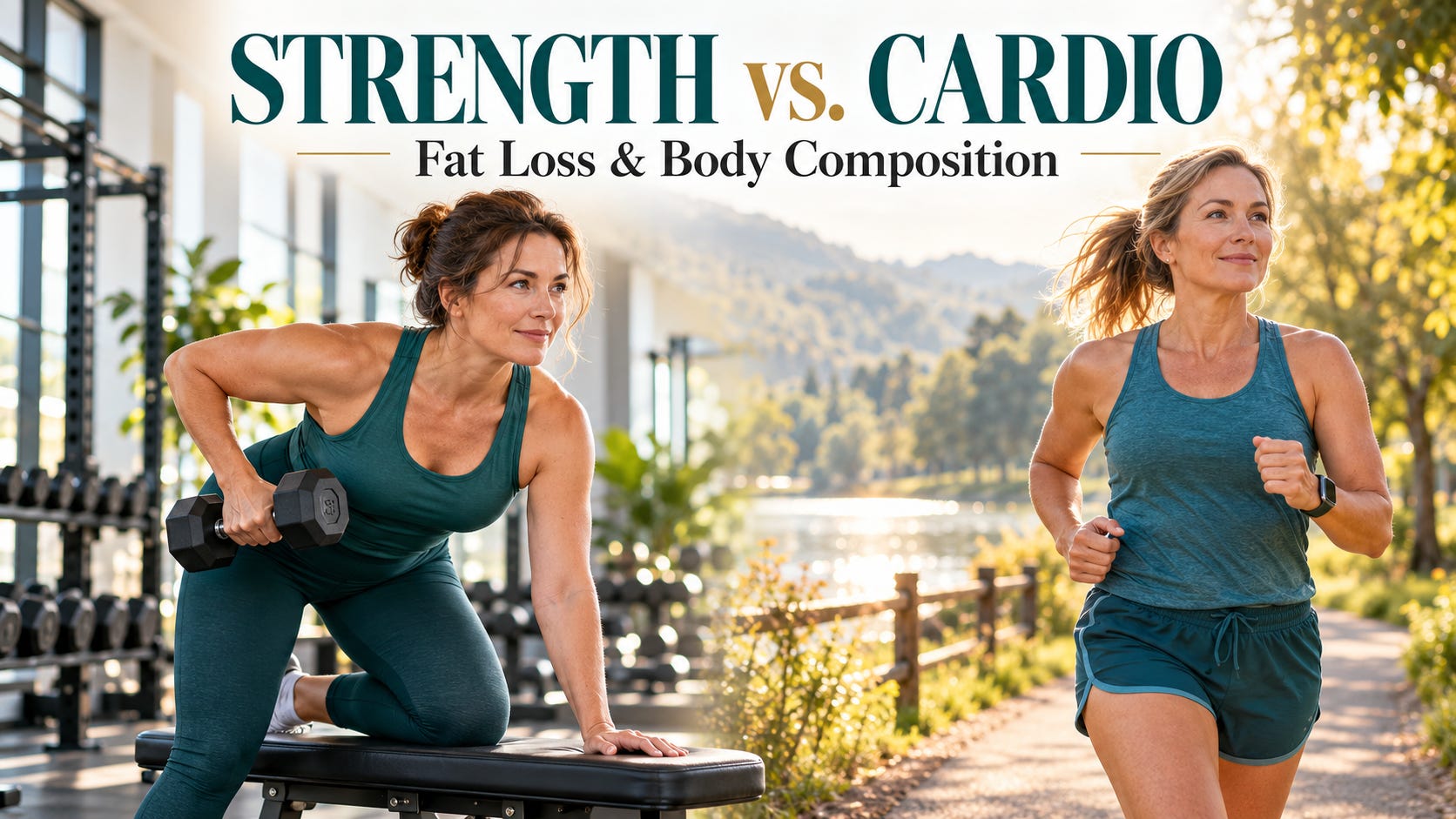
After 40, hormonal shifts make fat loss harder, which is why strength training often deserves top priority over cardio-only routines for changing body composition
Strength training preserves muscle and supports resting metabolism in ways cardio alone cannot match
Restriction-based dieting can trigger a slingshot effect where deprivation leads to compulsive eating and a cycle of guilt and shame
Lasting change in body composition tends to follow a shift in identity and daily self-image, not a new workout split
Weight Loss Mindset frames slip-ups as data to learn from rather than moral failures, a mindset that supports long-term consistency
The gym debate never seems to end: should someone over 40 grab the dumbbells or hit the treadmill? The honest answer involves both tools, along with something the fitness industry rarely talks about - the identity someone carries into the gym each day.
Strength and cardio matter, and so does the mental software running underneath every workout decision, every food choice, and every moment of doubt. Weight Loss Mindset focuses on that underlying mental layer, treating lasting change as something that starts in the mind before it ever shows up on a scale.
Why Fat Loss Changes After Age 40
Bodies over 40 do not respond to exercise and food the same way they did at 25. Fat seems to arrive faster and leave slower, and the usual tricks that worked in younger years stop producing results. Understanding what changed biologically helps explain why a new strategy, rather than more effort on the old one, tends to work better.
Hormonal Shifts That Alter Fat Storage
Declining estrogen, progesterone, and testosterone levels reshape how the body manages fat and muscle. These shifts are linked to increased insulin resistance and a tendency to store more fat around the abdomen, while muscle mass naturally declines at the same time. Chronic stress compounds the problem by elevating cortisol, a hormone tied to fat storage, especially around the belly. None of this reflects a lack of effort; it reflects biology quietly changing the rules without sending a memo.
Why Calories In, Calories Out Falls Short
The old formula, eat less, move more, assumes a stable metabolism and consistent hormones, neither of which holds steady after 40. Slower metabolism paired with hormonal shifts means the same calorie deficit that worked in the past can stall out or even backfire. Many people find themselves eating less than ever and still not seeing the scale move, which fuels frustration and self-blame. The math was never wrong on paper; the body simply stopped following the old script.
Strength Training’s Edge Over Cardio
When comparing the two, strength training tends to offer a sturdier foundation for people over 40 working on body composition rather than just the number on the scale.
Preserving Muscle and Resting Metabolism
Lifting weights signals the body to build and preserve lean muscle, and muscle tissue burns more calories at rest than fat tissue does. This matters enormously after 40, since muscle loss accelerates with age and quietly lowers resting metabolic rate year after year. Building muscle through resistance training counteracts that decline directly, giving the body a higher metabolic baseline even on rest days. Body composition, rather than just scale weight, becomes the more honest measure of progress here, since someone can look leaner and stronger while the scale barely shifts.
What Cardio Alone Cannot Fix
Cardio burns calories efficiently and plays an important role in heart health, but weight lost through cardio alone often includes both fat and muscle. Losing muscle lowers resting metabolic rate, which can make it easier to regain fat later, creating a frustrating cycle of loss and rebound. Heavy reliance on cardio without any resistance work can also wear down joints over time, a real concern for anyone over 40 managing aging knees, hips, or lower backs. Cardio supports endurance and cardiovascular health well; it simply cannot build the muscle that strength training builds.
Why Combining Both Still Works Best
Pitting strength training against cardio misses the bigger picture. Research on postmenopausal women found that aerobic exercise had the most significant effect on body fat percentage, while resistance training had the greatest effect on waist circumference and fasting glucose. Resistance and combined training produced significantly greater effects on muscle mass outcomes, while aerobic training alone had no significant effect on lean mass or muscle cross-sectional area.
The American Heart Association recommends at least 150 minutes of moderate-intensity aerobic exercise per week for cardiovascular health, a benefit strength training does not directly replace. Pairing that cardio base with two or three strength sessions each week gives the body what it needs on both fronts: a strong heart and a metabolism supported by muscle. Choosing one over the other trades away a real benefit; combining them covers more ground with less risk.
The Hidden Cost of Restriction
Exercise only tells half the story, because what happens at the table matters just as much as what happens at the gym. Many people over 40 have tried cutting calories hard, skipping meals, or following rigid food rules, and the body does not respond to that kind of pressure quietly.
The Slingshot Effect Explained
Restriction does not create balance; it creates tension, and tension always looks for a way to release. Dropping food intake too low can push the body to ramp up hunger signals and shift brain chemistry toward seeking out food, which often leads to overeating that undoes the original deficit. People sometimes call this the slingshot effect, and it helps explain why so many diets end with a binge instead of a steady plateau. A harder pullback tends to produce a harder rebound, and that rebound has nothing to do with weak character.
Guilt, Shame, and the Binge-Restrict Cycle
After a strict stretch of dieting breaks down, guilt and shame usually follow close behind, since the person often believes they failed some personal test of discipline. That emotional weight can spiral into anxiety and an unhealthy fixation on body image, slowly eroding trust in one’s own judgment around food.
Each cycle of restriction and rebound chips away at confidence, leaving many convinced the problem lies in their character rather than their strategy. Breaking that cycle starts with recognizing that the body was reacting to deprivation exactly as it was designed to, not malfunctioning.
Resetting the Identity Thermostat
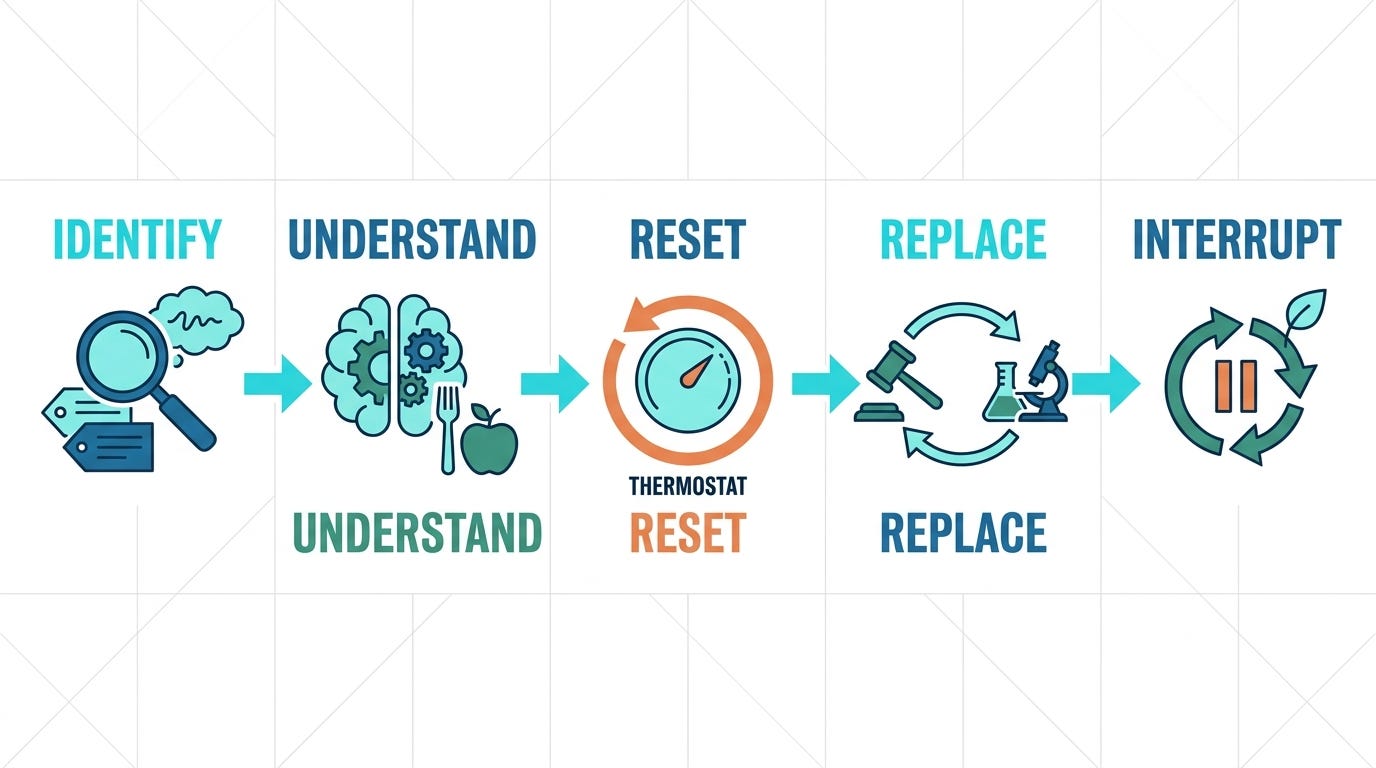
If restriction keeps backfiring and willpower keeps running dry, a different lever needs pulling. This approach treats identity as that lever: habits, cravings, and food choices run on autopilot according to who a person believes they are, and shifting that belief tends to change behavior from the inside out rather than forcing it from the outside in.
Why Willpower Always Runs Out
Holding a beach ball underwater provides a fitting picture of willpower - the arms eventually tire, and the ball shoots back up with force. Overriding hunger and cravings through sheer willpower sets up a losing fight against biology, which helps explain why lost weight so often returns within a few years. The fix involves stepping out of that fight altogether and addressing the patterns driving the behavior, rather than gripping harder or wanting it more.
Becoming the Scientist, Not the Judge
Picture two different reactions to the same slip-up: a judge delivers a harsh verdict, while a scientist collects data and asks what it reveals. The guiding principle “Scientists, not Judges” treats every slip as useful information rather than proof of failure, taking the shame spiral that so often follows a restrictive diet out of the equation.
Curiosity, instead of judgment, brings the pattern behind a late-night snack or a stress-triggered binge into view rather than leaving someone just feeling bad about it. A visible pattern is a pattern that can finally change.
Identity Change Precedes Lasting Fat Loss
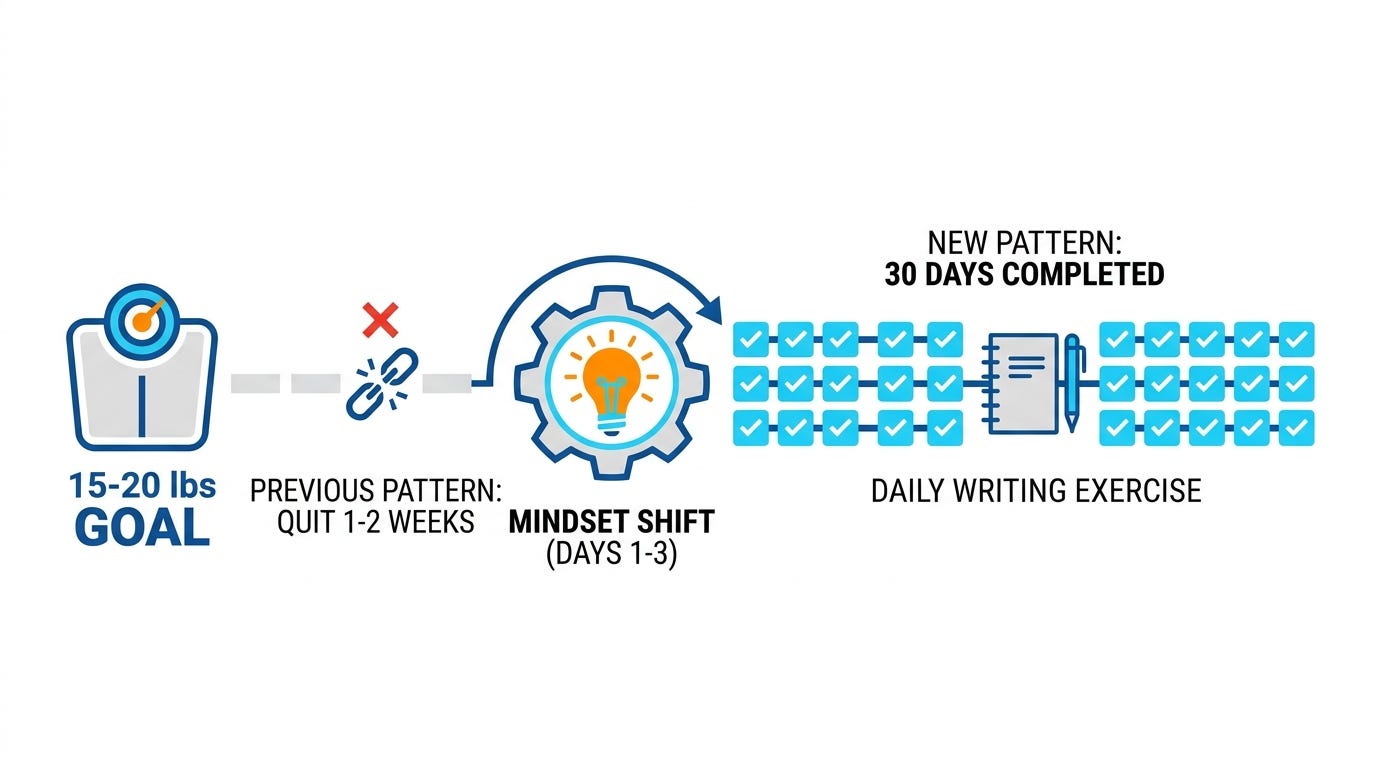
Strength training builds the muscle. Cardio supports the heart. Neither one holds much power if the identity underneath stays stuck in old patterns of restriction, shame, and quitting after a week or two. Lasting body composition change tends to follow a shift in self-image first, where someone starts acting like a person who shows up consistently instead of fighting a losing battle against cravings.
That shift calls for a different internal operating system guiding daily choices, more than it calls for extra discipline. For a practical starting point, consider identity-based weight loss strategies that pair strength-focused habits with a calmer, more consistent relationship with food.
The point about strength training preserving resting metabolism after 40 is the decisive argument, and it rarely gets stated plainly. Cardio burns calories during the session, but dieting plus cardio alone shrinks muscle along with fat, which quietly lowers what you burn all day. Lifting protects the metabolic machinery itself. The slingshot effect description is accurate too. The people who keep the weight off are not the ones with the most willpower, they are the ones who built a repeatable routine they can live with.