

If you’ve tried shakes and whole-food meal prep but still end up back where you started, the real culprit might not be what you think. One simple factor predicts success more than the food format ever could.
Key Takeaways
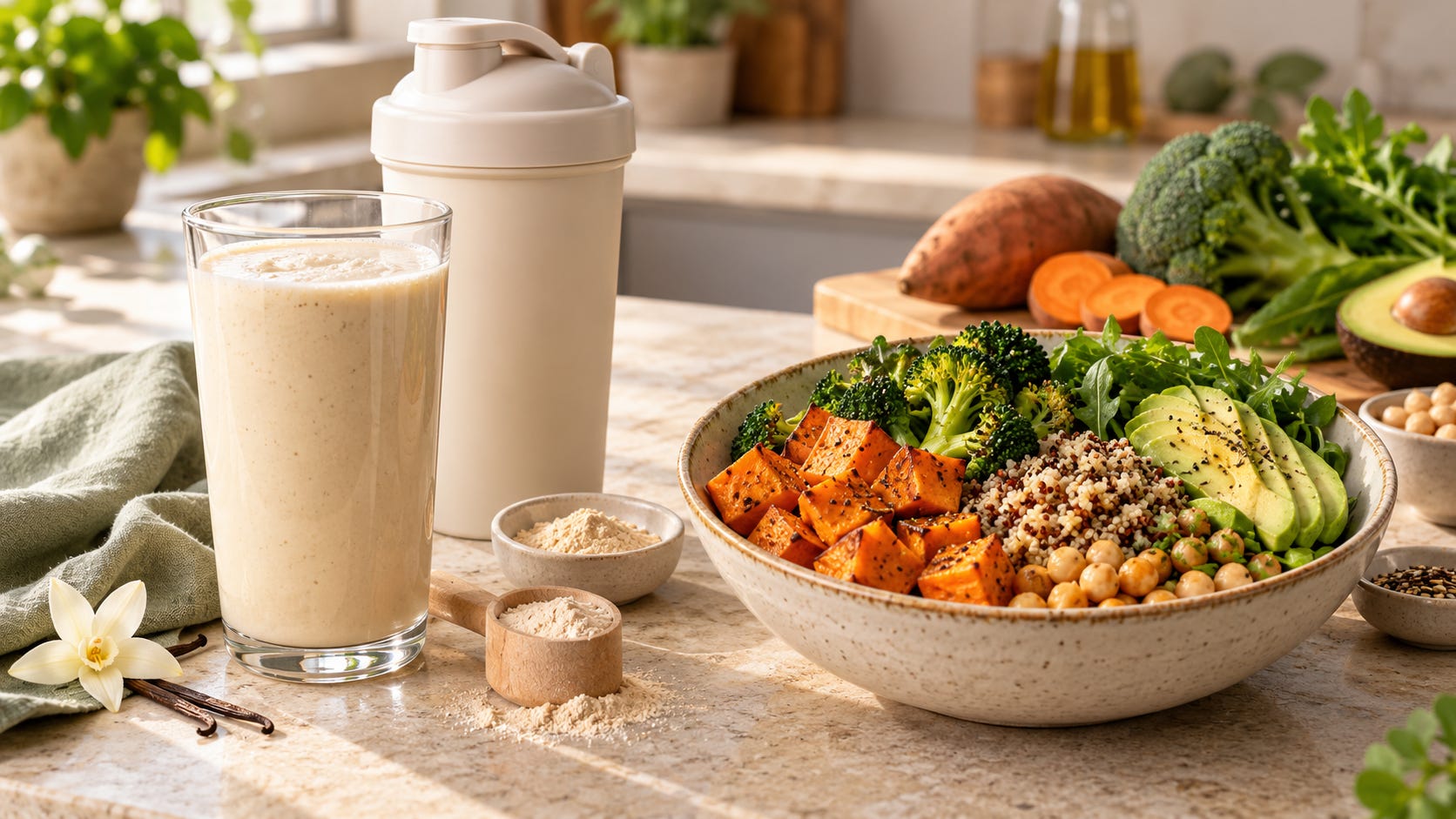
The real question isn’t shake versus whole food; it’s which option helps a person hold a calorie deficit long enough to see results.
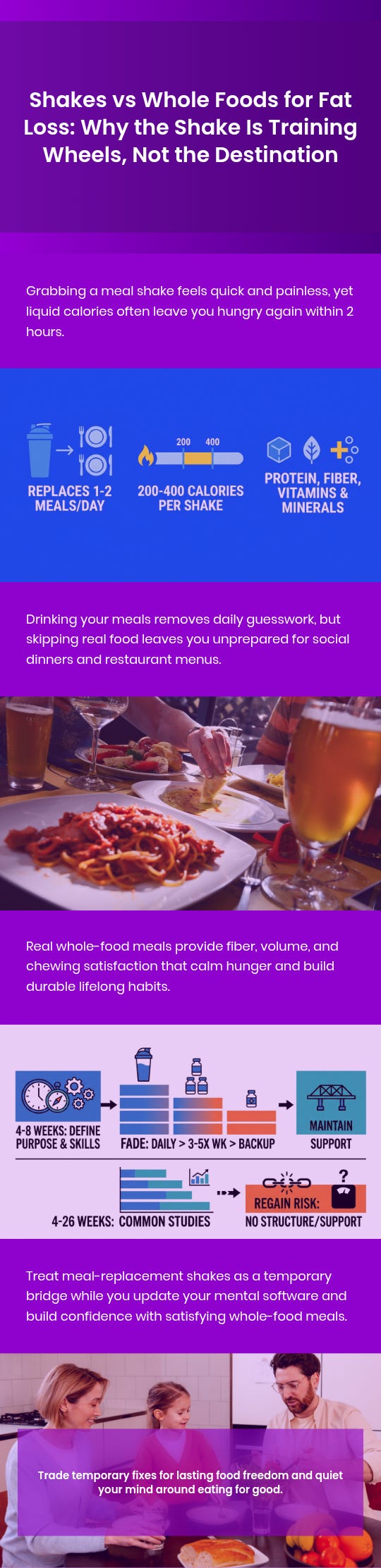
A meal-replacement shake needs real calories, protein, fiber, and vitamins and minerals to function as an actual meal, rather than merely a thin protein drink.
Whole foods tend to build skills for restaurants, social meals, and hunger management that a shake-only routine can quietly skip.
Persistent hunger, evening overeating, or anxiety about missing a shake are signs a routine needs adjusting, not a sign of personal failure.
Weight Loss Mindset frames these choices as identity work, where setbacks become information instead of proof that something is wrong with the person.
After decades of yo-yo dieting, a lot of people over 40 have tried both: the shake-stocked fridge and the meal-prepped whole-food plan. Both have worked for a while. Both have also stopped working at some point, which usually leads to the same tired question: are shakes actually worse, or better, than real food for losing fat?
Deficit and Adherence Decide, Not the Food Type
The honest answer is less exciting than most marketing suggests. Fat loss happens when a person takes in fewer calories than the body burns over time, and the format of those calories matters far less than whether the person can stick with the plan. A shake and a chicken salad can deliver the same calorie deficit on paper. The difference shows up in which one someone will actually keep choosing on a Tuesday night after a long shift, a stressful phone call, or a family dinner that wasn’t part of the original plan.
Weight Loss Mindset treats the tool as secondary to the identity behind the choice. Someone who sees themselves as a person who always quits by week two will struggle with a shake plan or a whole-food plan equally; the format was never the real obstacle. That reframing matters for anyone who has blamed a lack of discipline for a diet that simply wasn’t built around how they actually live.
Picking between formats starts with an honest look at daily life rather than which plan sounds more virtuous. A packed morning commute, a desk job with no kitchen nearby, or a history of overthinking every meal choice all point toward different answers. The sections below break down what each format does well, where it tends to fall short, and how to use shakes without losing the skills whole foods naturally build.
What Shakes Do Well
Shakes earn their popularity honestly. For someone juggling a demanding schedule, a premeasured shake removes a dozen small decisions that can otherwise derail a day.
Portion Control and Fewer Decisions
A shake arrives with its calories already counted, which takes the guesswork out of one meal entirely. A premeasured shake can reduce the need to estimate portions and simplify a meal choice when work or other demands make selecting a suitable meal difficult. That structure helps people who tend to either skip meals under pressure or grab whatever is fastest, since the shake becomes the fast option that also fits the calorie target.
Fewer decisions during the day can also mean less mental fatigue by evening, which is often when old habits resurface. A person who doesn’t have to think about breakfast or lunch has more mental bandwidth left for dinner, where whole-food choices and social eating usually happen anyway.
What a Real Meal-Replacement Needs Nutritionally
Not every shake on a store shelf is built to replace a meal. A shake meant to stand in for breakfast or lunch needs enough calories, protein, fiber, and vitamins and minerals to actually function as a meal, rather than working like a thin protein drink that leaves someone hungry an hour later.
A few practical checkpoints help separate a real meal-replacement from a snack in a cup:
Calories that reflect an actual meal, not a token amount
Enough protein to support fullness and muscle maintenance
Fiber, since liquid meals often lack the bulk that fiber provides
Added vitamins and minerals to help cover nutritional gaps
Checking the nutrition label for whole-food ingredients, vitamin and mineral content, and added sugar matters more than relying on the marketing claims printed on the front of the package. A shake that skips these basics may fill a cup, but it won’t necessarily fill the role of a meal.
Where Whole Foods Win Out
Whole foods carry advantages that no shake fully replicates, and these advantages tend to matter most over the long run rather than in week one.
Satiety, Variety, and Chewing
Liquid calories often feel less filling than the same calories eaten as solid food, largely because drinking takes far less time than chewing. Adding a crunchy food, such as fruit, to a shake can help make that meal more satisfying. Whole-food meals naturally include that chewing time, along with the volume and fiber that help signal fullness to the brain.
Variety matters too. A rotation of vegetables, fruits, whole grains, and lean proteins delivers a wider range of nutrients than most shakes can match, and it keeps meals from feeling monotonous. Monotony is a quiet but common reason people abandon a shake-heavy routine after a few weeks, even when the calorie math was working.
Skills Shakes Don’t Teach
A shake solves one meal, but handling the meals it isn’t replacing takes a different kind of practice. Planning a grocery list, building a balanced plate, ordering wisely at a restaurant, or managing hunger during a busy afternoon are skills that only get built when a person is actually choosing and preparing whole foods.
This gap shows up most clearly during the transition away from shakes. A shake plan may reduce decisions and make portions predictable, but those conveniences don’t automatically teach a person how to choose and prepare ordinary meals once the shakes stop. Returning to solid food without a plan for food choices can quietly undo months of progress, not because the person lacks willpower, but because the skill was never built in the first place.
Signs a Shake Routine Isn’t Working
A shake routine that looked promising on day one can start working against someone without obvious warning. A few patterns are worth watching for:
Persistent hunger soon after a shake, or constant snacking afterward
Evening overeating that seems to cancel out the calories saved earlier in the day
Fatigue, dizziness, or just feeling run-down more often than usual
Digestive issues like bloating or irregularity that weren’t a problem before
Rigid thinking around food, such as treating a missed shake as a ruined day
Anxiety or stress when a shake isn’t available, rather than simple inconvenience
Any one of these on its own might be a minor hiccup. Several showing up together usually means the shake is either too small to function as a real meal, or it has become the entire strategy instead of one tool among several. Neither outcome means the person failed; it means the plan needs an adjustment.
Using Shakes as a Bridge, Not a Destination
The most sustainable way to use shakes treats them as a temporary bridge rather than a permanent meal plan. That framing changes how a shake gets used from day one.
Attaching a Skill to Every Shake
Pairing each shake with a small skill-building habit keeps progress moving even while the shake is doing the heavy lifting. A protein target, a simple plate template for the next whole-food meal, a grocery list, or a short script for ordering at a restaurant all count as skills worth practicing alongside the shake, not instead of it.
This matters because the goal was always the calorie deficit and the habits that keep it going once the product runs out or the schedule changes.
Fading Back Toward Whole-Food Meals
A shake that starts as a daily habit can be deliberately scaled back over time, moving from every day to a few times a week, and eventually into an occasional backup for unusually busy days. This gradual fade gives someone a chance to rebuild whole-food habits in small steps instead of facing an abrupt switch that feels overwhelming.
Keeping some form of support during that fade also helps. Weekly check-ins, a journal tracker, or simple accountability with another person can catch the early signs of rebound hunger or frustration before they turn into a reason to quit the whole plan.
Adherence Beats the Format Every Time
Neither shakes nor whole foods win this debate outright, because the format was never the deciding factor. The deciding factor is whether a person can sustain a calorie deficit long enough to see results, and whether the eating pattern they build along the way still works once the initial plan ends.
For people who have cycled through diet after diet, this reframe can feel like relief rather than another rule to follow. A shake used wisely for a few chaotic months isn’t a shortcut or a failure; it’s one tool among several, chosen because it fit a real-life problem at a real-life moment, with whole foods remaining the foundation to return to as skills and confidence grow.
For anyone ready to build that foundation without another rigid meal plan, an identity-based approach to fat loss can offer a useful next step.
Adherence decides it every time. I tell clients a shake is fine for one meal a day, but if they're hungry by 3pm, swapping it for 6oz chicken, rice, and veggies at the same calories usually fixes the snacking.