

That morning number on the scale can swing five pounds just from sodium and hydration, yet most dieters over 40 still treat it as the ultimate verdict. What should you track instead to actually see progress? The answer might surprise you.

Key Takeaways
Sustainable weight loss depends more on realistic goals and non-scale victories than on a single number on the scale
Daily weight fluctuations of two to five pounds come from hydration, sodium, digestion, and hormones rather than actual fat loss
Non-scale victories like better energy, sleep, mood, and looser clothing often show up before the scale reflects any change
Waist measurements and progress photos taken every two to four weeks can reveal change the scale misses entirely
An identity-based mindset shift, treating slip-ups as data rather than failure, helps explain why restrictive diets keep backfiring
Stepping on a scale each morning feels like checking a scoreboard, but that number rarely tells the whole story. For people over 40 who have spent years cycling through diets, the scale often becomes a source of daily frustration rather than useful information. Realistic weight loss goals depend less on that number and more on signals the body sends in other ways.
Why The Scale Lies To You Daily
Body weight shifts throughout the day for reasons that have nothing to do with fat loss. Hydration levels, sodium intake, digestion, hormonal cycles, and even the time of day a person steps on the scale can all push the number up or down by two to five pounds. None of that reflects whether fat was gained or lost; it mostly reflects what someone recently ate or drank.
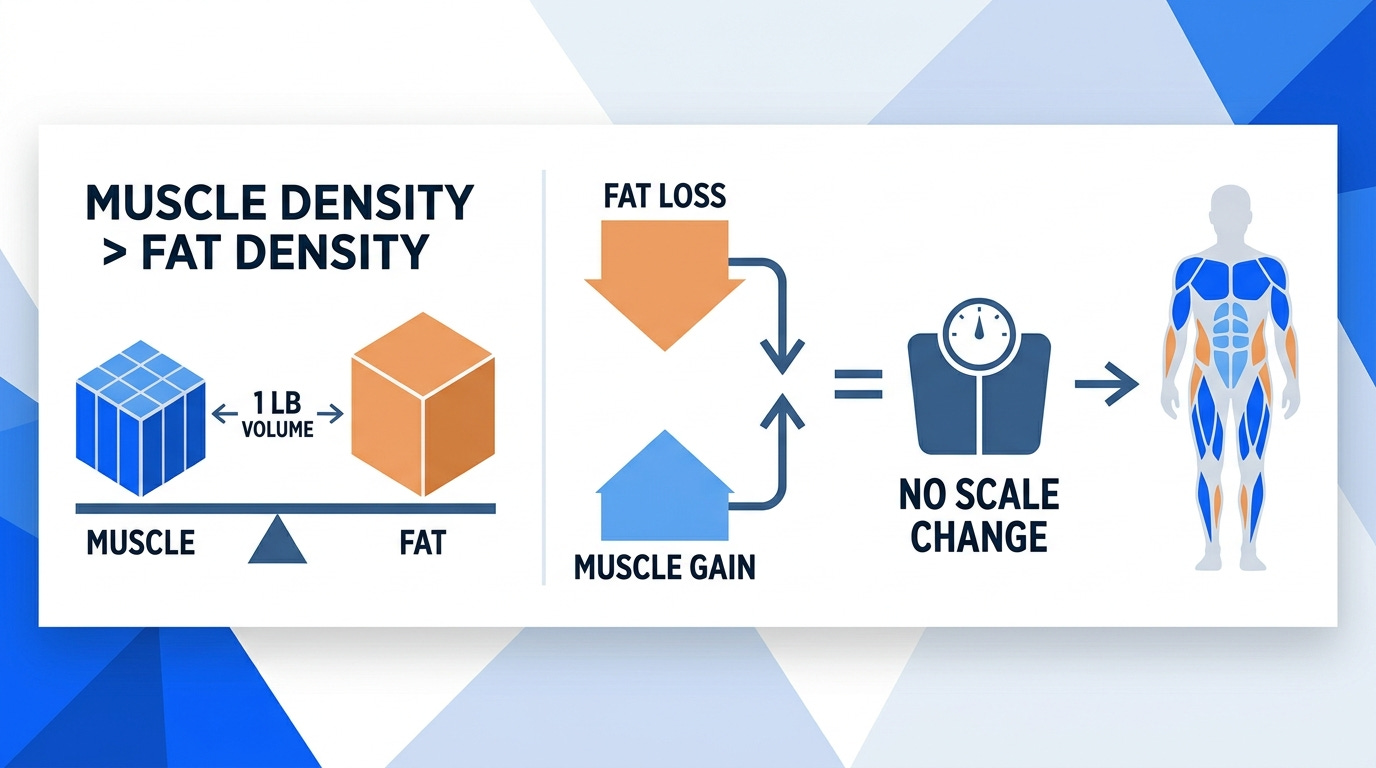
The scale also cannot tell the difference between fat, muscle, and water weight. Someone who starts strength training alongside better eating habits might see the number hold steady or creep upward even while body composition is clearly improving. Muscle takes up less space than fat, so clothes can fit looser while the scale insists nothing has changed. Relying on that single number as the main measure of success sets people up for discouragement that has little to do with actual progress.
Weight Loss Mindset approaches this problem by looking past the number entirely and asking what the body and mind are actually communicating. Daily weigh-ins can also take a psychological toll. When the scale doesn’t move the way someone expects, it can chip away at self-esteem and trigger the exact stress response that makes emotional eating more likely.
What Non-Scale Victories Actually Reveal
Non-scale victories, often shortened to NSVs, are the changes that happen in daily life when habits start shifting in a healthier direction. These victories show up in how someone feels, moves, and interacts with the world, and they tend to arrive earlier than any dramatic shift in body weight. Tracking these wins gives people more chances to feel proud of their progress, building the kind of patience and motivation that restrictive diets rarely produce.
Energy, Sleep, Mood, And Confidence
Better energy throughout the day is one of the clearest signs that something positive is happening beneath the surface. People who start eating more consistently and moving their bodies more often tend to notice they sleep more soundly and wake up less groggy. Mood tends to follow the same pattern, with fewer afternoon crashes and less irritability tied to blood sugar swings.
Confidence often shows up last, but it tends to stick around the longest. Someone who used to avoid certain social situations because of how they felt in their body may find themselves saying yes more often. These shifts rarely register on a scale, yet they often matter more to daily quality of life than a specific number ever could.
Looser Clothes And Shrinking Measurements
Clothes fitting differently is one of the most reliable signs that something real is happening in the body. A waistband that used to pinch and now sits comfortably, or a jacket that buttons easily again, speaks louder than any digital readout. These changes often appear even when the scale barely moves, since they reflect shifts in fat distribution and muscle tone rather than overall mass.
A pair of jeans fitting the way it used to a year or two earlier
Belt holes moving in by one notch, then another
Shirts that no longer pull at the midsection
Shoes or rings fitting more comfortably as fluid retention decreases
Tracking Progress Beyond The Number
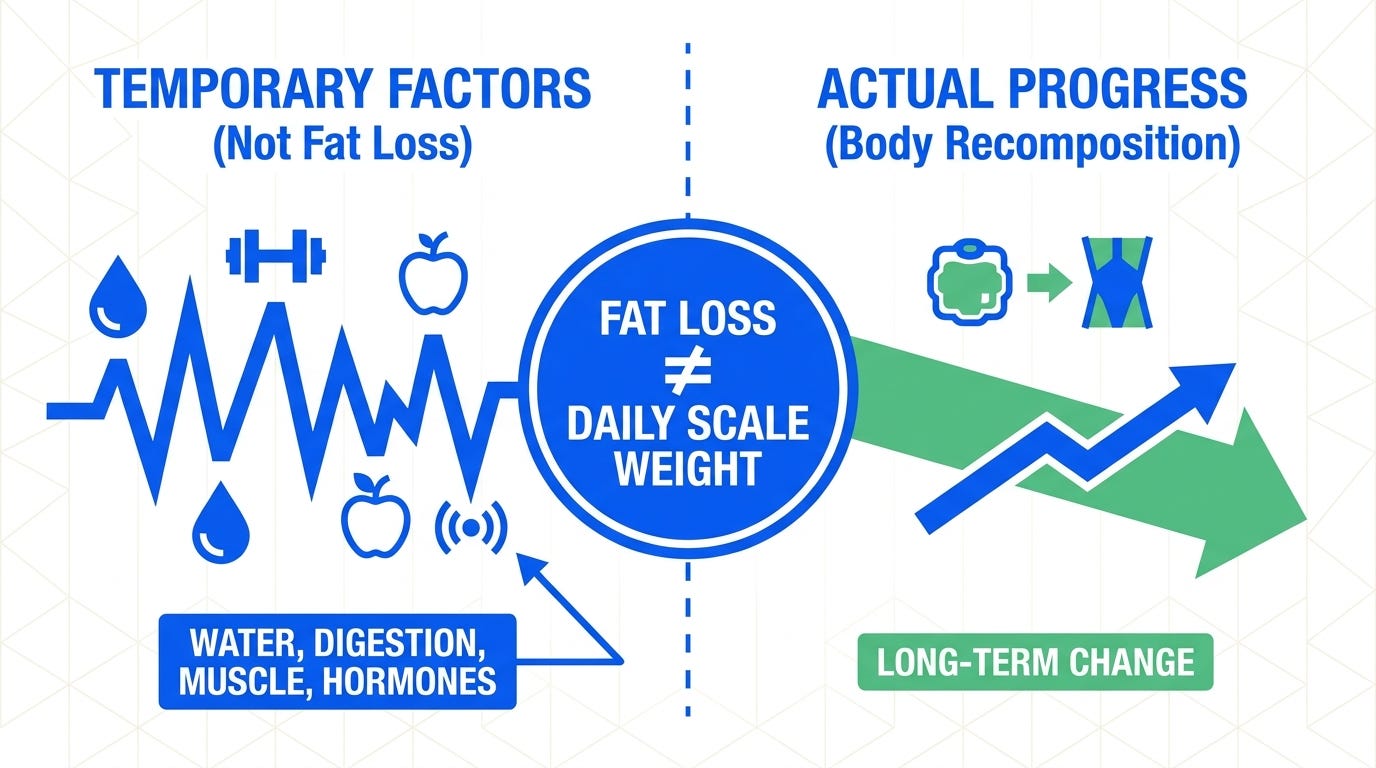
Letting go of the scale does not mean giving up on tracking progress altogether. It means choosing measurements that actually reflect what is happening in the body and in daily life. A handful of simple tools can replace the scale as the main source of feedback.
Measuring Waist And Other Circumferences
Taking measurements of the waist, hips, chest, arms, and thighs every two to four weeks provides a clearer picture of body changes than daily weigh-ins ever could. Waist circumference in particular tends to correlate with metabolic health, making it a useful number to track over time. Because these measurements are taken less frequently, they tend to show steadier, more encouraging trends rather than the noisy up-and-down pattern a scale produces.
Using a simple tape measure and recording numbers in a notebook or app creates a record that becomes more meaningful with each check-in. Seeing a waist measurement drop by half an inch over a month can feel more concrete than a scale number that bounced around all week for unrelated reasons.
Progress Photos Over Time
Photos taken in the same lighting, clothing, and pose every two to four weeks can reveal changes that daily mirror checks miss entirely. Because change happens gradually, it is easy to overlook in the moment while looking in a mirror every day. Comparing a photo from today against one from two months ago often reveals a difference that feels surprising, especially around the midsection and face.
Keeping these photos private and simply reviewing them personally removes any pressure to perform for an audience. The goal is a personal record, not a public before-and-after.
The Identity Shift Behind Lasting Change
A positive mindset plays a central role in whether weight loss habits stick around for the long haul. Stress and negative self-talk can push people toward emotional eating, while a steady, growth-oriented mindset tends to support better choices without constant effort. Identity-based thinking fits naturally here: focusing on becoming the kind of person who eats well and moves regularly tends to produce more sustainable change than simply chasing a number on a scale.
Resetting The Identity Thermostat
Resetting the Identity Thermostat, rather than relying on willpower, rests on the idea that habits, cravings, and daily choices are downstream of who a person believes they are at their core. Diets tend to open a window for a short period of relief; identity work resets the thermostat so the whole room changes temperature. Small, incremental shifts in self-image, rather than dramatic overnight transformations, tend to reshape behavior from the inside out over time. This framing turns the focus away from short-term discipline and toward a steadier sense of who someone is becoming.
Scientists, Not Judges, About Slip-Ups
Treating a slip-up as data instead of a moral failure changes the entire emotional experience of a setback. A missed workout or an unplanned dessert becomes information about a pattern worth noticing, not evidence of personal weakness. This “Scientists, not Judges” framing removes the shame spiral that often follows a perceived failure, replacing it with curiosity about what triggered the choice in the first place.
Adopting this kind of growth mindset turns setbacks into learning opportunities rather than reasons to quit entirely. Someone who views a rough day as useful information is far more likely to get back on track the next day, compared to someone who treats it as proof that the whole effort was pointless.
Why Restriction Keeps Backfiring
Restrictive dieting has a well-documented pattern of failure over time, with many people regaining more weight than they originally lost within four to five years. Beyond the physical rebound, restriction carries psychological costs that make the next attempt at change even harder. Understanding why this cycle keeps repeating helps explain why a different approach is worth considering.
The Slingshot Effect Of Dieting
Pulling back hard on food through strict rules does not create balance; it creates tension, and tension eventually snaps back. Hunger hormones spike and blood sugar crashes when the body senses prolonged restriction, triggering compulsive eating that feels disproportionate to the original slip. This pattern is sometimes described as a slingshot or pendulum effect, since the harder someone pulls back, the farther the swing in the other direction tends to go. Recognizing this as a physiological response, rather than a personal failing, is a useful first step toward breaking the cycle.
Quieting Food Noise Without Willpower
Food noise describes the persistent, intrusive thoughts about eating, hunger, and body image that can dominate someone’s mental space throughout the day. These thoughts often lead to guilt, obsessive meal planning, or a sense that food has more control than the person does. Quieting this mental chatter involves supporting the body with steady nutrition, reducing common triggers, and practicing new mental habits that rebuild trust in internal hunger and fullness cues.
Eating meals with enough protein and fiber to feel satisfied longer, without counting every calorie
Reducing exposure to situations or environments that reliably trigger overeating
Practicing mindful eating by slowing down and paying attention during meals
Prioritizing consistent sleep and stress management, since both affect the hormones that regulate hunger
Realistic Goals Build Momentum, Not The Scale
Setting goals that focus on energy, clothing fit, measurements, and mental clarity tends to build steadier momentum than chasing a specific number ever does. Small, consistent wins stack up over weeks and months, creating a sense of progress that feels earned rather than fragile. This approach also tends to be more forgiving of the normal ups and downs that come with real life, since no single bad day or stressful week can erase an entire month of visible change.
Choosing non-scale victories as the primary measure of success turns the experience of working toward better health into something closer to genuine self-discovery, rather than a stressful numbers game. For anyone ready to approach this differently, realistic weight loss goals built around identity and daily habits offer a steadier path forward than another round of restriction ever could.