

You’ve tried keto, plant-based, maybe both - and still ended up back where you started. With 80 to 95 percent of dieters regaining lost weight, the real reason plans fail has nothing to do with which label you choose.
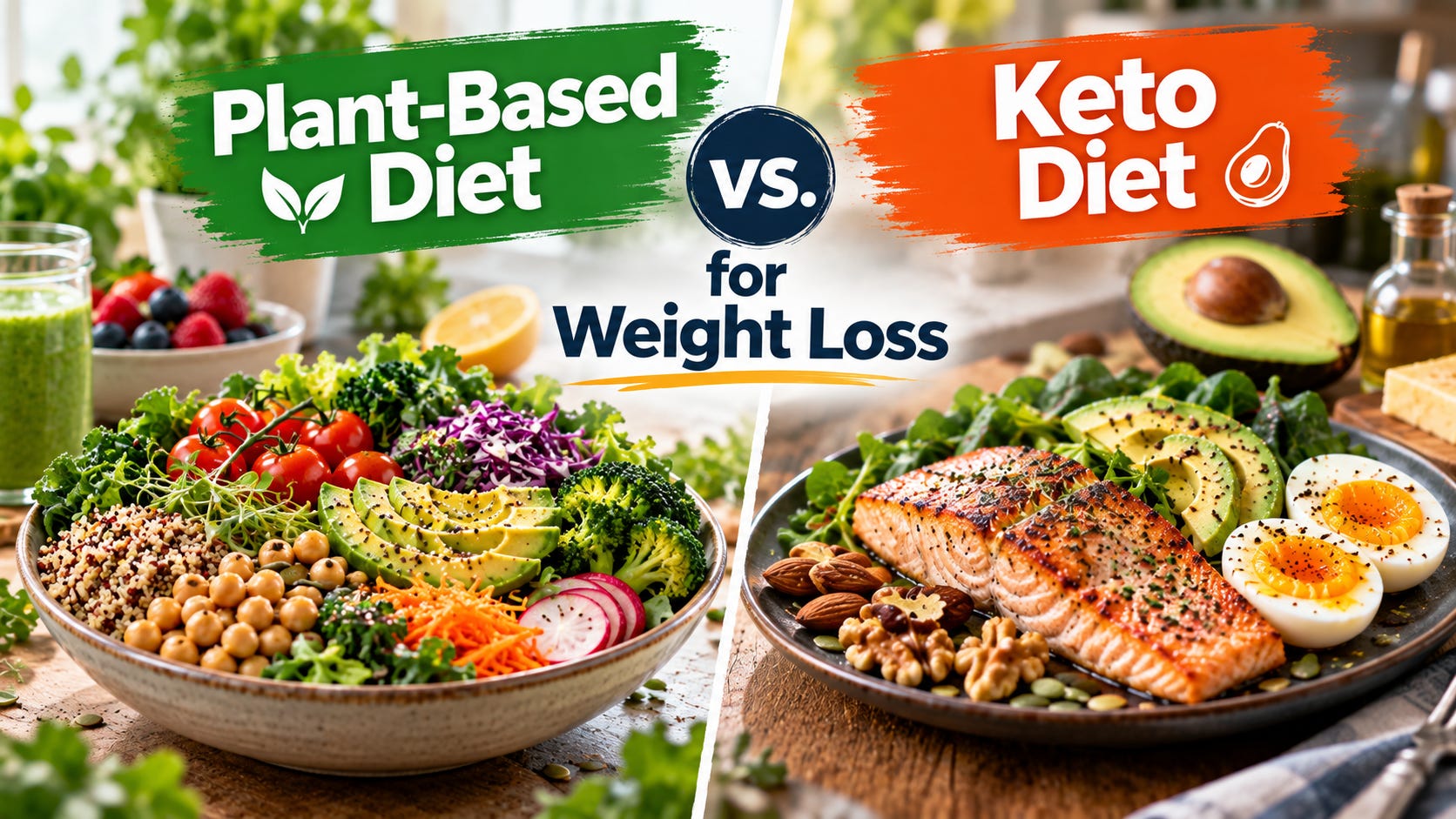
Key Takeaways
Research shows 80 to 95 percent of people who lose weight through calorie restriction regain it within three to five years, regardless of which diet plan they used.
Plant-based and keto diets can both produce fat loss, but the deciding factor for lasting results is whether a person can actually stick with the plan.
Strict restriction often backfires, triggering intense rebound eating rather than steady progress.
An identity-based approach to eating habits may offer a more sustainable path than chasing the next diet trend.
Plant-based or keto. Low-carb or low-fat. The debate over which diet wins never seems to end, and most people over 40 have tried a few of these labels themselves, often with the same disappointing result. The real question is not which diet is technically better on paper. The real question is which one a person can keep doing six months, a year, or five years from now.
80 to 95 Percent of Weight Loss Is Regained
Weight regain after dieting is not a personal failing. Research shows that roughly 80 to 95 percent of people who lose weight through calorie restriction regain it within three to five years. That number holds true across diet types, from low-fat to low-carb to plant-based, which says something important: the diet label itself is not the deciding factor in long-term success.
What separates short-term wins from lasting change is adherence, the ability to keep following a plan once the initial motivation fades. This pattern shows up again and again among people who have cycled through diet after diet. A person can lose weight on almost any eating plan. Staying at that new weight is where most plans fall apart, and that gap between losing and keeping it off is where this piece focuses its attention.
Plant-Based vs. Keto: The Real Verdict
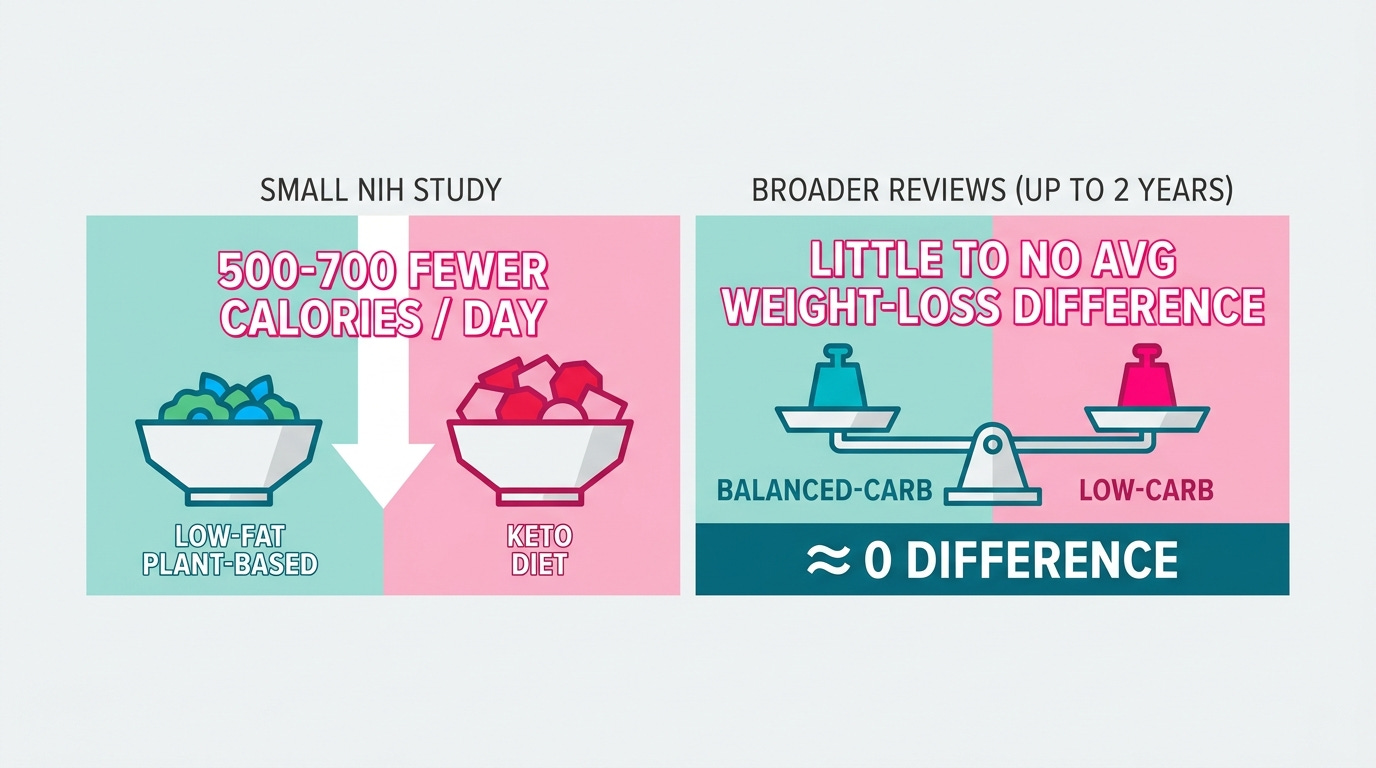
Comparing plant-based eating and keto side by side reveals two different paths to the same short-term goal, each with its own strengths and its own breaking points.
Fewer Calories, More Fat Loss on Plant-Based
A controlled study from the National Institutes of Health compared a low-fat, plant-based diet against a low-carb, animal-based diet over four weeks. Participants following the plant-based plan ate between 550 and 700 fewer calories per day without being told to restrict intake, and they lost more body fat than the keto group during that window. Fiber-rich, less energy-dense foods like beans, vegetables, and whole grains fill people up on fewer calories, lowering intake without constant tracking.
The keto group in the same study saw lower blood sugar and insulin levels, showing that both approaches can produce meaningful physiological changes. The study only ran for four weeks, so it cannot settle which diet wins over years rather than days. Food quality still matters on either path; a plant-based diet loaded with refined grains and fruit juice will not deliver the same benefits as one built around whole foods.
Why Keto Adherence Drops Over Time
Keto often delivers fast results early on, largely from appetite suppression and water weight dropping quickly in the first several months. The challenge shows up later. Adherence to strict ketogenic eating tends to decline the longer a person stays on it, and dropout rates tend to run high among people using keto for weight loss. Strict carb limits make everyday situations like family dinners, restaurants, and holiday meals genuinely difficult to manage long-term.
Keto can also shift cholesterol numbers in ways worth watching. A review examining ketogenic diets in normal-weight people found that short-term clinical trials in healthy individuals with a normal body mass index reported mean LDL cholesterol increases ranging from 18 to 70 mg/dL. Individual responses vary widely, which is one more reason sustainability deserves as much attention as initial results.
Why Plant-Based Diets Can Be Easier to Sustain
Plant-based eating tends to offer more flexibility day to day, since the food list is broader and less rigid than keto’s narrow carb ceiling. Healthy versions of this pattern are linked to lower obesity rates and greater reductions in body mass index and body fat over time. A wider variety of acceptable foods makes social meals, travel, and everyday cooking far less stressful to manage.
None of this means plant-based is automatically the easier choice for every person. Preference, lifestyle, and how a person’s body responds to each approach all play a role in which plan actually gets followed. The diet that fits a person’s daily life beats the diet that looks best on paper.
Restriction Backfires: The Slingshot Effect
Heavy restriction rarely creates the calm, controlled relationship with food that dieters hope for. Pulling back hard on food intake creates tension rather than balance, and tension has a way of snapping back with force. Hunger hormones spike, blood sugar crashes, and the body reads deprivation as a threat to respond to rather than a goal to celebrate.
This pattern has a name: the Slingshot effect. The harder someone restricts, the harder the rebound hits, often showing up as sudden, compulsive eating that feels impossible to stop in the moment. Some research links dietary restraint to weight gain over time and ties it to overeating and binge-type eating patterns, though other studies that experimentally manipulate reduced calorie intake typically find no rise in appetite, hunger, overeating, or disordered-eating symptoms during the restriction itself. That late-night kitchen moment people blame on themselves is a predictable physical and psychological reaction to pulling back too hard for too long, not a character flaw.
Why Willpower Always Runs Out
Willpower gets sold as the missing ingredient, as if trying harder is the answer. Imagine holding a beach ball underwater. The arms can manage it for a while, but eventually they give out, and the ball does not float up gently. It explodes to the surface. Willpower works the same way against biology: it can suppress hunger and cravings for a stretch, but the underlying signals do not disappear. They build pressure until something gives.
This explains why so many people over 40 feel strong and in control during the day, only to fall apart in the evening. Research on dietary adherence has found that higher perceived stress, anhedonia, and food insecurity are associated with lower adherence scores, even after adjusting for age, sex, and body fat percentage.
People with higher self-efficacy tend to manage emotions without turning to unhealthy eating habits and are generally better able to maintain self-control and make rational decisions even in emotionally charged situations, while stress itself has been shown to undermine self-control around food, pushing people toward higher calorie intake and a preference for energy-dense foods. The fix is not gripping tighter. It is understanding why the grip keeps failing in the first place.
Identity, Not Labels, Drives Lasting Change
If restriction and willpower cannot hold up over years, something else has to carry the weight of lasting change. That something is identity, the quiet set of beliefs a person holds about who they are and what they’re capable of.
Resetting the Identity Thermostat
Diets function like opening a window when a room gets too hot. The relief is immediate, but the thermostat itself never changes, so the room drifts back to its old temperature the moment the window closes. Lasting change means resetting the thermostat instead, shifting the underlying identity that drives food choices so new habits stick without a fight. This identity-first approach treats eating behavior as downstream of belief rather than a simple matter of discipline, and resetting that internal setpoint is the actual goal rather than any single meal plan.
Identity-based habits tend to hold up better over time because they stop feeling like a temporary project and start feeling like a true description of who someone is. A person who sees themselves as someone who eats well does not need to white-knuckle their way through a Tuesday night. The behavior follows the belief, not the other way around.
Becoming a Scientist, Not a Judge
A slip-up at dinner does not need to spiral into shame or a full abandonment of progress. Treating a missed goal as data to study, rather than evidence of personal failure, removes the moral weight that so often turns one off day into a lost month. Collecting information instead of delivering a verdict keeps the focus on what actually happened and why, which is far more useful than guilt.
This shift matters because shame tends to fuel the very cycle people are trying to escape. Once the inner judge goes quiet, patterns become easier to see clearly, and clarity is what allows change to happen.
Adherence, Not the Diet Name, Determines Success
Plant-based and keto will keep competing for headlines, but neither label guarantees results that last. The deciding factor has always been whether a person can follow their chosen approach through ordinary weeks, stressful months, and the holidays that tend to derail good intentions. A diet that fits someone’s life, tastes, and daily routine will outperform a “better” diet that feels impossible to maintain.
For anyone who has cycled through plan after plan and ended up back where they started, the pattern usually was never a lack of discipline. It was a mismatch between the plan and the person, or a mismatch between the strategy and the biology working against it. Shifting the focus from “which diet is best” to “which identity supports lasting habits” changes the entire conversation. For those ready to dig deeper into that shift, Weight Loss Mindset is worth checking out.
Choosing a way of eating that fits real life, rather than chasing the diet with the loudest reputation, is the clearest path toward results that actually hold. For a deeper look at building habits that last, consider an identity-based approach to weight loss.