

Stuck watching the same stubborn number for weeks? Your body might already be changing in ways a scale can’t measure. Like easier stairs, deeper sleep, and looser jeans. Here’s what to track instead, and why it could save your motivation.

Key Takeaways
Non-scale victories are health and lifestyle improvements a bathroom scale cannot measure, and they often show up before any change in body weight
Better sleep, steadier mood, looser clothes, and easier movement all count as real proof that a body and mind are changing for the better
Tracking these wins with journaling, measurements, photos, and strength markers builds a fuller, more honest picture of progress than a single number ever could
Weight Loss Mindset frames this shift as trading the inner Judge for the inner Scientist, treating setbacks as data instead of failure
Readers can start their own non-scale tracking habit today by writing down one small win before checking any scale
Standing on a scale can feel like waiting for a verdict. The number goes up, and the whole day feels ruined. The number goes down, and relief washes in for a few hours before doubt creeps back. This pattern traps a lot of people who are 40 and older, especially those who have already tried keto, intermittent fasting, and every calorie app on the market, only to watch the same digits creep back up months later.
Why the Scale Isn’t the Whole Story
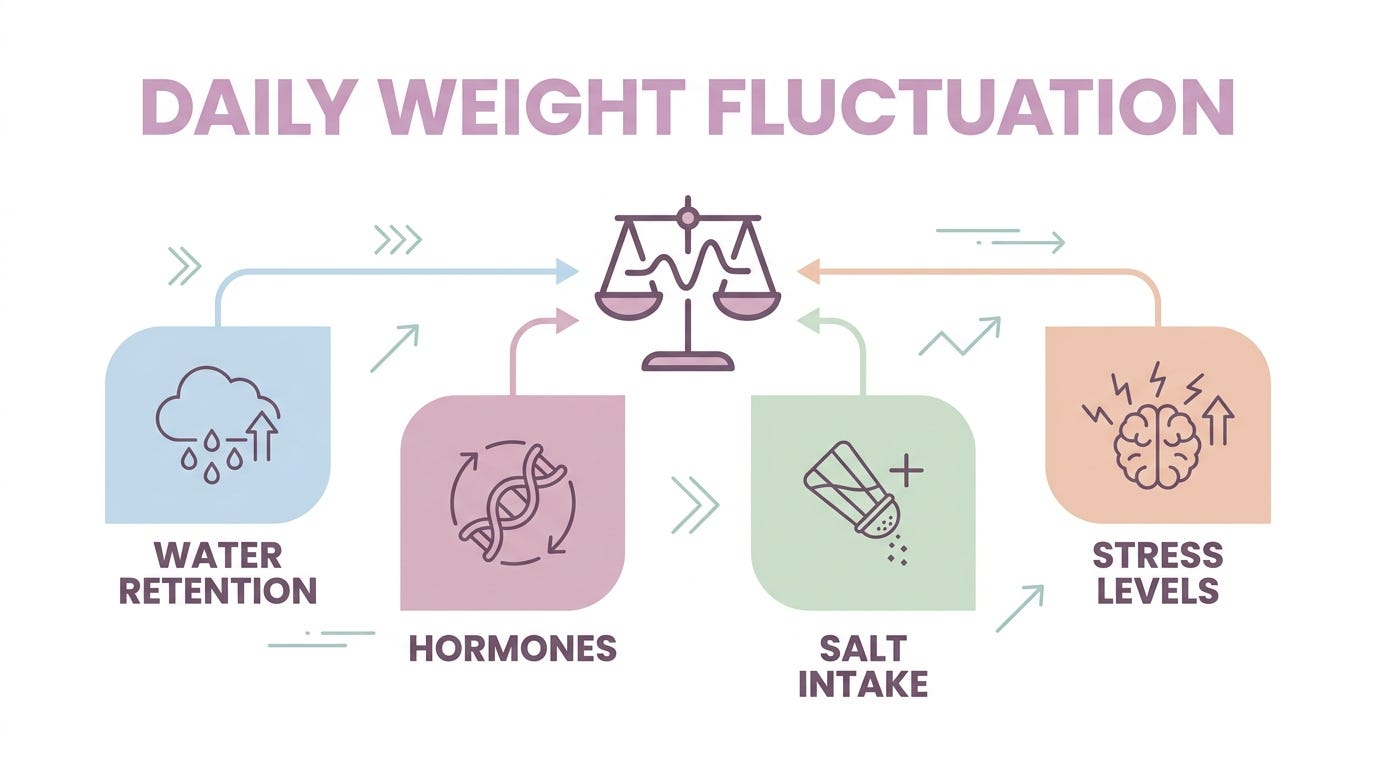
A bathroom scale measures one thing: how hard gravity is pulling on a body at a single moment. It cannot tell the difference between water weight from a salty dinner, hormone shifts, stress, poor sleep, or actual fat loss. It also cannot measure muscle gained while fat is lost, so someone can look leaner, feel stronger, and still see the same number staring back at them.
This is where non-scale victories, often called NSVs, come into the picture. These are the changes in energy, sleep, mood, strength, and daily function that reveal a body and mind moving toward better health, even when the scale refuses to budge. Weight Loss Mindset, a coaching resource built around identity-based change rather than restriction, talks about this often when guiding people away from the all-or-nothing thinking that keeps them stuck.
Paying attention to these signals does more than boost mood for a day. It rebuilds trust between a person and their own body, something that years of yo-yo dieting tends to wear down. When the scale stops being the only referee, the whole experience starts to feel more like a process worth sticking with instead of a punishment.
What Counts as a Non-Scale Victory
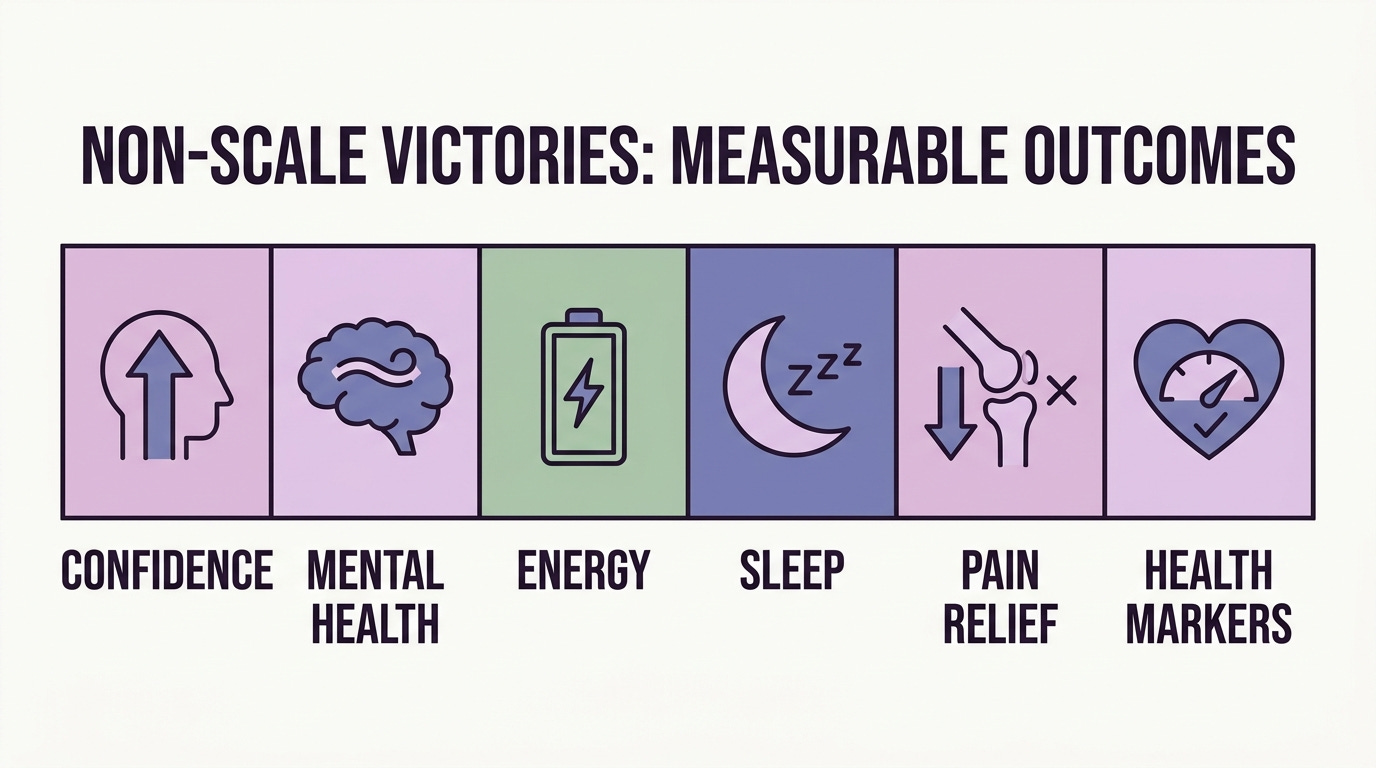
Non-scale victories show up in more places than most people expect. They touch energy, sleep, thinking, clothing, and the small physical tasks that make up an ordinary day.
Body and Energy Signals
Feeling less winded walking up a flight of stairs is a non-scale victory. So is having enough energy left at 7 p.m. to take a walk instead of collapsing on the couch. As the body becomes more efficient at moving oxygen and nutrients to its cells, everyday tasks start to feel lighter, even before any visible change appears.
Reduced joint pain and easier movement often follow close behind. Less pressure on weight-bearing joints like the knees and hips can make getting out of a car or climbing stairs noticeably less painful, which matters far more to daily comfort than a number on a screen.
Sleep, Mood, and Mental Clarity
Sleep quality is one of the most reliable non-scale victories to track. Reduced pressure around the airway can make breathing easier at night, leading to deeper, more restful sleep instead of tossing and turning.
Mood improvements can follow a similar path. Losing weight has been linked to lower levels of depression in research on the subject, and that shift in outlook is worth tracking alongside sleep and energy as part of the fuller picture of progress.
Clothing Fit and Daily Function
Clothes fitting looser is one of the clearest, most tangible signs of progress, even when the scale has not moved an inch. A pair of jeans that used to pinch at the waist suddenly zipping with room to spare tells a story no number can.
Daily function tells the rest of that story. Carrying all the groceries in one trip, playing on the floor with grandchildren without needing help getting back up, or climbing two flights of stairs without gasping for air are all practical, lived proof that something is working.
Why NSVs Show Up Before the Scale Moves
Non-scale victories frequently appear before any change registers on the scale, and there is a simple reason for that. Habits shift first. Sleep improves, stress eases, and movement gets easier long before the slower, more variable process of fat loss catches up and becomes visible in body weight.
This timing matters most during a plateau, one of the most discouraging stretches of any weight-loss process. When the scale sits frozen for weeks, tracking energy, mood, and sleep can reveal that real change is still happening underneath the surface. It gives a reason to keep going instead of quitting out of frustration.
Body composition shifts also explain part of this lag. Someone gaining muscle while losing fat may see almost no change in total body weight, even while their clothes fit differently and their strength climbs. The scale simply is not built to measure that kind of trade.
Simple Ways to Track What Matters
Tracking non-scale victories does not require fancy equipment or a complicated spreadsheet. A few consistent habits can capture most of what matters.
Journaling How the Body Feels
A short daily journal entry, even just two or three sentences, can capture how energy, mood, and sleep felt that day. Over a few weeks, patterns start to emerge that a single day never could reveal on its own.
Simple prompts work best:
How did the body feel first thing in the morning?
Was climbing stairs or standing up from a chair easier than last month?
Did sleep feel restful, or restless?
What emotion showed up around food today, and what happened right before it?
This kind of daily writing lines up closely with the identity-based approach that treats a person as a scientist gathering data about their own patterns rather than a judge handing down a verdict at the end of the day.
Measurements, Photos, and Strength Markers
Beyond journaling, a few physical tools round out the picture:
A tape measure around the waist, hips, and other key areas, checked every few weeks rather than daily.
Progress photos taken in the same lighting and pose, since visual changes often appear long before the scale reflects them.
Strength personal records, such as lifting a heavier weight or completing more repetitions than the month before.
Resting heart rate and recovery time after a walk or workout, which tend to improve as fitness builds.
Health markers like blood pressure and blood sugar, tracked with a doctor’s guidance over time.
None of these require obsessive daily checking. Spacing them out every two to four weeks keeps the focus on trends instead of noise.
Trading the Judge for the Scientist
Much of the frustration around the scale comes from turning a number into a moral report card. A lower number feels like good behavior rewarded; a higher number feels like a personal failure, even when it is really just water retention or a salty meal the night before.
This framework swaps the inner Judge for an inner Scientist. Instead of asking “What did I do wrong?” the question becomes “What does this data tell me?” A slip-up, a stalled scale, or an off week becomes information to study rather than evidence of some deeper personal flaw. This same lens applies naturally to non-scale victories: they become data points that prove a strategy is working, not feel-good consolation prizes.
This shift in thinking removes a lot of the shame that keeps people cycling through diet after diet. Once the verdicts stop, patterns become easier to see clearly, and easier to change without a fight.
Progress Is Bigger Than a Number
A single scale reading captures a fraction of a second in gravity’s pull on a body. It says nothing about better sleep, calmer moods, looser jeans, or the ease of carrying groceries up a flight of stairs in one trip. Real progress touches all of these areas, often in that exact order, long before body weight catches up.
Tracking non-scale victories through journaling, measurements, photos, and strength markers builds a record that tells the truth about progress, not one narrow slice of it. For anyone over 40 who has tried every diet and still feels like something is missing, shifting focus toward these wins can turn an exhausting cycle into a sustainable, motivating path forward. For a deeper look at building that mindset day by day, a structured identity-based reset offers tools for tracking exactly this kind of progress.