Diet plans fail for two completely different reasons, and picking the wrong fix can waste months of effort. One fact might surprise you: logging food can eat up 20 minutes daily. So which gap is actually sabotaging you?
Key Takeaways
Meal delivery and calorie-tracking apps solve different problems: one lightens the physical workload of planning and portioning, the other builds awareness of what and how much gets eaten
The real question is where a person’s process actually breaks down, not which tool sounds more effective on paper
Logging food can take real time and effort every day, which is why many people quietly stop using tracking apps months after starting
A hybrid approach exists for people who need structure in some meals and flexibility in others, and it’s worth understanding before picking one option over the other
Weight Loss Mindset frames slip-ups in either system as data to study rather than evidence of a character flaw
Most people who’ve spent years cycling through diets already know the nutrition basics. Calories matter, protein helps, vegetables are good. Knowing this information has never been the real obstacle. The obstacle shows up in the gap between knowing and doing, and that gap looks different for different people, which is exactly why meal delivery and calorie-tracking apps keep getting compared as if one must be the better choice for everyone.
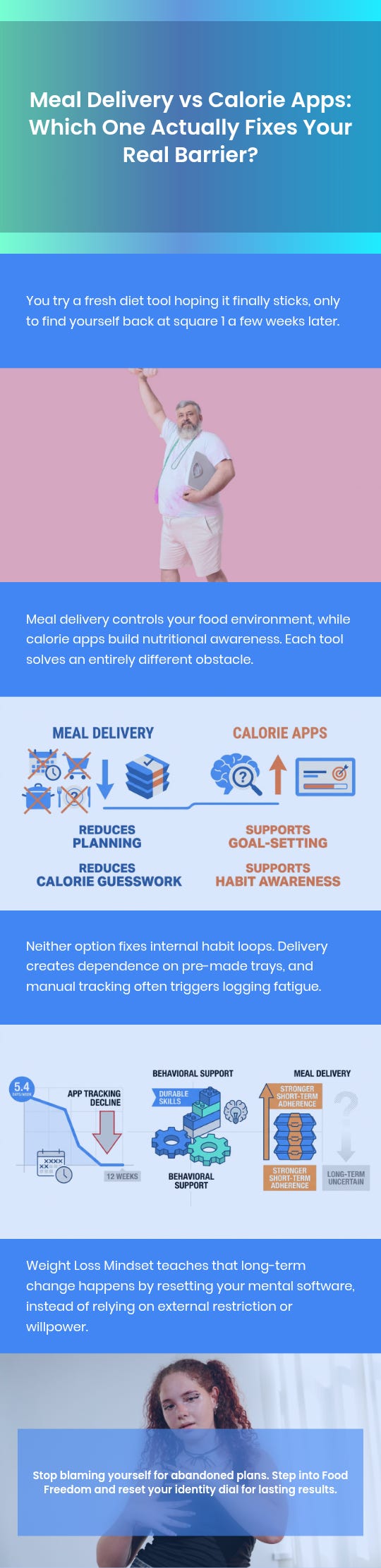
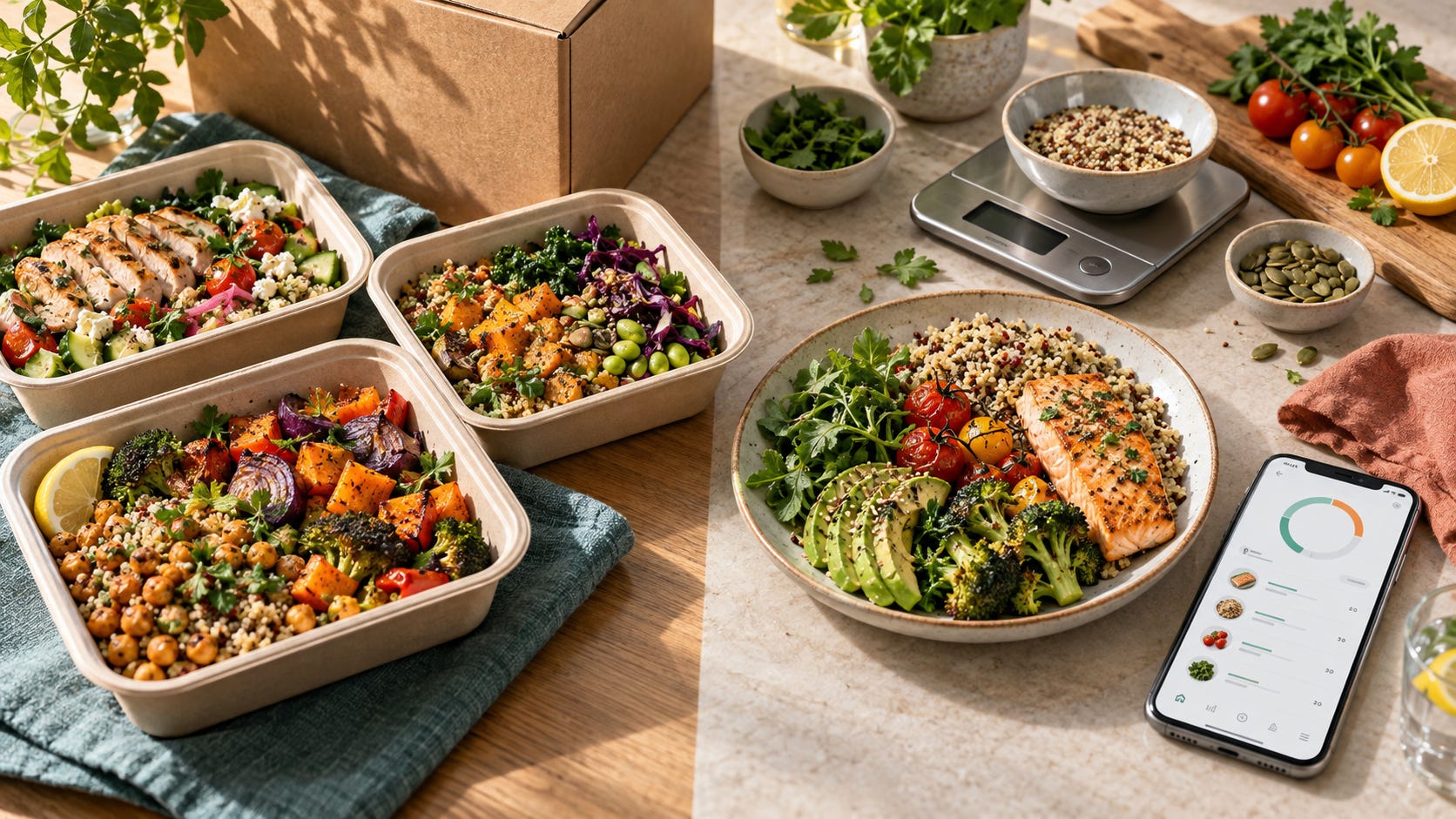
The two tools do different jobs. Pre-portioned meal delivery reduces the physical workload of deciding, shopping, cooking, and measuring. Calorie-tracking apps build awareness of patterns: what gets eaten, how much, and when things drift off course. Weight Loss Mindset approaches this kind of decision the way it approaches food choices generally, as a mental and behavioral question first rather than a search for the tool with the best feature list.
The practical task is figuring out which tool matches the actual sticking point. Someone who can plan a perfect week on paper but never makes it to the grocery store has a different problem than someone who eats reasonably well but has no idea how much they’re actually consuming. Treating both people the same way, with the same tool, sets one of them up to struggle for reasons that have nothing to do with motivation.
Your Real Problem Isn’t The Diet
A diet plan is a set of instructions. Following through on instructions day after day is a separate skill, and it’s the skill that usually breaks first. Someone can own every nutrition book worth reading and still end up ordering takeout four nights a week, not because the information was wrong, but because turning a plan into a plate requires time, energy, and decision-making bandwidth that often isn’t available after a long day.
Other people handle planning and cooking just fine. Their struggle shows up differently: portions creep up, snacking goes unnoticed, or weekend eating undoes five days of careful choices. This is a self-regulation gap rather than an execution gap, and no amount of meal-prepping will fix it, because the meals were never the problem.
Getting honest about which category actually applies is the real starting point. A fresh diet, a new app, or a meal-delivery subscription will not fix a mismatch between the tool and the actual breakdown point. The fix comes from identifying where things fall apart and choosing support that targets that exact spot.
Execution Gap Or Self-Regulation Gap
These two breakdown points call for different kinds of help, so it’s worth separating them clearly before choosing a tool. One is about getting the plan onto the plate. The other is about what happens once the plate is already in front of someone.
Signs Planning And Follow-Through Breaks Down
An execution gap tends to look consistent across weeks, even when motivation is high at the start. Common signs include:
Grocery lists get made but groceries don’t get bought, or they spoil in the fridge unused
Meals get skipped or replaced with takeout because there was no time or energy to cook
The same cycle repeats: a strong start on Monday, an unraveled plan by Wednesday
Decision fatigue sets in by evening, making any cooking feel like too much effort
A new diet gets abandoned not because the food was wrong, but because keeping up with shopping and prep became unsustainable
Signs Self-Monitoring Is The Gap
A self-regulation gap often hides behind otherwise reasonable eating habits. The person isn’t struggling to cook or plan; they’re struggling to see their own patterns clearly. Watch for:
Portions that quietly grow larger over time without anyone noticing
Snacking between meals that doesn’t feel like “real” eating but adds up
Confusion about why the scale isn’t moving despite eating what feels like a normal amount
Weekday discipline that disappears on weekends or during social events
A sense that food choices are reasonable, yet the numbers tell a different story
What Meal Delivery Actually Solves
Meal delivery removes a cluster of decisions all at once. Someone doesn’t have to decide what to cook, shop for ingredients, prep them, or measure out portions, because the meal arrives already built to a known calorie and nutrition profile. For someone whose eating falls apart specifically because planning and cooking feel like too much to manage on top of everything else, this kind of structure can replace a weak link in the chain.
Pre-portioned meals also take the guesswork out of serving sizes. Rather than estimating what a cup of rice or four ounces of chicken looks like, the portion is already decided. That can matter a great deal to someone whose main struggle isn’t what to eat, but how much, at least for the meals that come delivered.
Where Delivery Still Falls Short
Delivery solves the meal in front of someone. It does nothing for the meals and snacks that happen around it. A person can eat a balanced delivered lunch and still graze through a bag of chips an hour later, because the service only controls what it ships, not everything else on the day’s menu.
Cost is a real factor, since delivered meals tend to run more expensive than cooking from scratch, and the value depends heavily on what they’re replacing: a service that displaces regular restaurant takeout provides a different trade-off than one replacing home-cooked meals that were already working. Storage space, fixed menus that don’t match personal taste, and reliance on a service that eventually has to end are also worth weighing.
Some meals run higher in sodium than people expect, so checking the nutrition details before committing to a plan is a reasonable step. None of this means delivery doesn’t work; it means delivery solves a specific slice of the problem, and the rest of the day still needs a plan.
What Calorie Tracking Actually Solves
Tracking apps work on a different layer of the problem entirely. Instead of removing decisions, they make existing decisions visible. Logging a meal, a snack, or a drink turns something that might have gone unnoticed into a data point that can be reviewed later. For someone whose real gap is self-monitoring, this visibility is often the missing piece, not because they’re eating recklessly, but because they genuinely don’t have an accurate picture of their own patterns.
This kind of awareness tends to pay off most for people who already cook reasonably well, eat out regularly, or share meals with family, since tracking flexes to fit whatever is actually on the table rather than requiring a fixed menu. It also builds a skill that stays useful long after any single program ends, since understanding portions and patterns doesn’t disappear once the tracking stops.
Why Logging Burden Causes Apps To Be Abandoned
Tracking has a well-documented failure point: the effort of logging itself. A review published in JMIR mHealth and uHealth found that food and drink logging can take an average of 15 to 20 minutes a day, which adds up fast across a week. That burden is often why people start strong with a tracking app and quietly stop weeks later.
A few practical adjustments tend to make tracking more sustainable:
Saving frequently eaten meals or recipes cuts down on repeated data entry, since the app doesn’t need every ingredient re-typed each time
Simplified tracking, such as logging just key meals or using a photo instead of a full entry, can be easier to sustain than exhaustive daily logging
Features that make it easy to pick tracking back up after a missed day lower the barrier to returning, rather than treating one skipped day as a reason to quit entirely
Choosing an app with a manageable feature set matters more than choosing the one with the most bells and whistles, since a crowded interface can add friction rather than remove it.
When A Hybrid Approach Makes Sense
For some people, the honest answer is that both gaps exist at once. Execution breaks down on busy weekdays, and self-monitoring slips on weekends or during social meals. In that case, a blended approach can address both pressure points rather than forcing a choice between them.
A workable version of this might use delivery for a set of weekday meals where time and energy are tightest, paired with simple tracking for dinners, weekends, or meals eaten out. This way, delivery handles the environment where decision fatigue is highest, while tracking fills in awareness for the parts of the week that delivery doesn’t reach. Budget is the main limiting factor here, since running both systems costs more than committing to just one.
Avoiding The Scorekeeper Trap
Anyone with a history of all-or-nothing dieting should approach tracking carefully, because a log can turn into a report card without much effort. A single high-calorie day can start to feel like proof of failure, which often triggers the exact cycle of guilt and restriction that made previous diets collapse in the first place.
The guiding principle worth borrowing here is treating every entry as information rather than a verdict. A log that shows a pattern of late-afternoon snacking isn’t a confession; it’s a clue pointing toward what’s actually driving the behavior. Weight Loss Mindset frames this as the difference between acting as a scientist collecting data and acting as a judge handing down a sentence, and the distinction determines whether tracking becomes a useful mirror or another source of shame.
Fading Delivery Into Lasting Habits
Meal delivery works best as a bridge rather than a permanent arrangement, especially for anyone eventually wanting to cook and plan independently. Stopping delivery abruptly tends to recreate the exact execution gap that led someone to the service in the first place, since the planning and shopping skills never had a chance to rebuild.
A steadier path replaces one delivered meal at a time with a repeatable home-cooked option, paired with a simple tracking habit to keep portions roughly in check. Over a few weeks, this gradual swap lets someone rebuild independent routines without losing the structure that got them started. The goal isn’t to eliminate delivery on a fixed timeline; it’s to stop depending on it as the only thing keeping meals on track.
Match The Tool, Not The Trend
Neither meal delivery nor calorie tracking is the universally correct answer, no matter how a given app or service markets itself. The right fit depends entirely on where a person’s own process tends to break down, during the planning and cooking stage, or during the eating and self-monitoring stage.
Someone who knows what to eat but can’t make it happen night after night will likely get more out of removing decisions through delivery. Someone who cooks and plans just fine but underestimates portions or loses track on weekends will likely get more out of the awareness that tracking provides. Paying attention to which description actually fits, rather than which tool is trending, is what turns a purchase into an actual solution.
For anyone still untangling which gap is really driving the cycle, looking into identity-based tools for building food habits can offer a useful next step toward figuring out what kind of support will actually stick.