

You’ve counted macros, you’ve tried eating intuitively, yet 80-95% of lost weight comes back within years. What if the real reason isn’t your food plan at all, but something hiding beneath it?
Key Takeaways
Research shows 80 to 95 percent of people who lose weight regain it within three to five years, according to data from the National Institutes of Health and the Obesity Society, which points to a deeper problem than food choices alone
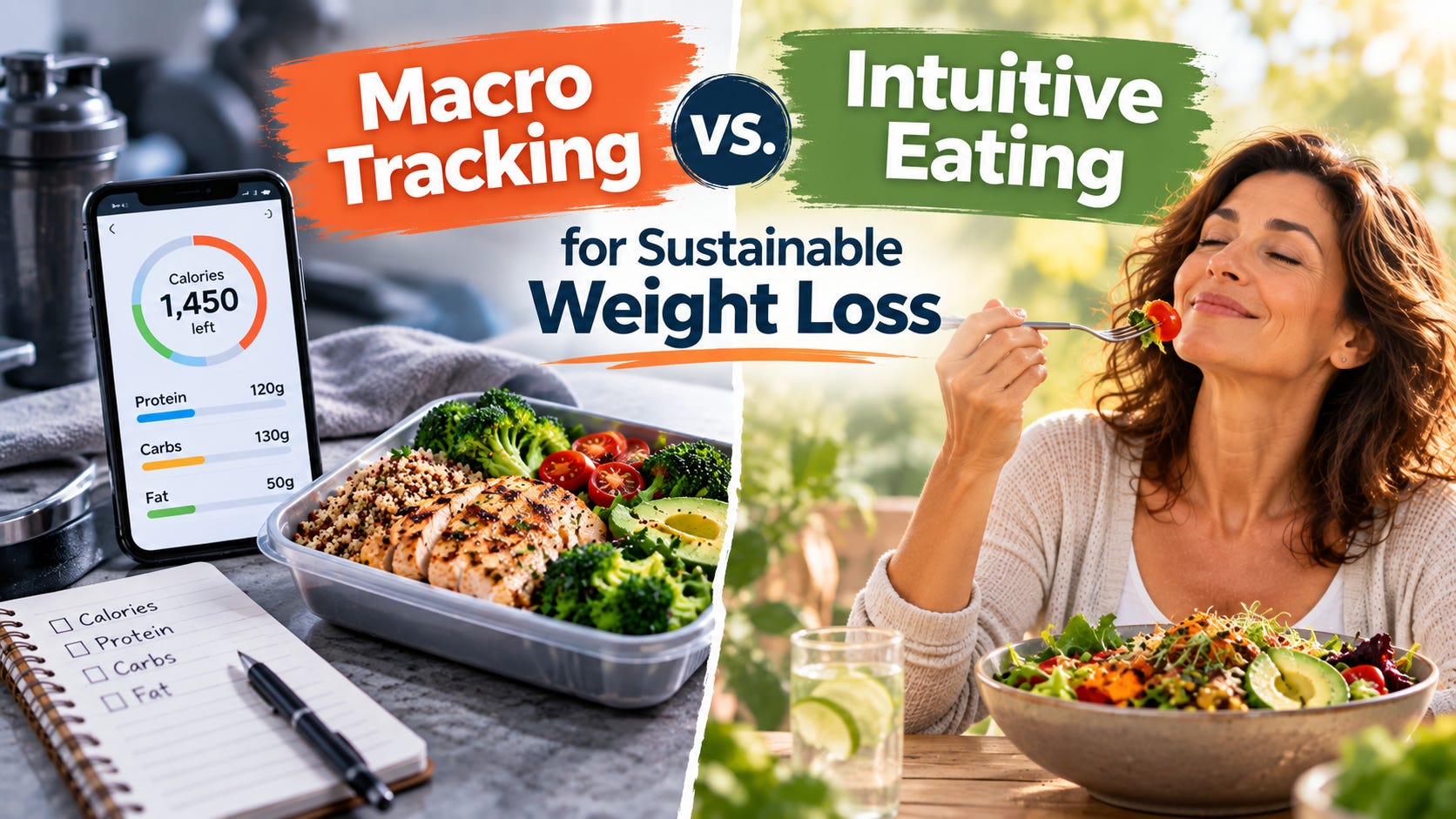
Macro tracking offers useful clarity but can create an obsessive relationship with numbers instead of a healthy one with food
Intuitive eating supports body satisfaction and psychological well-being but can leave a gap for people who need more structure
An identity-first approach closes the gap between both methods by changing the beliefs that drive food choices
The real question behind weight regain often is not what to eat, but who someone believes they are when they eat it
Anyone who has bounced between counting every gram of protein and trying to just listen to their body knows the frustration of doing everything right and still ending up back where they started. Two of the most popular weight loss philosophies, macro tracking and intuitive eating, sit at opposite ends of the spectrum. One offers structure, the other offers freedom, and both leave out something that determines whether change actually sticks.
Most Lost Weight Comes Back
Research shows 80 to 95 percent of people who lose weight regain it within three to five years, according to data from the National Institutes of Health and the Obesity Society. That number is not a reflection of laziness or lack of trying. It signals that something happens after the scale moves, something that has little to do with the food itself.
Diets often fail because they rely on restriction, fight the body’s natural biology, and lean entirely on willpower, a combination that tends to produce short-term results followed by long-term regain. When calorie intake drops fast but the internal sense of self stays the same, the whole effort rests on a shaky foundation. The early wins feel great, then uncertainty creeps in once the initial phase ends and the old patterns start calling again.
This gap is often the reason so many people cycle through diet after diet without lasting change. Behavior follows identity, so until the underlying self-image shifts, any new eating plan becomes another temporary rule layered on top of an unchanged foundation.
Why Macro Tracking Falls Short
Macro tracking asks a simple question every day: how much protein, carbohydrate, and fat is going into the body, and does it match a target? For many people, that question brings welcome order to what used to feel like chaos.
The Clarity It Offers
Tracking macros can provide real clarity about how much fuel the body needs and how it responds to different foods. It increases awareness of what is actually inside a meal, rather than relying on guesswork or vague impressions of healthy and unhealthy. That flexibility even allows favorite foods to stay on the plate without automatic guilt, since a slice of pizza can be logged and accounted for just like anything else.
The Obsession It Can Create
The same precision that makes macro tracking appealing can also turn it into a trap. Constant number-checking takes real time and mental energy, and for some people it becomes an unhealthy focus on digits rather than on how a meal actually feels in the body. A day that goes over target can trigger an all-or-nothing reaction, where someone gives up entirely rather than simply moving forward. Over time, eating decisions start to depend on what an app says is allowed instead of what the body is actually signaling, which can quietly disconnect a person from their own hunger and fullness cues.
Where Intuitive Eating Helps and Hurts
Intuitive eating encourages people to eat based on internal signals rather than external rules or plans. It was never designed as a weight loss method in the first place; its goal is a healthier relationship with food and a more positive self-image.
Body Satisfaction Without Weight Focus
Research on intuitive eating consistently links it to lower rates of disordered eating, less body image distress, and higher self-esteem and quality of life. People who practice it tend to report more pleasure around meals and a greater sense of peace with their bodies, since the approach removes the constant scorekeeping that other methods require. That psychological relief is genuine and should not be dismissed.
The Risk of No Rules at All
The flip side is that removing every rule and every forbidden food label can leave some people without enough scaffolding to make consistent choices. Letting go of structure entirely may lead to overeating or a drift toward low-nutrient foods, especially for someone who has spent years associating food rules with control. Without some kind of internal compass, intuitive eating can become directionless rather than freeing.
The Identity Gap Driving Regain
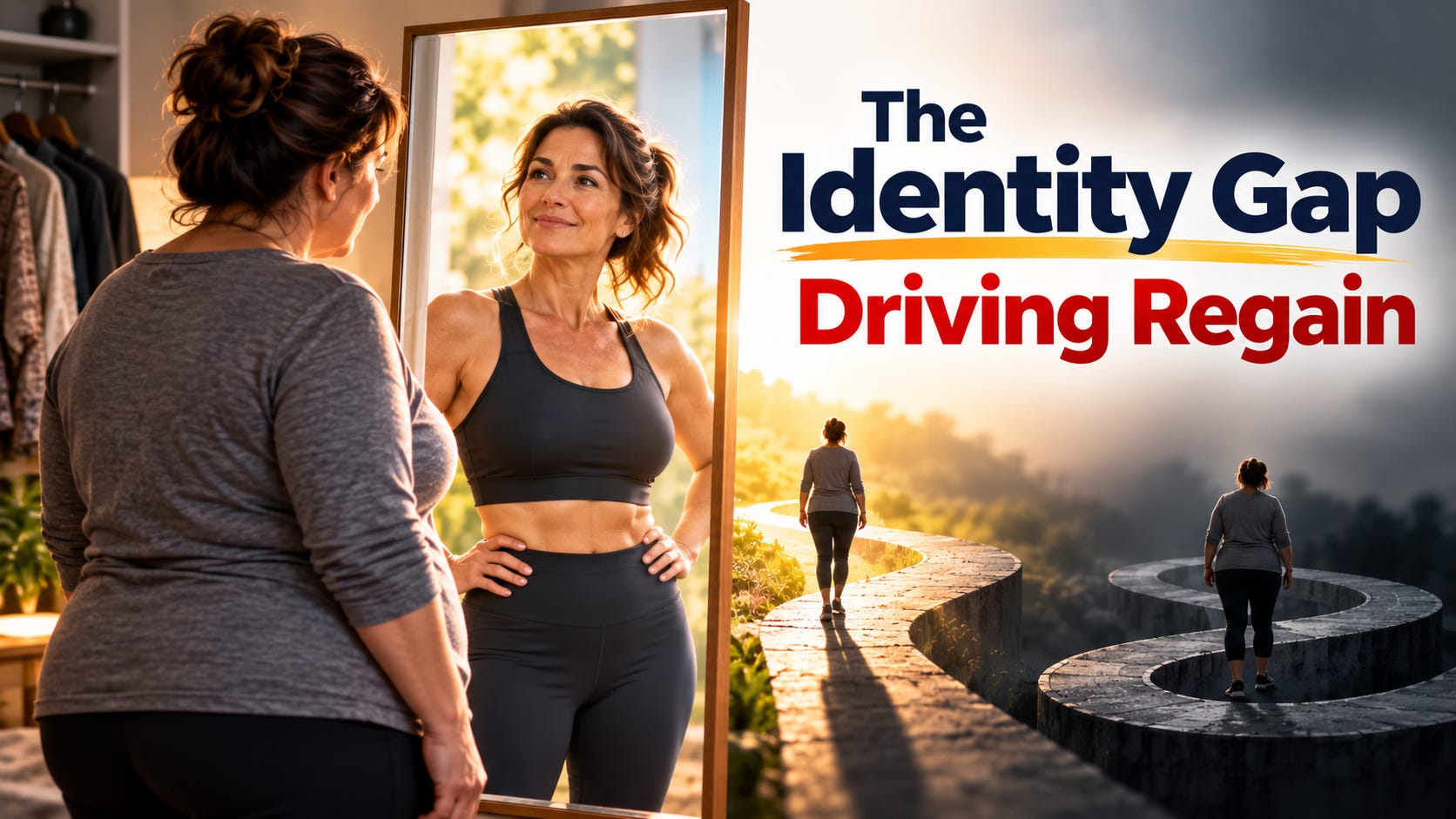
Both approaches, for all their differences, tend to miss the same underlying issue. There is often a real difference between how someone currently sees themselves and how they imagine a person who eats consistently well would think and act. That gap, sometimes called the identity gap, explains why a person can follow a macro plan perfectly or eat intuitively for months and still slide back into old patterns the moment life gets stressful.
When the body changes dramatically after weight loss, identity often has to scramble to catch up. Someone who has spent decades thinking of themselves as the person who always fails at diets does not automatically become someone else just because the scale reads differently. That mismatch between the new body and the old self-concept creates the disorientation that so often precedes regain.
Resetting the Identity Thermostat
Weight Loss Mindset frames this challenge through what it calls the Identity Thermostat: diets open a window and let in cooler air for a while, but the thermostat setting underneath stays the same, so the room always drifts back to its old temperature. Changing the temperature setting itself, rather than cracking another window, is what makes a difference last.
The method behind this idea moves through a few clear stages. It starts with identifying the labels and stories a person has quietly pinned to themselves over the years, often without realizing it. From there, it looks at the real reasons behind specific food choices, since seeing a pattern clearly is often what allows someone to finally let it go. The next step replaces self-judgment with curiosity, treating a slip-up as data to study rather than a verdict on someone’s character. Mindfulness tools then help interrupt automatic eating loops in the moment they happen, rather than after the fact.
This identity-first thinking is explored in more depth at Weight Loss Mindset, where the framework centers on resetting self-image before worrying about meal plans or macros. Habits, cravings, and behaviors are downstream of who a person believes they are, so changing that belief changes everything that follows.
Identity Is the Missing Third Approach
Macro tracking and intuitive eating are not enemies. Each solves part of the puzzle: one offers structure and information, the other offers self-trust and psychological ease. Macro tracking works well for someone who wants precise feedback and clear boundaries, while intuitive eating works well for someone who wants to rebuild a peaceful relationship with food and their body. Neither one, on its own, addresses the identity underneath the behavior.
Treating identity as a third, foundational approach reframes the whole question. Instead of asking which system to follow, the more useful question becomes who a person needs to become for a way of eating to feel automatic. A person who identifies as someone who eats with awareness will naturally gravitate toward the parts of macro tracking or intuitive eating that fit their life, without needing either system to carry the entire weight of change.
Lasting change tends to follow whichever identity a person settles into, so it helps to start by asking who that next version of yourself needs to be before choosing an eating approach built to match.