

Japan eats rice daily yet reports far lower obesity rates than the US. But the real gap depends on which BMI threshold you use, and the actual explanation has little to do with rice itself.
Key Takeaways
Japan’s obesity figures shift a great deal depending on which BMI cutoff gets used, with one clinical overview putting the rate near 5% at BMI 30 or higher versus roughly 25% at BMI 25 or higher
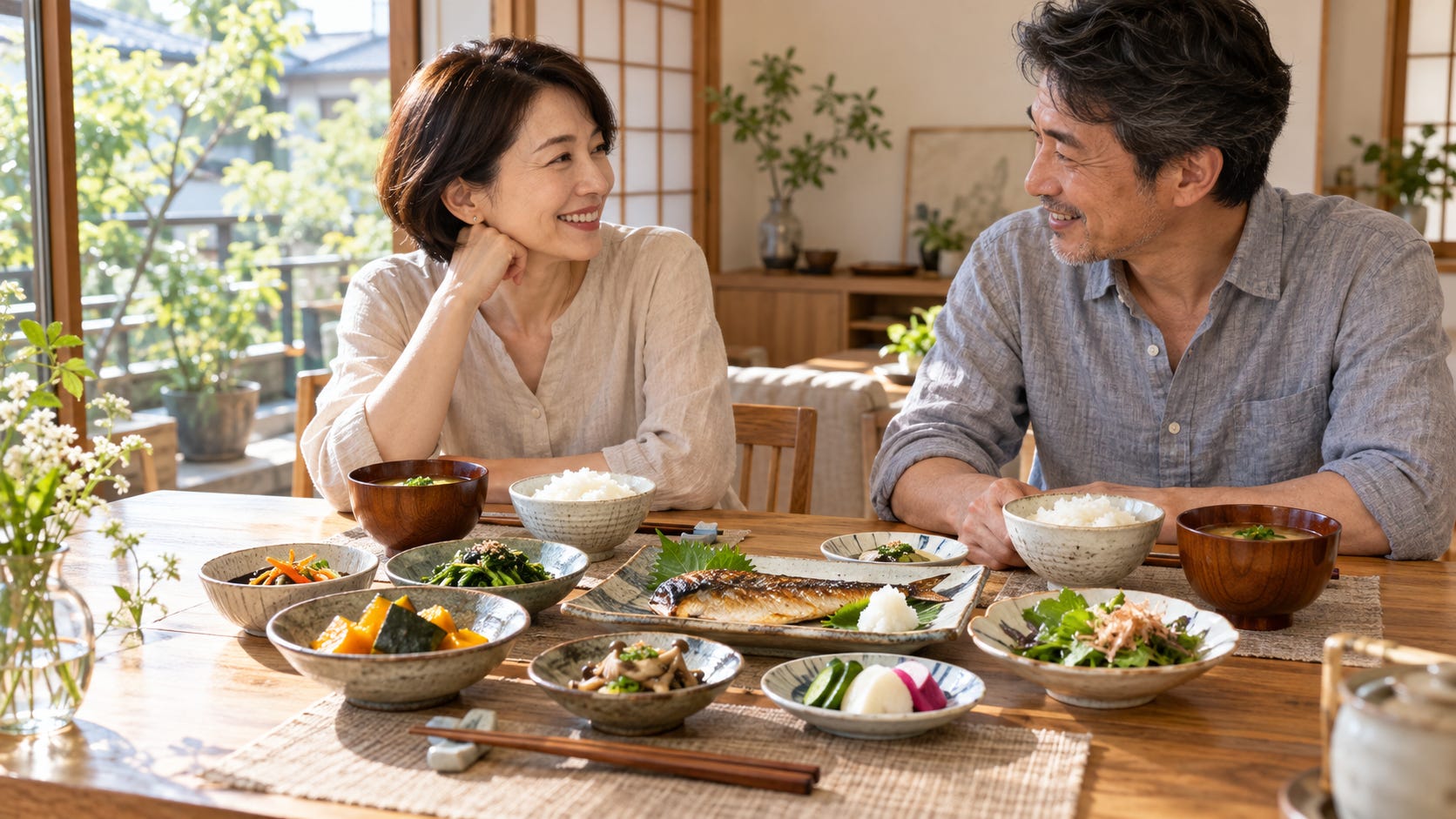
Japanese meals are traditionally built around rice paired with soup, vegetables, and a protein dish, rather than a single oversized bowl of rice
A small rice serving in Japan typically runs about 100 to 140 grams cooked, though restaurant portions can run larger
The eating habit called hara hachi bu means stopping at comfortable satisfaction rather than following a strict diet rule, and it works alongside meal structure rather than as a stand-alone fix
Readers curious about turning these meal-pattern lessons into a workable daily habit may find the mindset side of that shift worth looking into
Rice gets blamed for a lot in conversations about weight, yet Japan eats rice daily and still reports far lower obesity numbers than the United States. That gap has fueled a popular but shaky idea: rice itself must carry some special property. A closer look at the actual eating pattern tells a more useful story, one about how meals are put together, how big the portions really are, and even how obesity gets measured in the first place.
Japan’s Obesity Rate Depends on the Threshold
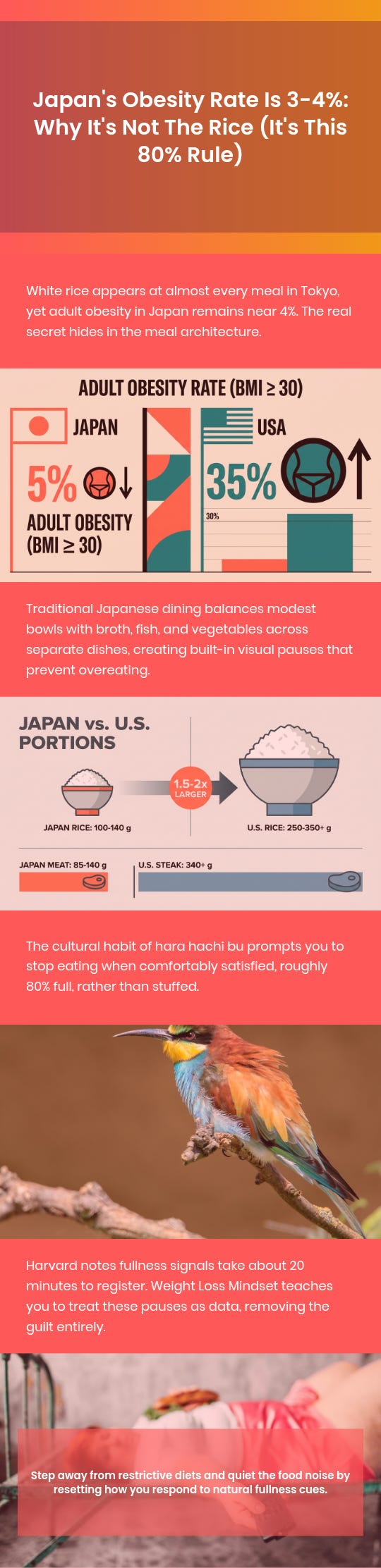
Before comparing Japan and the United States on obesity, it helps to know that the two countries measure it differently. A clinical overview published in The Endocrine Journal reports that about 5% of adults in Japan have a BMI of 30 or higher, the threshold most commonly used worldwide, compared with about 35% of adults in the United States at that same cutoff. Japan’s own health system classifies obesity starting at a BMI of 25, a much lower bar, and under that definition, roughly 25% of Japanese adults qualify.
The World Obesity Federation’s Japan country profile makes a similar point: check which BMI cutoff is being used before placing two countries’ numbers side by side. A 5% figure and a 25% figure can both be technically accurate descriptions of Japan, depending on where the line gets drawn. This matters because headlines favor a dramatic number, and a claim that Japan’s obesity rate is practically zero tells a cleaner story than the more accurate version, which is that Japan’s rate looks very different depending on the yardstick.
None of this erases the real difference between the two countries. Even using Japan’s stricter 25-point threshold, the share of adults affected is still notably lower than the U.S. figure at the looser 30-point cutoff. The honest takeaway is that Japan’s eating pattern appears to support healthier outcomes, though the exact size of that gap depends on definitions, not just diet.
Why Rice Alone Doesn’t Explain It
Rice is a daily staple in Japan, eaten at most meals, and still coexists with a much lower obesity burden than in rice-light countries. That contradiction is exactly why rice alone fails as an explanation. The food has to be understood in context: how much of it shows up on a plate, and what else sits next to it.
A Small Bowl, Not the Whole Meal
A typical small-bowl serving of cooked rice in Japan runs roughly 100 to 140 grams. Japan’s Ministry of Health, Labour and Welfare uses similar reference points in its food-balance guide, counting a small bowl as 100 grams and a medium bowl as 150 grams in its serving examples. That’s a modest amount of starch, especially compared to a large takeout container or an oversized dinner-plate serving common in American meals. Restaurant portions in Japan can run larger, but the everyday home-meal default leans small.
Rice Paired With Soup, Vegetables, and Protein
The traditional meal framework often called ichiju-sansai, meaning one soup and three dishes, pairs a modest bowl of rice with miso soup, a protein such as fish or tofu, and one or more vegetable dishes. Japan’s national dietary guidance, summarized by the Food and Agriculture Organization of the United Nations, describes meals this way: a staple food like rice, plus main and side dishes, with vegetables, fruit, dairy, beans, and fish recommended in combination. Rice functions as one piece of a varied plate rather than the dominant, calorie-heavy centerpiece. That structural difference, more than the rice itself, shapes how much food and how many calories end up in a single sitting.
How Japanese Meal Structure Differs From US Plates
Plate design carries real weight in this story. The way food gets divided up and served can change how much a person notices they’re eating, and how easy it is to stop at a reasonable amount.
Smaller Dishes Make Portions Visible
When a meal arrives as several small dishes rather than one large entrée, each component stays visible and separate. A bowl of rice, a cup of soup, a small plate of vegetables, and a modest serving of fish are all distinct and easy to track. A single large American entrée, by contrast, often piles a big starch, a protein, sauce, and side dishes onto one plate. That single-dish format makes it harder to judge how much is actually being eaten, since everything blends into one visual mass instead of separate, measurable portions.
Large Servings Still Exist in Japan
It would be a mistake to paint Japan as a nation of small portions across the board. Ramen bowls, curry plates, and donburi (rice bowl dishes piled with toppings) can be substantial, and these bigger formats are widely available and popular. The pattern that seems to matter has less to do with Japan banning large portions and more to do with large servings tending to be an occasional choice rather than the default at most everyday meals. That distinction, choice versus default, is worth remembering before assuming every meal in Japan is automatically modest.
Hara Hachi Bu: Stopping at Comfortable, Not Full
Beyond what’s on the plate, there’s a long-standing eating habit in Japanese culture, especially associated with Okinawa, called hara hachi bu. It roughly translates to eating until comfortably satisfied rather than stuffed. This habit skips calorie targets or forbidden foods entirely, working instead as a simple internal check-in: has eating reached a point of comfortable satisfaction, or is it continuing out of habit?
Pausing Before Deciding on Seconds
The practical version of this habit involves pausing partway through a meal and asking whether genuine hunger remains. If the answer is yes, more food gets added. If not, the meal wraps up before reaching the point of feeling overly full. This pause matters because fullness signals take time to catch up with how much has actually been eaten, so a brief wait before deciding on seconds can prevent the kind of overeating that happens simply because food is still sitting on the table.
What Okinawan Longevity Research Does and Doesn’t Prove
Hara hachi bu gets frequently linked to Okinawa’s reputation for long life spans, but that connection deserves a careful read. Research on Okinawan longevity generally looks at the whole lifestyle, diet quality, physical activity, social connection, and overall calorie intake, rather than isolating the stop-at-comfortable habit as a stand-alone cause. Treating hara hachi bu as one useful piece of a bigger puzzle makes more sense than treating it as a proven, isolated weight-loss technique.
This kind of pattern thinking, where behavior and mindset matter as much as the food itself, lines up with the identity-based coaching approach described at Weight Loss Mindset, which focuses on how daily habits and self-perception shape eating choices over time rather than relying on restrictive food rules.
Building a Sustainable Meal Pattern
Pulling these pieces together points toward a workable approach that doesn’t require giving up rice or adopting a rigid meal plan. A few practical shifts echo what the Japanese meal pattern demonstrates:
Treat rice, or any starch, as one part of the plate rather than the main event, pairing it with vegetables, soup, or a protein source.
Serve a defined, modest portion rather than eating straight from a large container or oversized serving dish.
Use smaller, separate dishes when possible so portions stay visible instead of blending into one large meal.
Pause partway through eating and check in on actual hunger before automatically going back for more.
Allow larger servings or indulgent meals to remain occasional choices rather than the everyday default.
These steps involve no calorie counting and no banned food groups. They simply shift attention toward structure and pacing, two things that are far easier to adjust consistently than willpower alone.
Structure and Habits Matter More Than One Food
The rice question turns out to be a good example of how a single ingredient gets unfairly credited or blamed for outcomes that come from a much bigger pattern. Meal structure, portion norms, and simple eating habits like pausing before seconds all play a role that a single food item simply can’t carry on its own. Even the headline obesity comparison between Japan and the United States depends heavily on which BMI threshold gets applied, a detail easy to miss in a quick headline but important for anyone trying to draw accurate lessons from it.
For anyone over 40 who has cycled through diet after diet chasing a single magic food or rule, the lesson here lands close to home: sustainable change tends to come from how meals are built and how eating habits unfold over time, not from any one ingredient carrying the blame or the credit. For a practical next step, consider a mindset-based approach to eating habits at Weight Loss Mindset that focuses on building sustainable patterns instead of chasing the next restrictive rule.
P.S. Want more?
Subscribe at https://news.weightlossmindset.co/subscribe