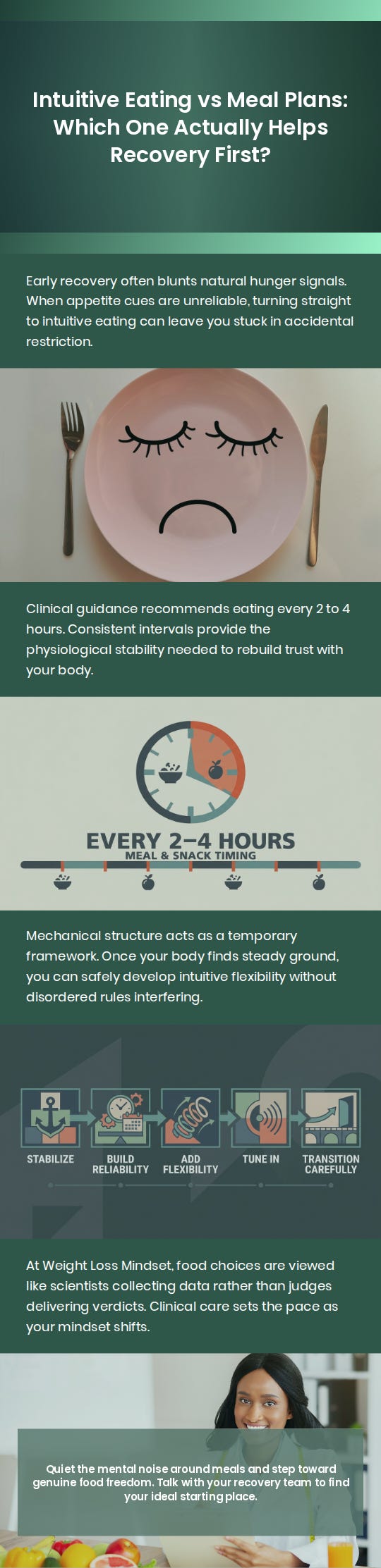
If your hunger cues feel broken, should you follow a strict meal plan or trust your body again? Eating disorder recovery follows a surprising five-stage sequence, and jumping ahead too soon could backfire.

Key Takeaways
Structured meal plans used in eating-disorder recovery are individualized clinical tools meant to provide enough food and build regular eating, not restrictive diets
Restriction and underfeeding can blunt or distort hunger and fullness signals, which is why relying on those cues alone too early can unintentionally maintain inadequate eating
A gradual five-stage path moves from clinician-designed structure toward flexibility and, eventually, intuitive eating, always with professional support
An identity-based coaching approach from Weight Loss Mindset frames slip-ups as data to study rather than moral failures, a mindset that pairs well with structured recovery eating
Readers weighing structured eating against intuitive eating will find a clearer picture of when each approach fits best in recovery
Choosing between a structured meal plan and intuitive eating can feel like an impossible decision when hunger and fullness cues are sending mixed signals or no signals at all. For someone recovering from an eating disorder, this choice carries extra weight because the body’s internal messaging system may not yet be working the way it used to. Recovery rarely demands an either-or decision. It usually calls for a staged progression that starts with structure and moves toward flexibility as the body and mind heal together.
Why Reliable Cues Can’t Be Trusted Yet
Hunger and fullness are supposed to work like a thermostat, signaling when to eat and when to stop. During an eating disorder, that thermostat often gets knocked out of calibration. Someone who has been restricting food for weeks or months may not feel hungry at expected times, may feel full after only a few bites, or may misread normal fullness as a signal to stop eating altogether.
This is a critical distinction for anyone starting recovery: the absence of hunger does not mean the body does not need food. Waiting for a reliable hunger cue before eating can unintentionally extend a pattern of inadequate intake, which is part of why so many recovery programs lean on scheduled eating rather than appetite alone in the early stages.
Structured Eating Is a Tool, Not a Diet
A structured meal plan in eating-disorder recovery looks nothing like a weight-loss diet. It is built around a different goal entirely: making sure the body gets enough fuel, consistently, while the person relearns what normal eating feels like. Framing it as a clinical tool rather than a restrictive plan helps separate recovery eating from the diet culture that may have contributed to disordered patterns in the first place.
Why Clinicians Design Individualized Plans
No two recovery plans look exactly alike. Some people benefit from a detailed exchange-based plan that specifies food types, quantities, and timing in advance. Others need less external structure and more flexibility from the start. A registered dietitian who specializes in eating-disorder care typically designs this plan around the individual, adjusting it as recovery progresses rather than handing over a single fixed template.
Eating Roughly Every 2-4 Hours
Many structured recovery plans are built around eating about every 2 to 4 hours, often following a pattern of three meals plus two or three snacks spaced roughly three hours apart. This regular rhythm is not arbitrary. Consistent eating helps restore physiological stability, prevents extreme hunger from building up, and over time makes hunger and fullness cues easier to notice and trust again. Planning snacks and meals in advance, and even carrying a snack when away from home, can make this rhythm easier to maintain when a day gets unpredictable.
How Restriction Blunts Hunger Signals
Restriction has a way of rewriting the body’s communication system. When someone is underfed, hunger signals can go quiet instead of getting louder, and the body may adapt to running on less than it needs. A person can feel genuinely unaware of hunger, not because the body lacks a need for fuel, but because the signal has been suppressed or disconnected from its usual pathway. Relying on these blunted cues as a guide for how much or how often to eat can inadvertently keep the restriction cycle going, which is exactly why clinicians usually recommend structure first and intuition later.
Where Intuitive Eating Fits In Recovery
Intuitive eating has earned a reputation as a flexible, body-respecting way of relating to food, and it plays a real role in recovery. The timing matters as much as the approach itself. For someone whose hunger and fullness cues are still unreliable, jumping straight into intuitive eating can create confusion or even reinforce old patterns rather than resolve them.
What Intuitive Eating Actually Means
Intuitive eating is a structured philosophy in its own right, built around attunement to hunger, fullness, satisfaction, personal food preferences, and body respect. It asks a person to tune into internal signals and respond to them with curiosity rather than judgment, which works best once those signals are sending accurate information again. This framework carries its own discipline rather than a casual, do-whatever-feels-right approach to food.
Challenging Food Rules and Diet Mentality
A central piece of intuitive eating involves identifying and questioning food rules, like labeling certain foods as off-limits or treating eating as something to earn or deserve. Letting go of this diet mentality matters in recovery, and it tends to work best once regular eating is already established and the nervous system is calmer about food scarcity. Introducing this piece too early, before eating has stabilized, can sometimes give an eating disorder a new way to justify skipping meals or avoiding entire food groups.
Five Stages From Structure to Flexibility
Moving from structured eating to a more intuitive relationship with food tends to follow a recognizable sequence rather than a sudden switch. Thinking about recovery as a staged path, rather than a single decision between two camps, takes pressure off the process and makes each step feel more achievable.
Stabilize With a Clinician-Designed Plan
The starting point is a meal plan built by an eating-disorder dietitian, with consistent meals and snacks that provide enough energy, fluids, and nutrients. This stage focuses on nutritional rehabilitation first, before anything else gets layered on top.
Build Reliable, Regular Eating
Once a plan is in place, the next stage focuses on following it consistently, even on days when hunger does not show up as expected. Completing meals regardless of appetite, and reducing any avoidance or compensatory behaviors, helps the body relearn a dependable rhythm.
Add Choice and Flexibility
As regular eating becomes more automatic, small choices start to get introduced, such as trying a new restaurant meal, picking between a few acceptable options, or handling an unplanned food situation without panic. This stage keeps the eating pattern steady while slowly loosening some of the earlier rigidity.
Notice Cues With Support
Once eating has been consistent for a while, it becomes possible to start noticing hunger and fullness sensations again, often with the help of a hunger and satiety scale discussed alongside a dietitian. This stage treats cue awareness as a skill to practice gradually, and a care team can help confirm whether cues are being read accurately or still showing signs of distortion.
Treating Slip-Ups as Data, Not Failure
A setback during this staged process, like skipping a snack or feeling overwhelmed by a new food, is common and does not erase progress. Treating these moments as information to study rather than evidence of failure keeps motivation intact and prevents one hard day from spiraling into a bigger setback. This mindset shift echoes the coaching philosophy behind Weight Loss Mindset, which encourages people to approach their own patterns like a scientist gathering data instead of a judge handing down a verdict. Applying that same curious, non-punishing lens to a missed meal or an unplanned snack can make the difference between a brief wobble and a full return to old restrictive habits.
Why a Care Team Guides the Transition
Moving from structure toward flexibility is rarely something to manage alone, especially when weight restoration, medical stability, or patterns like bingeing and purging are part of the picture. An eating-disorder specialist dietitian can track whether intake stays adequate as structure loosens, while a mental-health clinician can help work through the anxiety that often surfaces when food rules start to soften. This combined support matters most during the riskier middle stages, when old habits can resurface disguised as newfound flexibility.
Anyone experiencing rapid weight loss, fainting, chest symptoms, an inability to keep food down, frequent purging, or severe anxiety around eating should treat these as signs to seek medical and eating-disorder care right away. A staged approach to intuitive eating is meant to support recovery, not replace treatment during a period of acute illness or significant malnutrition.
Structure First Protects the Path Forward
Structured eating and intuitive eating are not rival philosophies competing for the same moment in recovery. They represent two ends of a continuum, with structure providing the safety net early on and intuitive practices becoming more useful once the body’s signals can be trusted again. Respecting that order, rather than rushing toward flexibility, tends to protect the progress made in the hardest early stages of recovery.
For anyone currently weighing a rigid plan against a more relaxed approach to food, working alongside an eating-disorder care team remains the clearest way to figure out which stage fits right now. For additional guidance on building sustainable habits once eating has stabilized, consider identity-based approaches to food and mindset as a complementary resource for the later stages of recovery.