

Lost weight before, only to watch it creep back? You’re not lacking willpower, research shows up to two-thirds of dieters regain it all. Learn why one approach beats rigid diet plans by 2.4 times for lasting results.

Key Takeaways
Habit coaching tends to produce more lasting weight loss than traditional diet plans because it targets identity and daily behavior instead of relying on restriction and willpower
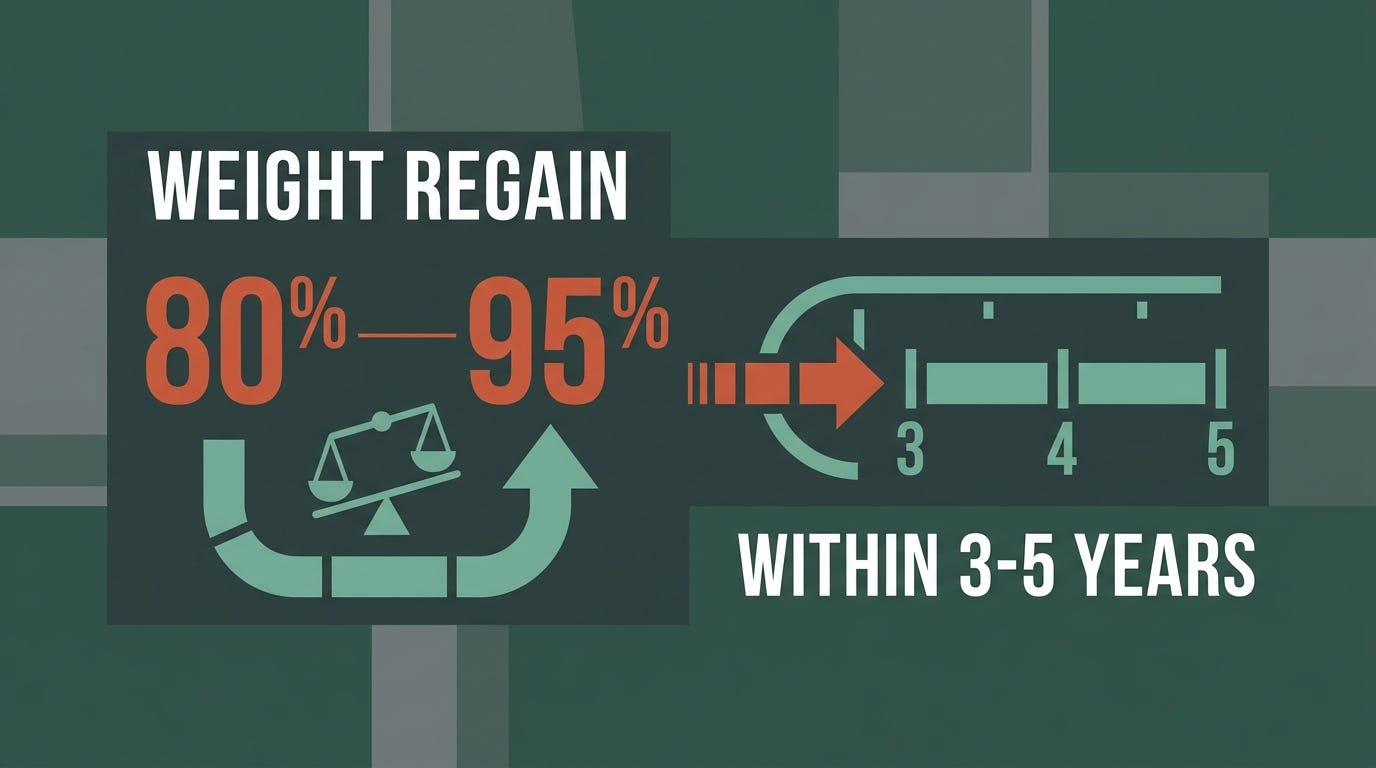
At least one-third to two-thirds of people on diets regain more weight than they lost within four or five years, and the majority regain all the weight plus more, according to psychology research on dieting outcomes
Restriction-based diets can trigger metabolic slowdown and rebound cravings that make regained weight almost inevitable
Habit-based weight loss programs were found to be 2.4 times more likely to produce a clinically beneficial weight loss of 5% or more compared to control groups, per a research synthesis on weight-loss interventions
The article explains how reframing slip-ups as data instead of failure can change whether a weight loss effort survives past the first setback
Anyone who has lost weight on a diet only to watch it creep back has already lived the statistic. Research on long-term weight loss keeps circling back to the same uncomfortable truth: the diet itself is rarely the missing ingredient. What tends to be missing is a way to change behavior that survives contact with real life, real stress, and real cravings. This piece compares two paths - traditional diet plans and habit coaching - to explain why one tends to produce a rebound and the other tends to produce something that sticks.
Most Dieters Regain the Weight They Lost
The numbers around dieting are sobering. At least one-third to two-thirds of people on diets regain more weight than they originally lost within four or five years, and the majority regain all of it plus more, according to psychology research on dieting outcomes. That is not a character flaw showing up over and over in millions of people. It is a pattern, and patterns point to a system problem rather than a personal one.
Diet culture has trained people to see the scale going back up as proof that they lack discipline. That framing deserves a direct challenge: the weight-regain cycle is a predictable outcome of restriction-based methods rather than a personal failing. The rest of this piece breaks down why that reframe matters, and what a different approach - one built around habits and identity - looks like in practice.
Why Traditional Diet Plans Set You Up to Fail
Most diet plans share a common blueprint: cut calories, cut carbs, cut something, and follow a rigid set of rules until the weight comes off. That blueprint sounds logical on paper. In practice, it collides with biology, psychology, and everyday life in ways that quietly guarantee a rebound.
Metabolic Adaptation Fights Back Against Restriction
When calorie intake drops sharply, the body does not simply burn fewer calories and wait patiently. It slows metabolism as a protective response, treating the calorie deficit as a potential threat rather than a lifestyle choice. Hormonal and neurological changes kick in alongside this metabolic slowdown, working together to push a person back toward eating more.
This is why a strict plan that produces quick results in week one can stall out completely a few weeks later, even when someone follows it exactly as written. The body is doing what bodies have always done when food becomes scarce.
Restriction Triggers a Rebound Effect
Cutting out entire food groups or slashing portions creates a kind of internal tension that builds the longer restriction continues. Eventually, that tension snaps back, often in the form of intense cravings or a binge that undoes days or weeks of careful eating. Restriction does not create balance; it creates tension, and tension always snaps back, much like a stretched rubber band.
The Emotional Toll of the Yo-Yo Cycle
Beyond the physical rebound, repeated cycles of losing and regaining weight carry a real emotional cost. Yo-yo dieting is associated with increased depressive symptoms and lower body esteem and satisfaction, according to psychology-focused reporting on dieting. Over years of repeated attempts, this cycle can leave someone doubting their own ability to change anything, which makes the next attempt even harder to sustain than the last.
How Habit Coaching Changes the Equation
Habit coaching starts from a different premise entirely. Instead of asking what someone should eat, it asks what daily behaviors a person can actually keep doing, and what is getting in the way of that. That shift in the starting question changes everything downstream.
Small, Personalized Behaviors Beat One Perfect Plan
A meal plan assumes everyone eating from it has the same schedule, the same budget, the same sleep patterns, and the same relationship with food. Real life rarely works that way. Long-term weight care tends to respond better to small, repeated choices that fit a person’s actual health history, culture, mobility, sleep, and daily routine than to one rigid, one-size-fits-all plan. A habit coach typically builds around the person in front of them:
Adjusting meal timing around an unpredictable work schedule instead of forcing a fixed eating window
Choosing one or two behaviors to focus on at a time instead of overhauling everything at once
Accounting for physical limitations, sleep quality, or stress load before assigning any new habit
Coaches Address Mindset Roadblocks, Not Just Meals
Weight loss coaching also spends real time on the mental side of eating, including emotional eating, sleep habits, and stress management, because these roadblocks often matter more than the food itself. A person can know exactly what to eat and still fall apart in the evening if nobody has addressed why that kitchen visit keeps happening. Habit coaching treats that pattern as something to investigate and interrupt, rather than something to grit through with sheer effort.
The Identity Shift Behind Lasting Change

Underneath the habits sits something deeper: identity. The way a person answers the question of who they are quietly shapes almost every food-related decision made in a day, often without that person noticing the connection.
Becoming the Person Who Doesn’t Quit
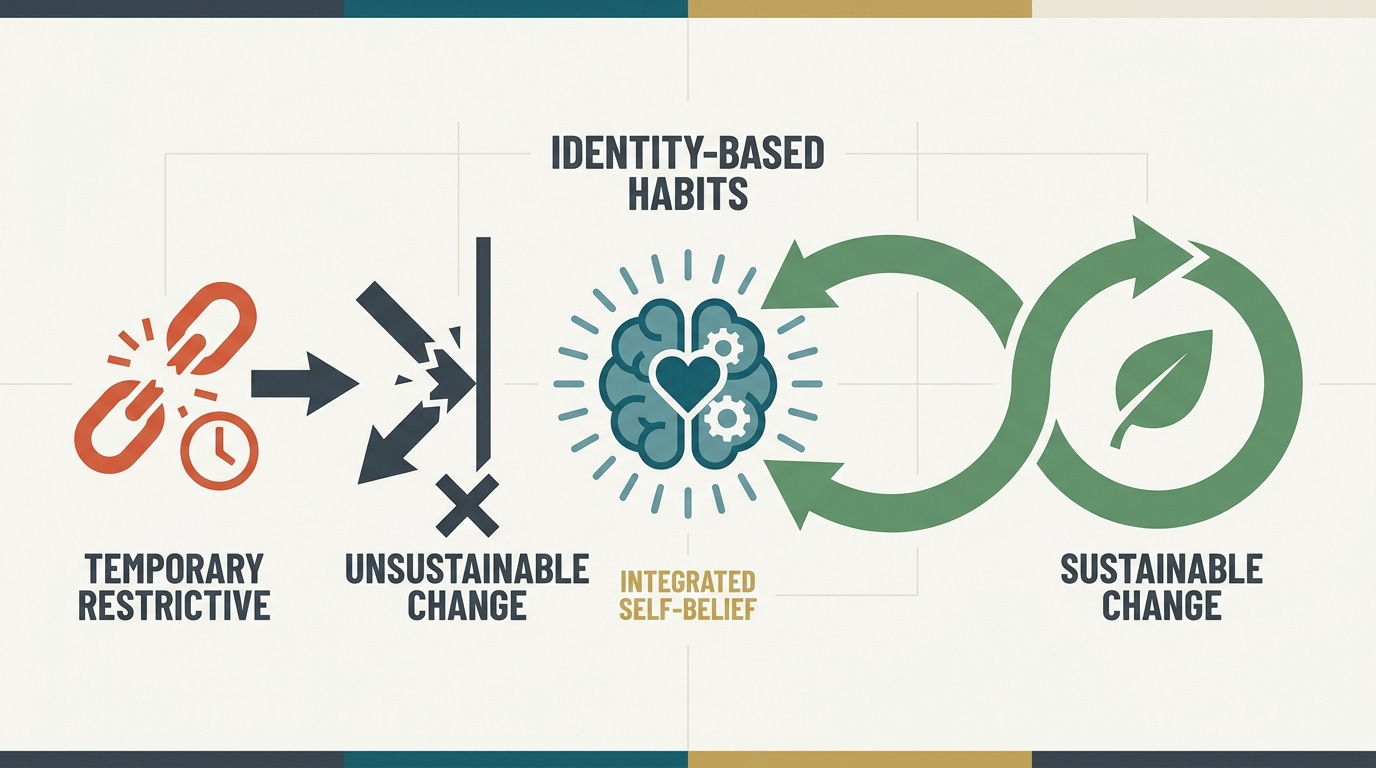
Identity-based habits work because they focus on becoming a certain kind of person rather than chasing a single outcome, which makes the change more likely to hold once it happens. Instead of aiming to lose a set number of pounds, the internal script shifts toward being someone who shows up consistently, and the weight loss becomes a byproduct rather than the whole mission. Weight Loss Mindset describes this shift as resetting the “Identity Thermostat” rather than opening a window for temporary relief, so the old baseline stops feeling like home once the thermostat itself has moved.
Treating Slip-Ups as Data, Not Failure
A single off-plan meal does not have to mean the whole effort collapses. Reframing a slip-up as information rather than a moral failure, approaching food choices like a scientist collecting data rather than a judge handing down a verdict, keeps momentum intact instead of triggering an all-or-nothing spiral. This single mental shift often determines whether someone keeps going past the first setback or gives up entirely.
What the Evidence Says About Coaching Results
Beyond the theory, there is measurable evidence that habit-focused approaches outperform restriction-only methods over time.
Habit-Based Interventions Show Higher Success Rates
A research synthesis on weight-loss interventions found that habit-based programs were 2.4 times more likely to produce a clinically beneficial weight loss of five percent or more, compared to control groups following standard approaches. That is a substantial gap, and it lines up with what habit coaches see in practice: people who build one sustainable behavior at a time tend to keep more of their progress than people chasing a strict, all-or-nothing plan.
Human Guidance Outperforms Solo Willpower
Technology alone does not appear to close the gap either. A study of HealthifyMe app users found that people using both human and AI coaches lost 74% more weight over three months than those relying on AI coaching alone, suggesting that human feedback and accountability add something a chatbot cannot replicate. Personalized feedback about intervention content and a user’s stress level has been identified as an effective engagement strategy in some studies on digital health tools. The pattern across these findings points in the same direction: guidance from another person, paired with consistent small habits, tends to outperform solo willpower and rigid rulebooks.
Identity Change, Not Willpower, Sustains Weight Loss
Diet plans promise fast results and often deliver them, at least at first. The problem shows up later, when metabolic slowdown, rebound cravings, and emotional exhaustion combine to pull the weight back on. Habit coaching, paired with an identity-first mindset, targets the actual mechanism behind lasting change: a shift in who someone believes they are, and what they do automatically as a result, rather than one more rulebook to follow.
For anyone ready to stop cycling through diets and start building an identity that keeps the weight off, an identity-based approach to weight loss can be a useful next step.
Subscribed! I post abt weight-loss content as a college student. Let’s connect.