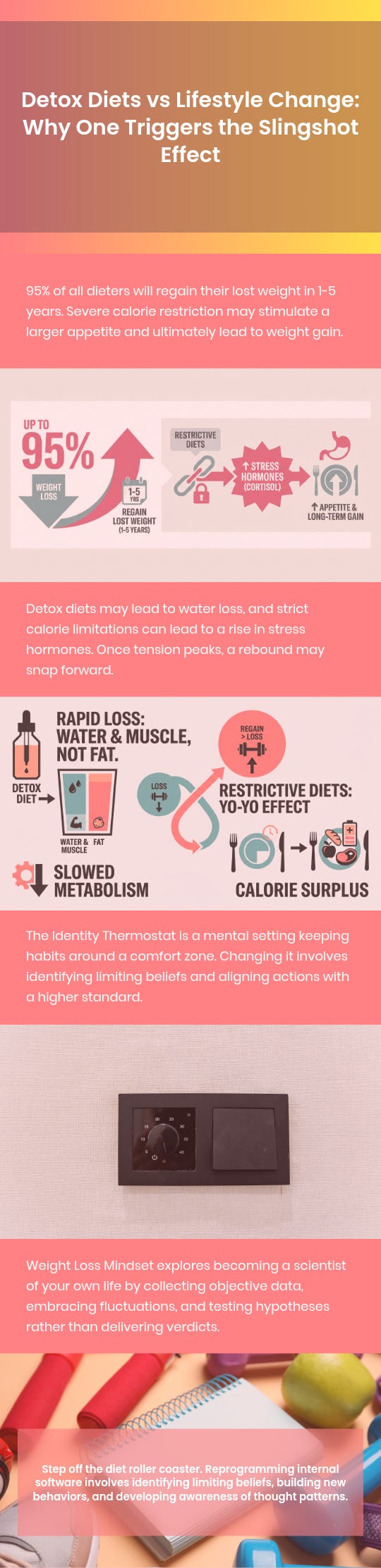
You’ve probably watched the scale drop fast on a cleanse, then crept right back up. That rebound isn’t weakness, it’s biology fighting restriction like a beach ball held underwater. Here’s what actually makes fat loss stick after 40.

Key Takeaways
Detox diets often produce early scale drops from fluid loss rather than true fat loss, and that weight typically returns once normal eating resumes.
Severe restriction can slow metabolism and trigger what is known as the Slingshot effect, where cravings snap back harder than before the diet started.
Lasting fat loss over 40 tends to follow a shift in self-perception and daily identity, not another round of calorie counting or cleansing.
One documented case describes a lifelong pattern of quitting programs early being broken through a 30-day identity-focused approach rather than a new diet plan.
Replacing self-judgment with curiosity about personal eating patterns is a method worth understanding before starting another restrictive plan.
For anyone over 40 who has tried juice cleanses, tea detoxes, or seven-day “reset” plans, the pattern probably feels familiar: fast initial results, followed by a slow slide back to square one. Understanding why that happens matters more than finding yet another cleanse to try.
Why Detox Diets Lose the Weight Game
Detox diets promise a quick fix. Cut out entire food groups, drink only juice or broth for a few days, and watch the number on the scale fall. That early success feels like proof the plan is working, but the drop rarely reflects actual fat loss. There is very little clinical evidence to support using these diets for toxin removal, and the handful of studies claiming commercial detox diets improve liver function or eliminate pollutants are hampered by flawed methodologies and small sample sizes.
The deeper issue is sustainability. A plan built around strict denial is a plan built to be broken. Restriction fights biology instead of working with it, and that fight tends to end the same way every time: the body wins, the diet ends, and the weight returns. Weight Loss Mindset focuses on what happens in the mind before the next meal plan ever gets written, a different starting point than most detox programs offer.
What Really Happens on a Detox Diet
A detox plan looks dramatic on the outside, but the biology underneath tells a quieter, more complicated story. Three things tend to happen at once, and none of them lead toward lasting change.
Fluid Loss Mistaken for Fat Loss
Most of the weight lost in the first few days of a detox comes from water, not fat. Cutting carbohydrates and sodium causes the body to release stored water quickly, which shows up as a dramatic number on the scale. Once regular eating resumes, that water returns just as fast, and so does the weight. Mistaking this rebound for a diet “failure” is one of the most common and most discouraging misunderstandings in the detox cycle.
Nutrient Deficiencies and Metabolic Slowdown
Severely restricting food intake for days at a time can lead to nutrient deficiencies, muscle loss, and electrolyte imbalances. The body does not distinguish between a planned cleanse and a famine. It responds to a sudden drop in available fuel by slowing metabolism to conserve energy, which makes continued weight loss harder and makes weight regain easier once normal eating returns.
The Shame and Guilt Cycle
Beyond the physical toll, detox diets carry a psychological cost. Severe restriction often sets off feelings of guilt and shame when the plan inevitably gets broken, and that emotional weight can push people toward disordered eating patterns over time. The liver, kidneys, digestive tract, lungs, and skin already remove toxins effectively on their own, so a commercial cleanse adds an extra burden rather than solving a real gap in the body’s own process.
The Slingshot Effect: Why Restriction Backfires
Restriction does not create balance. It creates tension, and tension always looks for a way to release.
Willpower as a Beach Ball Underwater
Picture willpower as a beach ball held underwater. The harder the push, the more pressure builds beneath the surface. For a while, the ball stays down, and it looks like control has been achieved. Eventually, arms get tired. The ball does not float up gently when that happens; it shoots to the surface with force. That sudden burst is what many people call falling off the wagon, but it is really just physics. The harder the restriction, the harder the rebound.
Why the Body Fights Back
When food intake drops sharply, hunger hormones spike and blood sugar crashes, sending urgent signals that something is wrong. Psychologically, deprivation reads as a threat, not a lifestyle choice. This combination explains why so many people regain weight after a round of restrictive dieting, often ending up heavier than before they started. Emotional eating, diet fatigue, and expectations that were never realistic to begin with all feed into this well-documented rebound pattern.
Resetting the Identity Thermostat
If restriction keeps backfiring, the answer is not a stricter version of the same approach. It is a different approach altogether, one built around identity instead of discipline.
Identity Drives Behavior, Not the Other Way Around
Diets open a window for a little while. Identity resets the thermostat for good. A person who sees themselves as someone who eats vegetables, moves their body, or listens to internal hunger cues tends to keep those behaviors going long after the initial motivation fades, because the behavior now matches who they believe they are. That belief in one’s own ability to follow through, paired with a sense of internal control rather than relying on outside rules, plays a major role in whether healthy habits stick. Changing the identity first means the habits that follow feel like a natural extension of daily life.
Trading the Judge for the Scientist
Much of the shame tied to dieting comes from treating every slip as a moral failure. A missed goal becomes proof of weakness instead of useful information. The alternative is trading the role of judge for the role of scientist: collecting data about what triggered a craving or a setback instead of delivering a verdict about personal character. This shift removes the shame that so often drives people back into secretive eating patterns, and it opens space to notice what is driving a choice in the first place. Once a pattern becomes visible instead of hidden under guilt, it becomes much easier to let go of.
Proof an Identity Shift Can Last
Theory only goes so far. What matters is whether an identity-based approach actually holds up once the motivation of day one fades.
Breaking a Lifelong Pattern of Quitting
One case from a 30-day identity-focused program describes a participant whose lifelong pattern was to start strong, lose interest within a week or two, and slide back into old habits. This time was different. Every single day of the program was completed, something the participant described as out of character for her. By day 30, several long-standing eating habits that had followed her for years were gone, and she kept going on her own well after the formal program ended.
Finding Food Freedom and a Quiet Mind
Beyond the habits themselves, participants in identity-focused work often describe a quieter kind of change: less constant mental noise around food, fewer moments of negative self-talk after a minor setback, and a sense of freedom that feels different from simply following a plan correctly. One participant described feeling “free and light” after her identity shifted, a result she said was worth it even before any weight came off. That kind of internal quiet is difficult to manufacture through restriction, because restriction tends to make the mental noise louder, not softer.
Identity Reset Outlasts the Detox Cycle
Detox diets and identity resets start from two very different questions. A detox asks what food should be removed this week. An identity reset asks who a person needs to become so the old patterns stop making sense. The first question produces fast, fragile results that tend to unravel once normal life resumes. The second produces slower, sturdier change that holds up because it is no longer propped up by sheer discipline.
Weight loss after 40 rarely needs another cleanse. It needs a different relationship with the choices made every single day, one rooted in self-understanding rather than self-punishment. For a practical way to begin that shift, consider an identity-first approach to weight loss as a starting point before reaching for another short-term fix.