

You strap on a glucose sensor hoping for flatter curves and faster fat loss, but one clinical review of nearly 3,000 participants found something surprising about who actually benefits, and it’s not who you’d think.
Key Takeaways
Continuous Glucose Monitors can help people notice eating patterns, but research shows they do not reliably cause weight loss on their own, since fat loss depends on overall energy balance rather than glucose curves
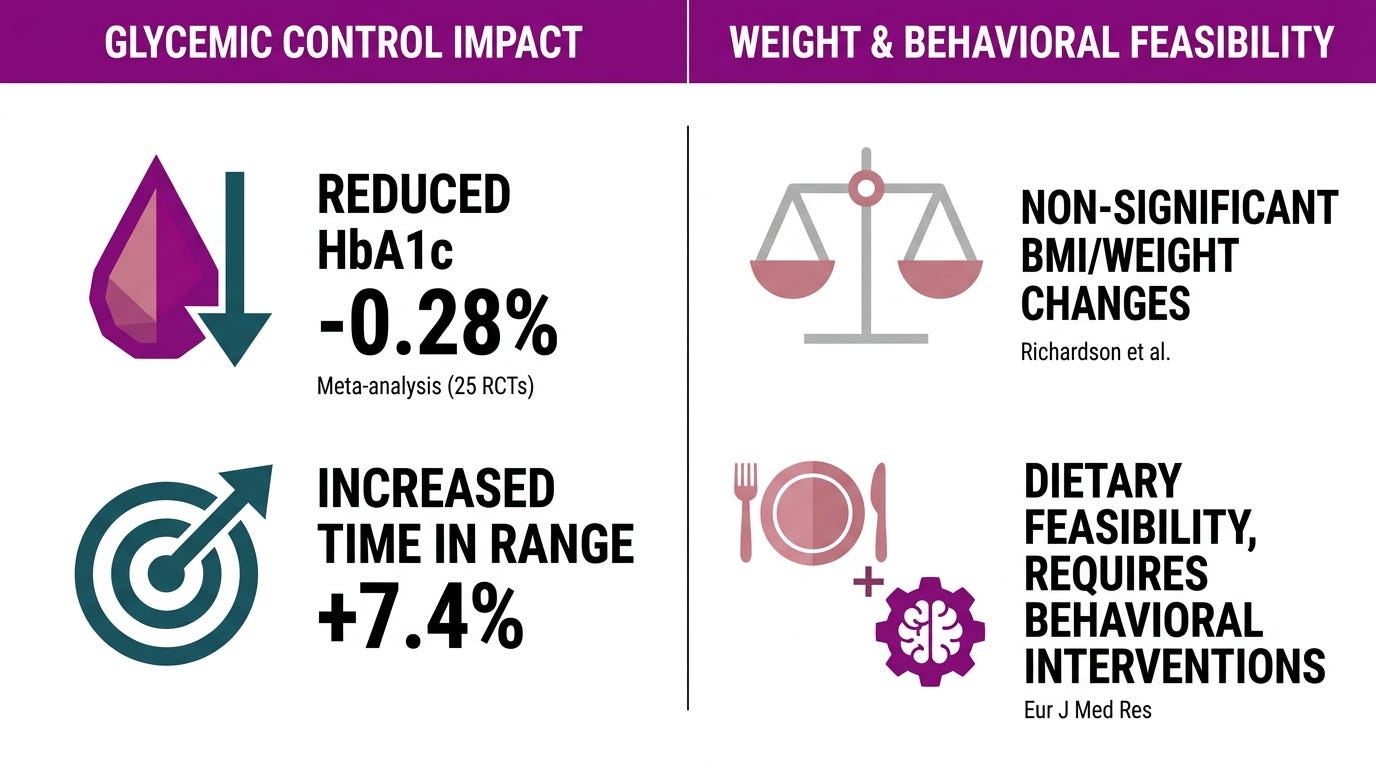
A clinical review covering 25 randomized controlled trials and nearly 2,996 participants found CGM feedback improved blood sugar markers mainly in people with diabetes or prediabetes, with no significant weight or BMI change in non-diabetic users
Chasing a flat glucose line can backfire, pushing people toward anxiety, rigid food rules, and even orthorexia-like patterns around normal eating
A normal post-meal glucose rise is a healthy, expected response, not a warning sign that something has gone wrong
Lasting change tends to come from shifting identity and habits rather than fixating on any single data feed, including a glucose sensor
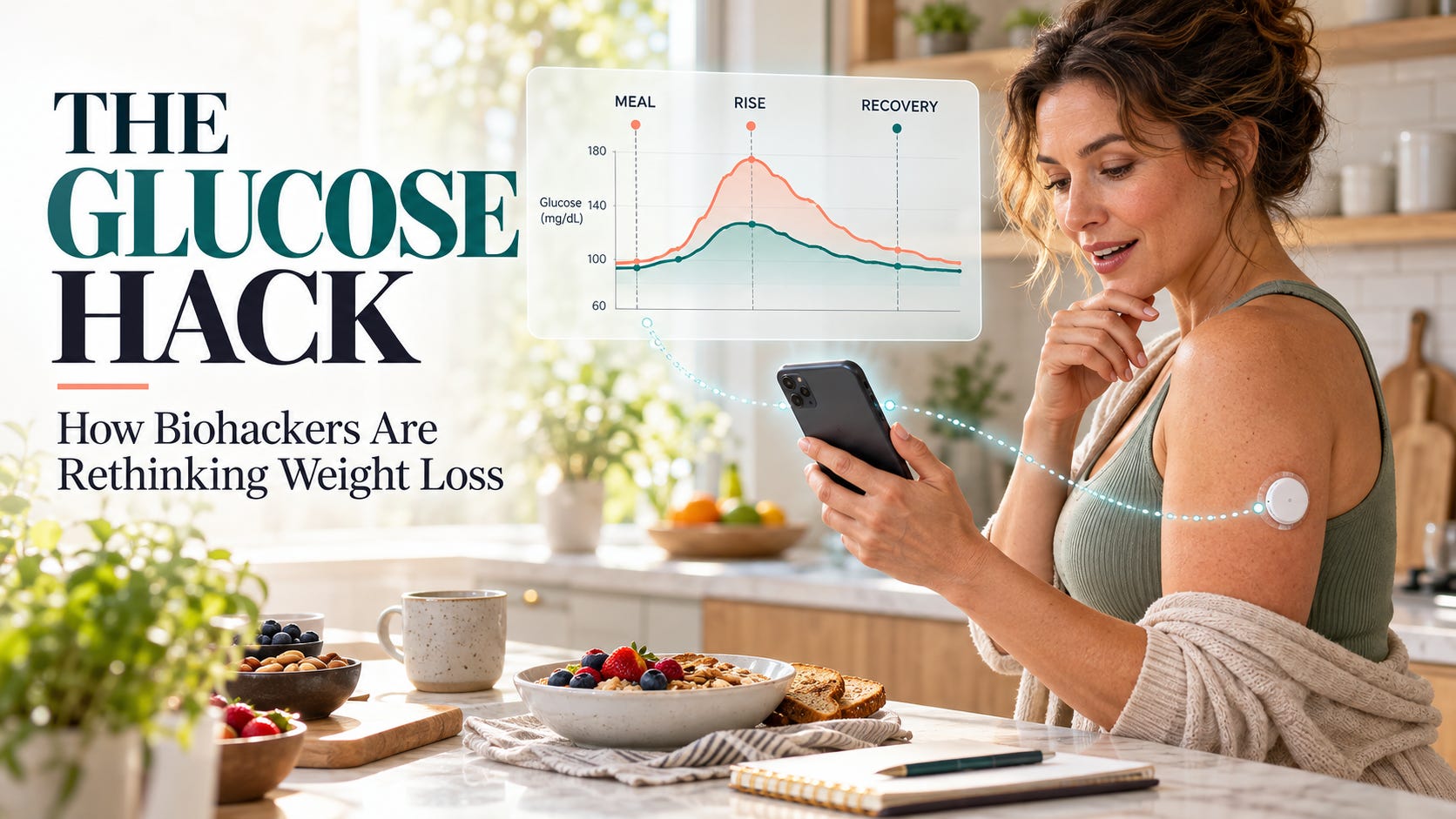
A small screen on the arm, a wave of numbers after lunch, a jolt of worry over a cookie - this is the new daily ritual for a growing number of people who don’t even have diabetes. Continuous Glucose Monitors (CGMs) have moved from hospital supply closets to wellness influencers’ arms, promising sharper focus, fewer cravings, and a flatter belly. The reality is more complicated, and it matters for anyone 40 and older who’s already cycled through keto, intermittent fasting, and every tracking app in the store.
CGMs Can’t Guarantee Fat Loss Alone
A CGM measures glucose in the fluid under the skin and reports it every few minutes, painting a picture of how a body responds to food, stress, sleep, and movement. That picture can be genuinely useful for spotting patterns, but it answers only one narrow question: what is blood sugar doing right now? The bigger question that actually determines fat loss is whether the body is taking in more energy than it burns over time, and a glucose graph alone has no answer for that.
Flattening a glucose curve can make a meal feel more “controlled,” yet a flatter curve is not the same thing as a calorie deficit. A plate of salmon, olive oil, and cheese might barely move the needle on a glucose graph while still delivering enough calories to prevent fat loss if portions run large and consistent. This is the gap between what a sensor can see and what the scale eventually reflects, worth sitting with before buying into any glucose-first weight loss plan.
Chasing a single number on a device repeats the same mistake as chasing a single number on a scale: it hands the controls to a data point instead of to a sustainable identity shift. Fixating on grams, macros, or now glucose curves can quietly become another version of the restriction-reward cycle that leaves people worn out and no closer to lasting change.
Why Non-Diabetics Are Strapping On Sensors
From Medical Device to Wellness Gadget
CGMs were built for people with Type 1 diabetes and insulin-treated Type 2 diabetes, where real-time glucose data can be the difference between a safe day and a medical emergency. Regulatory clearance has since opened the door to general wellness use: the FDA cleared Dexcom’s Stelo Glucose Biosensor System for adults 18 and older who are not using insulin in March 2024, and Abbott’s Lingo System received its own FDA clearance in June 2024. Neither device includes the high and low glucose alarms built into prescription CGMs, because they’re designed for curiosity rather than crisis management.
That regulatory shift lines up with a fast-growing market. The North American weight management products market, which includes these sensors alongside other dietary technology and tracking platforms, is projected to grow substantially through 2033, and non-diabetic users already account for a meaningful share of total sensor sales. Subscription platforms built around these sensors now pair the hardware with apps, coaching, and predictive scoring, turning a glucose reading into a whole ecosystem of feedback loops. For someone who has already tried counting points or syncing a food-scale app, strapping on a sensor can feel like the next logical step toward finally understanding their body.
What a Normal Glucose Curve Looks Like
Before trusting any glucose graph as a verdict on health, it helps to know what normal actually looks like. Non-diabetic blood sugar typically runs between 70 and 140 mg/dL, with gentle rolling hills after meals rather than sharp spikes and dramatic crashes. A healthy pancreas is built to handle a rise after eating carbohydrates; the line is supposed to go up and then settle back down within a couple of hours.
Confusion creeps in when a wearable’s raw numbers get treated like a report card instead of a snapshot. A single post-meal bump, a slightly elevated overnight reading, or a sensor hiccup can look alarming on a phone screen even though it reflects completely ordinary biology. Understanding this baseline is a first defense against turning a wellness gadget into a source of unnecessary stress.
The Energy Balance Problem CGMs Ignore
Flat Curves Don’t Erase Excess Calories
Energy balance is the quiet variable that every glucose app leaves out of the picture. Fat loss happens when the body burns more energy than it takes in, regardless of how smooth or jagged the glucose line looks on a graph. Eating enough calories from low-glycemic fats and proteins can produce a beautifully flat CGM reading while still maintaining the exact lipid storage that keeps extra weight in place.
A person can follow every food-sequencing trick, sip vinegar before meals, and walk after dinner, and still see no change on the scale if total intake stays above what the body needs. None of those tactics are harmful by themselves, but treating them as a replacement for overall intake awareness sets people up for disappointment and self-blame that was never warranted in the first place.
What Clinical Reviews Actually Found
A systematic review and meta-analysis found that while CGM feedback can shift short-term habits, such as cutting back on sugary drinks and refined carbs, the technology is unlikely to produce meaningful weight management results on its own. A separate meta-analysis covering 25 randomized controlled trials and nearly 2,996 participants found that glycemic improvements were concentrated in people with diagnosed Type 2 diabetes or prediabetes, while non-diabetic and isolated-obesity groups showed no significant change in body mass index or total weight.
One smaller 2022 study of overweight, non-diabetic adults found CGM users lost an average of 3.1 kilograms over eight weeks, compared with 2.3 kilograms for a group that simply received standard dietary advice. That’s a modest difference, and it suggests a sensor might nudge food choices in a helpful direction without acting as a weight loss solution by itself. Reviewed together, these findings paint a consistent picture: glucose data can inform better choices, but it cannot substitute for the broader habits that actually move the scale.
When Tracking Turns Into Anxiety
Orthorexia and Dietary Rigidity
Watching a number update every few minutes changes a person’s relationship with food, and not always for the better. Clinical observations describe a hyper-fixation on real-time glucose metrics carrying real psychological risk, including orthorexia nervosa, dietary rigidity, and anxiety over completely routine eating. Orthorexia is not currently recognized in the Diagnostic and Statistical Manual of Mental Disorders (DSM-5 TR), but it’s described as an exaggerated focus on “healthy” eating that can lead to malnutrition, emotional distress, and strained social relationships when every meal becomes a test to pass or fail.
For someone who has already spent years labeling foods as good or bad, strapping on a sensor can reinforce the exact judgment cycle that made previous diets collapse. A graph that spikes after a shared birthday cake can feel like proof of failure rather than a normal, temporary blip, and that framing quietly recreates the shame loop that makes sustainable change so hard to hold onto.
False Alarms From Normal Physiology
Sensors measure interstitial fluid, not blood directly, which introduces a natural lag of several minutes between what the device reports and what’s actually happening in the bloodstream. That lag, plus overnight compression lows from simply sleeping on an arm, can produce readings that look like a crisis when nothing is wrong. Misreading a normal post-meal rise as a dangerous event can push people to needlessly restrict whole grains, fruit, and other nutrient-dense carbohydrates out of fear rather than evidence.
Endocrinologists describe these fluctuations as benign and functional rather than signs of pathology or metabolic failure. Treating every blip as an emergency turns a wellness tool into a source of chronic low-grade stress, which runs directly counter to the calm, steady mindset that actually supports long-term habit change.
Marketing Claims Worth Questioning
FTC Standards for Weight Loss Promises
Glucose sensors are sold inside a weight loss industry with a long history of overpromising, and the Federal Trade Commission has paid close attention to it for decades. The FTC’s “Gut Check” reference guide lists several weight-loss claims considered scientifically untenable without rigorous clinical backing, including promises of substantial weight loss without dieting or exercise, claims that a product works no matter what or how much a person eats, and claims of weight loss that stays off permanently even after a person stops using the product.
Any marketing that implies a sensor alone will melt fat or guarantees a certain number of pounds per week deserves a skeptical second look against that framework. Subscription-based digital health platforms have also drawn consumer protection scrutiny for murky auto-renewal terms and hard-to-find cancellation options, a reminder to read the fine print before committing to any recurring glucose-coaching service. None of this means every CGM company misleads customers, but the burden of proof sits with the marketing, not the consumer’s wallet.
Why Identity-First Habits Outlast Any Sensor
Replacing the Judge With the Scientist
A glucose graph, like a bathroom scale, can easily turn into a referee handing out verdicts instead of a tool offering information. Weight Loss Mindset calls this shift “Scientists, not Judges”: a spike or a slip becomes a piece of data to study rather than proof of a moral failing to punish. That reframe matters because the emotional spiral after a “bad” reading often does more damage to long-term habits than the reading itself.
Collecting data without delivering a verdict changes what happens next. Instead of spiraling into guilt after seeing a post-meal spike, a person can simply note what happened, notice the pattern over a week, and adjust with curiosity rather than punishment. That small mental shift tends to outlast any single device, because it changes how a person relates to food choices long after the sensor comes off.
Resetting the Identity Thermostat Instead of the Data Feed
Diets and devices both tend to open a window for a little while; they rarely reset the thermostat underneath. The idea behind the Identity Thermostat is that habits, cravings, and food choices are downstream of who a person believes they are, so chasing short-term data - whether it’s calories, macros, or glucose spikes - without addressing that underlying identity tends to produce the same rebound pattern seen after countless diets. When the identity shifts first, the daily choices tend to follow on their own, without a sensor standing guard over every bite.
A tool built for insulin management cannot automatically solve a weight struggle rooted in decades of all-or-nothing thinking. A CGM can offer useful information about how a particular body responds to a particular meal, but the quieter work of changing the self-talk that drives the 11pm kitchen moment or the Friday-night “I’ve already blown it” spiral happens elsewhere.
The Real Lesson: Data Informs, Identity Decides
A Continuous Glucose Monitor can be a genuinely interesting window into personal biology, showing how sleep, stress, and specific foods nudge blood sugar up or down. What it cannot do is override the basic math of energy balance, replace structured lifestyle habits, or substitute for a settled, non-judgmental relationship with food. Treating every reading as data to study rather than a verdict to fear keeps a sensor useful instead of stressful.
The numbers on any screen are only ever one input among many, and the real decision-making still belongs to the person wearing the device, not the device itself. For anyone ready to stop outsourcing their sense of progress to a gadget, a steadier path starts with identity-based habit change that holds up long after any sensor’s battery runs out.