

Tried a dozen diets that all fizzled out by week three? The real culprit might not be willpower at all. It could be a psychological trap experts call the “Slingshot effect.” Here’s how to spot a program built to actually fit your life.

Key Takeaways
The most effective weight loss programs are built around an individual’s actual schedule, health needs, and values, rather than a generic template
Restrictive dieting often triggers a rebound effect where the body and mind push back hard after a period of deprivation, making the cycle repeat
Consistency over time matters more than short bursts of perfect compliance for maintaining weight loss
The article breaks down what ongoing support should include once the initial phase of a program ends
Shifting away from self-judgment after a slip-up tends to produce better long-term results than punishing willpower-based approaches
Anyone who has tried three, five, or a dozen different diets knows the drill. A plan looks promising on paper, works for a few weeks, and then quietly falls apart. The problem rarely comes down to laziness or lack of discipline. More often, the plan itself never fit the life it was dropped into.
Why Most Programs Fail Long-Term
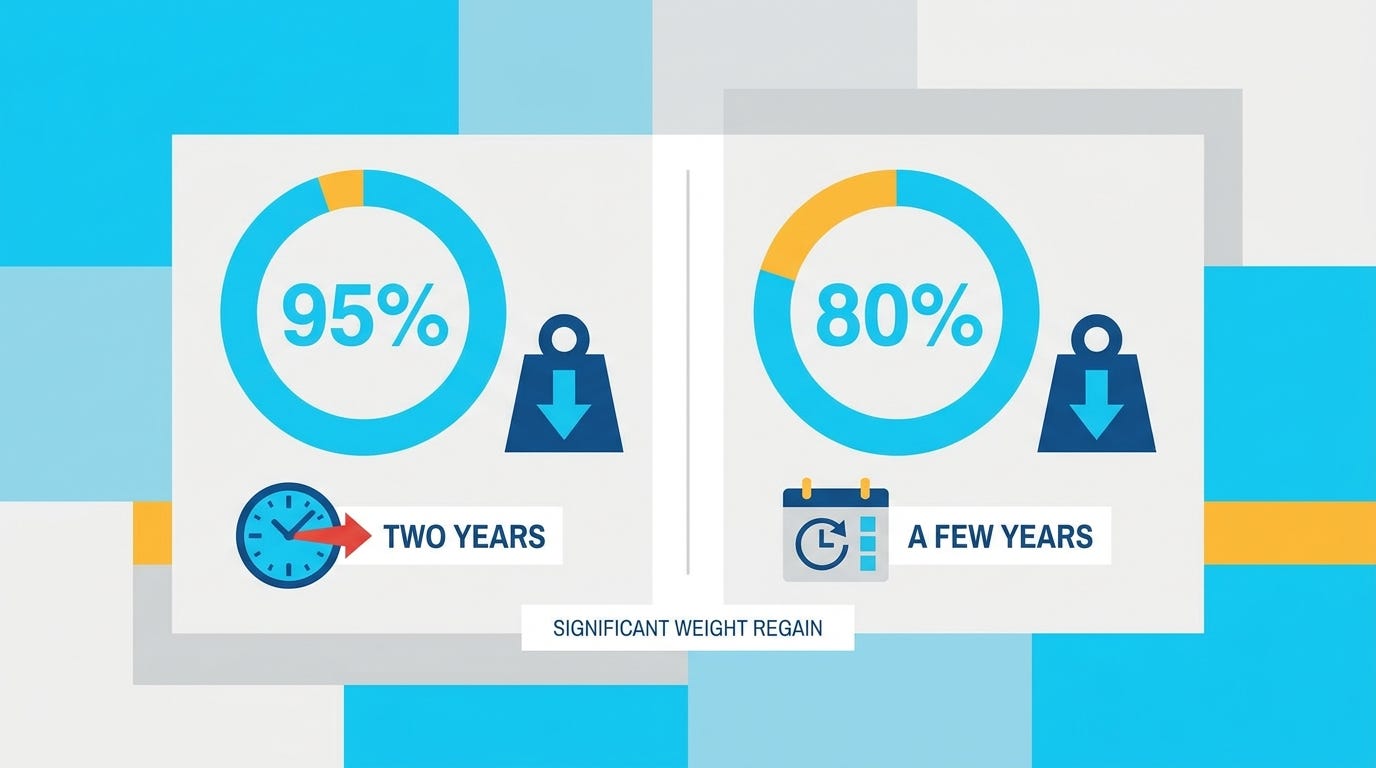
Most weight loss programs are built around a generic template: a calorie target, a meal structure, a workout schedule. They assume everyone has the same mornings, the same stress levels, the same relationship with food, and the same body. That assumption breaks down fast for people over 40 juggling careers, family demands, changing metabolisms, and decades of dieting history.
The most effective path to lasting weight loss aligns with an individual’s lifestyle, values, and health needs rather than chasing whatever trend is popular that year. Weight Loss Mindset, an identity-based coaching approach for people stuck in the diet cycle, treats the real issue as something deeper than food choices. Most programs treat the body as the problem to fix, when the patterns driving behavior actually run on mental software that restriction alone never touches.
That distinction matters because it explains why smart, capable people can follow a plan perfectly and still end up back where they started. A plan built for someone else’s schedule, someone else’s stress patterns, and someone else’s history with food was never going to hold for very long.
Signs a Program Actually Fits You
Fit is not a vague feeling. It shows up in concrete, checkable ways once a person knows what to look for.
It Adapts to Your Schedule and Preferences
A program that demands the same rigid meal prep and gym schedule regardless of a person’s job, family, or energy levels is set up to be abandoned. A plan that fits should bend around real life instead of asking real life to bend around it. That might mean flexible meal timing for someone with an unpredictable work schedule, or movement options that work for stiff joints and busy calendars alike. A plan too restrictive or inconvenient becomes nearly impossible to sustain, no matter how sound the science behind it looks.
It Prioritizes Consistency Over Perfection
Perfectionism is a trap that dresses itself up as discipline. Programs built around flawless execution set people up for an all-or-nothing collapse the moment life gets messy, which it always does. A program worth sticking with rewards showing up most of the time over demanding total compliance every single day. Consistent, moderate effort compounds over months in a way that a handful of perfect weeks never will.
It Considers Your Health and Fitness Level
Age, joint health, chronic conditions, and current fitness level all shape what a reasonable plan looks like. A program written for a young marathon runner is not automatically safe or effective for someone managing arthritis or a slower metabolism after 40. Good programs ask about health history before prescribing anything, and they adjust intensity and intake accordingly rather than applying a one-size-fits-all formula.
It Supports Mental Well-Being, Not Just the Scale
The psychological and social side of eating deserves as much weight as the physical side. A plan that damages self-esteem, isolates someone from social life, or fuels anxiety around food fails to hold up even if the number on the scale drops temporarily. Programs that treat mental well-being as part of the outcome, rather than an afterthought, tend to hold up far better over time.
The Restriction Trap: Why Willpower Backfires
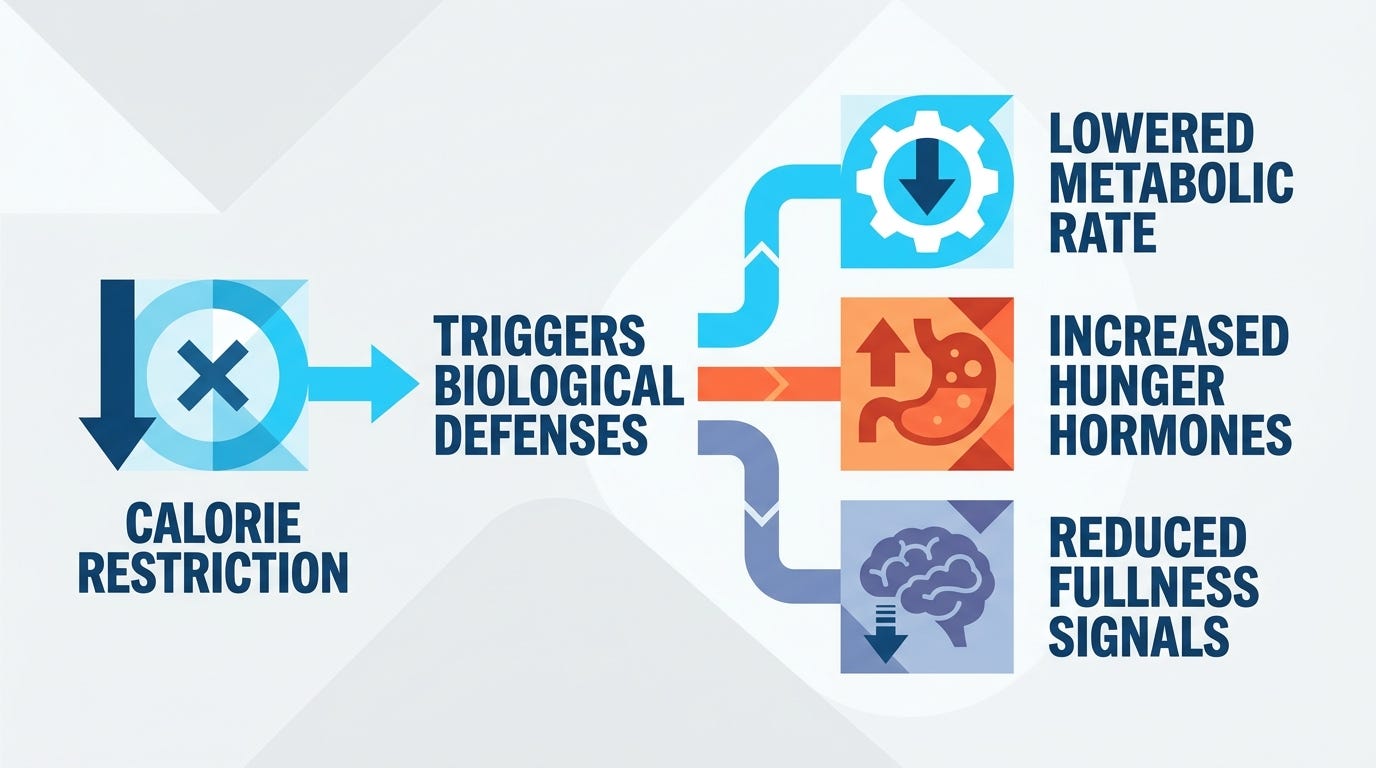
Willpower has a shelf life, and it is shorter than most diet marketing admits. Relying on willpower has been compared to holding a beach ball underwater: the arms give out eventually, and the ball does not float up gently. It launches. The fix comes from stepping back from the fight with biology altogether, rather than gripping harder.
The Slingshot Effect Explained
Restriction creates tension, and tension always looks for a way to release. This pattern is sometimes called the Slingshot effect: the harder someone pulls back on food intake, the harder the rebound tends to hit once willpower runs dry. Hunger hormones spike, blood sugar dips, and the brain reads deprivation as a threat to respond to, not a goal to admire. What looks like a late-night binge is frequently the predictable result of a pattern set in motion hours or days earlier, not a personal failing.
Shame Keeps the Cycle Going
After a slip-up, the instinct for most dieters is to turn inward with harsh judgment. That self-criticism does not prevent the next slip. It often guarantees one, because shame narrows focus onto the failure instead of the pattern that caused it. Breaking the cycle starts with recognizing that a moment of overeating is information about what happened, not proof of some deeper flaw in character.
Shifting from Judge to Scientist
Reframing setbacks changes what happens next. Instead of asking “why do I always mess this up,” a more useful question becomes “what was actually happening right before that moment.” One question spirals into shame. The other produces data that can actually change behavior.
Why Identity Drives Lasting Habits
Habits, cravings, and food behaviors tend to follow from who a person believes they are, more than from any meal plan. Diets attempt to force change from the outside, similar to opening a window to cool down a room. Resetting the underlying identity works more like adjusting the thermostat itself, changing the baseline so new habits stick without a constant fight. When someone sees themselves as a person who shows up consistently rather than someone who always quits, the follow-through tends to arrive on its own.
Interrupting Automatic Eating Loops
Many eating behaviors run on autopilot, triggered by stress, boredom, or habit long before conscious choice enters the picture. Building a pause between the urge and the action gives someone room to respond differently. Simple tools work here: noticing the physical sensation of a craving without immediately acting on it, or naming the trigger out loud before opening the refrigerator. These small interruptions, repeated enough times, weaken the automatic pull of the loop.
What Ongoing Support Should Look Like
A program that ends the moment the official plan is over rarely produces lasting results. Sustainable weight loss depends on continued guidance well past the initial goal, because life keeps presenting new stressors and new temptations long after week one. Useful ongoing support tends to include a few consistent elements.
Community or accountability check-ins that catch a slip early instead of after months of drift.
Tools for handling setbacks without spiraling into shame, so one hard day does not become a hard month.
Flexible strategies that can be adjusted as schedules, health conditions, or life circumstances change.
Access to guidance between major milestones, not just at the very beginning and very end of a program.
Programs offering this kind of continued structure tend to see people maintain results far better than programs that hand over a manual and disappear.
Fit Beats Willpower Every Time
The evidence keeps pointing the same direction: the ability to stick with a plan matters more than how scientifically sophisticated that plan sounds on paper. A moderately good program someone actually follows for years will outperform a perfect-looking program abandoned after three weeks, every time.
Choosing a weight loss approach that respects individual health, schedule, and mindset is the actual strategy that works, and far more than a compromise. For anyone ready to stop cycling through programs that were never built for real life, Weight Loss Mindset provides a look at what changes when the focus shifts from restriction to identity.
Before signing up for another plan built around someone else’s routine, consider trying an identity-based approach to weight loss that starts with mindset instead of another meal plan.