

If you’ve lost the same fifteen pounds three times over, you’re not alone. Up to 95% of dieters regain the weight within years. The culprit isn’t willpower. It’s a biological “slingshot effect” most diets never address.

Key Takeaways
Studies show varying long-term weight loss outcomes, with some research indicating 80-95% of people regain weight within three to five years, pointing to a biological problem rather than a willpower problem.
Restriction triggers a slingshot effect: hunger hormones spike, metabolism slows, and cravings activate the brain’s reward system.
Behavioral approaches like cognitive behavioral therapy and self-monitoring have outperformed short-term diets in supporting sustained weight loss.
Weight Loss Mindset frames slip-ups as data to study instead of moral failures to punish, a shift that can ease the shame many dieters carry.
A 2025 study found that lack of motivation, not lack of discipline, was the primary barrier to successful weight loss and maintenance - even more predictive than physical activity or eating habits - so what actually builds motivation back up?
Anyone who has lost the same fifteen pounds three different times already knows the frustrating truth: the diet itself might be the problem. Restrictive eating plans promise control, yet for a huge share of people over 40 who have tried everything from keto to intermittent fasting, the weight creeps back no matter how disciplined they were the first few weeks. That pattern is not a character flaw. It is a predictable biological and psychological response that behavioral coaching is specifically designed to address.
Why Up to 95% Regain Lost Weight
Research on dieting outcomes varies, but the pattern is consistent: some studies show 80-95% of people who lose weight through restrictive dieting regain it within three to five years. That range alone explains why so many people over 40 feel like they are failing at something everyone else seems to master. In reality, the people who struggle with dieting are experiencing a common outcome, not a rare personal breakdown.
The regain cycle tends to follow a familiar shape. Someone cuts calories or eliminates entire food groups, sees quick results, then watches the weight return once life gets stressful or motivation fades. Each cycle chips away at confidence, leaving people to wonder what is wrong with them. The honest answer is that nothing is wrong with them personally. The method itself sets up conditions the body is built to resist.
How Restriction Triggers the Slingshot Effect
Pulling back hard on food intake does not create steady, lasting change. It creates tension, and tension has a way of snapping back with force. This reaction shows up in two connected ways: through hormones and metabolism, and through the brain’s own reward circuitry.
Hunger Hormones Spike, Metabolism Slows
When calorie intake drops sharply, the body reads that change as a threat to survival rather than a lifestyle choice. It responds by raising ghrelin, the hormone responsible for hunger signals, while lowering leptin, the hormone that signals fullness. At the same time, the body slows its basal metabolic rate to conserve energy, impairing the hunger and satiety signals a person needs to eat normally. The combined effect is someone who feels hungrier, less satisfied after eating, and burns fewer calories at rest than before the diet began. None of that reflects poor effort. It reflects a body doing exactly what bodies are designed to do when food seems scarce.
Cravings Hijack the Brain’s Reward System
Restriction does something to the brain beyond hunger signals. It intensifies cravings by activating the brain’s reward pathways, the same circuitry involved in pleasure and motivation. The longer someone restricts a food, the louder that food’s pull tends to become, until a single slip can feel like a full loss of control. This mechanism drives what gets called the slingshot effect: restriction creates tension rather than balance, and that tension always snaps back. The harder someone pulls away from food, the harder the eventual rebound tends to hit.
The Mental Toll of Restrictive Dieting
The damage from restriction rarely stays contained to the body. It moves into mood, thinking patterns, and the relationship a person has with their own judgment.
Anxiety, Mood, and Self-Trust Erosion
Restrictive dieting has been linked to worsened depressive symptoms, particularly in people who are already overweight and in men specifically, through disrupted sleep, lower energy, and impaired cognition. Beyond mood changes, dieting can foster anxiety by creating an unhealthy fixation on body image and weight, turning every meal into a small test to pass or fail. Over time, the repeating cycle of losing weight and regaining it erodes self-trust, leaving many people stuck in frustration and a quiet sense of hopelessness about ever breaking the pattern. Research reviewing dieting behavior has also found that self-imposed food restriction can lead to binge eating, constant preoccupation with food, heightened emotional reactivity, and difficulty concentrating, which only deepens the discouragement.
Willpower Isn’t a Strategy
Willpower gets treated like the missing ingredient, as if trying harder would finally make restriction stick. Willpower behaves more like holding a beach ball underwater than flexing a muscle. The pressure builds the entire time it is held down, and eventually the arms give out. When that happens at eleven o’clock at night in the kitchen, the ball surfaces with force rather than gently. Framing the solution as simply needing more discipline ignores the biology already working against the person and adds a layer of blame on top of an already difficult situation.
What Behavioral Coaching Changes Instead
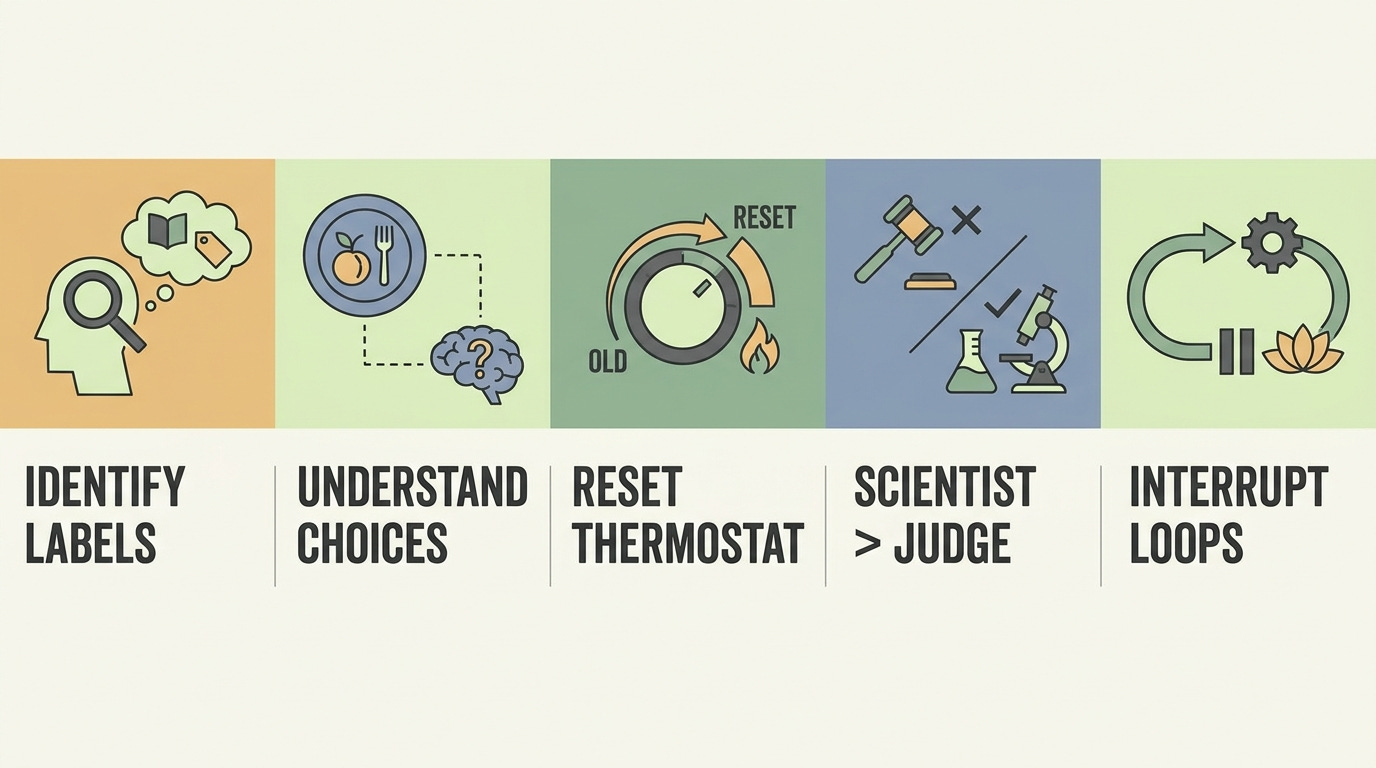
If restriction is the wrong lever to pull, something else has to take its place. Behavioral coaching shifts the target from meal plans to the thinking patterns and emotional triggers sitting underneath food choices.
Identity Patterns Over Meal Plans
Diets hand someone a set of rules: eat this, avoid that, track every gram. Behavioral coaching works differently by resetting the identity patterns running beneath conscious awareness, the labels and stories a person has quietly pinned to themselves over years of trying and failing. Habits, cravings, and automatic food choices tend to follow from identity rather than lead it, so shifting how someone sees themselves can cause old patterns to loosen without a single rule about food.
Scientists, Not Judges: Reframing Slip-Ups
A guiding idea in this approach treats slip-ups as data to study rather than evidence of failure to punish. Collecting data instead of delivering a verdict changes what happens after someone eats something they did not plan to eat. Instead of a spiral of guilt that often triggers more eating, there is a question: what happened right before that moment, and what does it reveal? That single reframe removes the shame that keeps so many people stuck, since shame rarely motivates lasting change and more often fuels the very behavior someone is trying to stop.
Evidence Behind Behavior-First Approaches
Behavioral strategies are not a fringe idea tacked onto traditional dieting. They carry a growing body of support showing they outperform restriction-based plans over time.
CBT and Self-Monitoring Outperform Short-Term Diets
Behavioral interventions that include self-monitoring, structured goal setting, and cognitive behavioral therapy have been shown to produce more sustained weight loss than short-term dieting strategies. University-based research on behavioral weight loss programs run by trained behavior-change specialists found participants achieved an average of 10% body-mass loss over 12 months and maintained that loss for a full year afterward. These same interventions carry a secondary benefit: they tend to lower the risk of conditions linked to excess weight, including diabetes, heart disease, and high blood pressure, by building healthier daily habits rather than temporary restriction.
Motivation, Not Discipline, Is the Real Barrier
A 2025 study found that lack of motivation, rather than lack of discipline, was the primary barrier to successful weight loss and maintenance, proving even more predictive than physical activity levels or eating habits. That distinction matters because motivation can be rebuilt through specific cognitive and behavioral skills, while discipline is often treated as a fixed trait someone either has or lacks. Teaching people how to stay motivated, rather than scolding them for losing it, turns out to be a far more workable foundation for lasting change.
Toward Food Freedom and a Quiet Mind
Food freedom describes a neutral relationship with eating, one where food no longer carries constant mental noise or moral weight. Mindfulness-based approaches built around this idea have been shown to help with emotional eating and binge eating by interrupting the habit of eating in response to outside cues rather than actual hunger. Intuitive eating practices work on a similar principle, helping people rebuild trust with their own hunger and fullness signals instead of following rigid external rules.
Weight Loss Mindset builds this kind of freedom around resetting what the company calls the Identity Thermostat rather than relying on calorie counting or willpower, treating the real problem as mental software and brain chemistry instead of weak character. That framing gives people something concrete to work on besides sheer effort, which tends to be the piece missing from most restrictive plans.
Sustainable Weight Loss Starts With Identity, Not Restriction
Lasting change rarely comes from gradual tightening of food rules. It tends to come from gradual shifts in eating patterns, daily habits, and self-perception that can actually be sustained, built through small, achievable wins rather than dramatic overhauls that invite burnout. Unrealistic expectations are one of the most common reasons diets collapse, since a single missed goal can feel like proof the whole effort was pointless, when really it was just one data point among many.
The research on restriction points in one clear direction: biology resists it, mood often suffers under it, and the regain cycle it produces chips away at confidence more than it builds results. Behavioral coaching approaches that work, including ones centered on identity rather than meal plans, give people tools to work with their biology instead of against it. For anyone ready to step off the cycle of losing and regaining, an identity-based weight loss approach is a reasonable next step toward food freedom and a quieter relationship with eating.